Height growth and improved learning ability? Warning over ‘hazardous ingredients’ in foods bought directly from overseas
- Input
- 2026-10-29 13:50:44
- Updated
- 2026-10-29 13:50:44
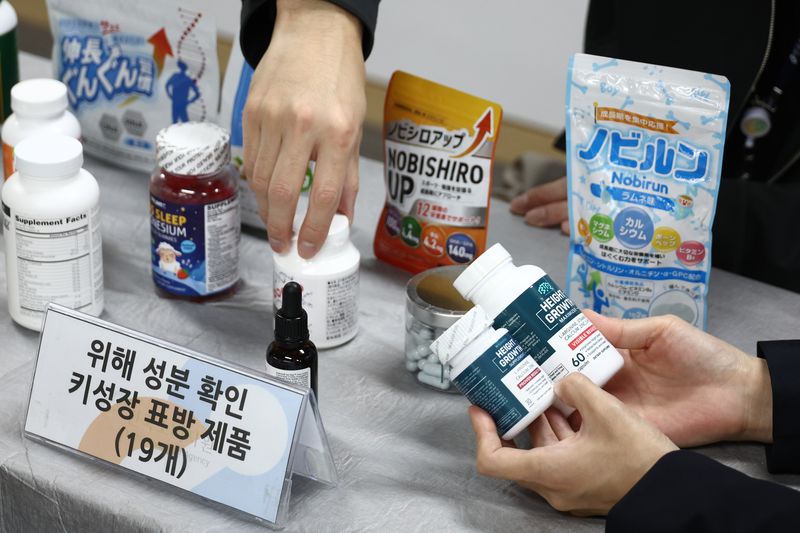
[Financial News] Six in 10 foods bought directly from overseas and brought into Korea, marketed as boosting concentration or promoting height growth, were found to contain pharmaceutical ingredients or ingredients that cannot be used in food in Korea.
The Ministry of Food and Drug Safety and the Korea Consumer Agency said on the 29th that, after testing 60 foods bought directly from overseas and marketed as boosting concentration or promoting height growth, they found that 37 products either contained or listed ingredients or substances subject to import restrictions in Korea (hazardous ingredients).
The investigation was conducted on foods bought directly from overseas that were suspected of containing hazardous ingredients and marketed as ‘concentration boosters (30 products)’ or ‘height-growth products (30 products).’ It aimed to prevent harm to consumers concerned about their children’s learning abilities and health ahead of the College Scholastic Ability Test.
Among the 30 products marketed as concentration boosters, 18 were found to list ingredients or substances subject to import restrictions in Korea, including ‘bacopa,’ ‘Dianol’ and ‘L-Dopa.’ Laboratory analysis detected ‘vinpocetine’ and ‘kava kava’ in three products.
‘Vinpocetine’ and ‘L-Dopa’ are prescription-drug ingredients and should be used only under a doctor’s diagnosis and prescription, taking the patient’s health condition and other factors into account. Since appropriate intake levels and safety have not been established when these substances are present in food, consumers should be cautious about purchasing or consuming such products.
Among the 30 products marketed for height growth, 19 were found to list ingredients or substances subject to import restrictions in Korea, including ‘5-HTP,’ ‘citrulline’ and ‘dolomite.’ ‘5-hydroxytryptophan (5-HTP)’ and ‘melatonin’ were detected in seven products.
Although 5-HTP, which is used as an ingredient in prescription drugs, was listed on 13 products marketed for height growth, testing detected it in only six. Cases were also found in which product labels did not match the ingredients actually present—for example, melatonin was listed but not detected, or detected despite not being listed.
The Ministry of Food and Drug Safety asked the Korea Customs Service to suspend customs clearance for products found to contain hazardous ingredients and the Broadcasting, Media and Communications Review Committee to block access to their online sales sites. It also asked the local food and drug safety offices with jurisdiction to take administrative action against businesses that brokered purchases of these products.
It also published information including product names, manufacturers, hazardous ingredients and product photos on the ‘Allbaro Overseas Direct-Purchase Food’ website so consumers could check the products themselves.
An official from the Ministry of Food and Drug Safety cautioned, “Foods that individuals buy directly from overseas for personal consumption may cause harm due to hazardous ingredients,” and urged consumers, “Before buying foods directly from overseas, be sure to check the ‘Allbaro Overseas Direct-Purchase Food’ website to see whether a product contains ingredients or substances subject to import restrictions in Korea, and do not buy products listed as hazardous foods from overseas direct purchases.”
[email protected] Kim Seo-yeon Reporter