Seoul’s suburban homeowners name their price: “Sales start at ₩2 billion, jeonse at ₩1 billion”
- Input
- 2026-10-29 16:18:07
- Updated
- 2026-10-29 16:18:07
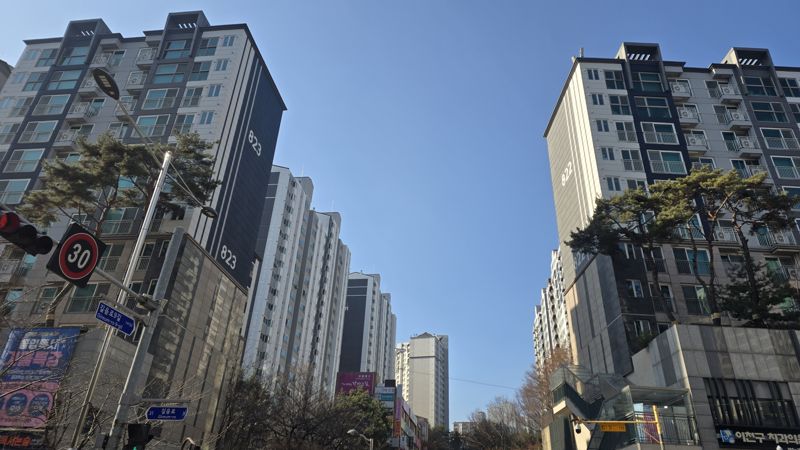
According to the Ministry of Land, Infrastructure and Transport’s Real Estate Transaction Price Disclosure System on the 29th, actual transaction prices for 84-square-meter homes in areas such as Gireum, Eunpyeong and Singil, once known for relatively affordable housing, have soared to just shy of ₩2 billion. A prime example is Gireum New Town in Seongbuk District, where prices surged early this year and even gave rise to the new term “Mapo-Yongsan-Seongdong-Gireum”—meaning Gireum comes after Mapo, Yongsan and Seongdong. The 84-square-meter unit at Lotte Castle Placia, considered the area’s flagship apartment complex, sold for ₩1.93 billion on the 15th of last month, setting a new record. Compared with transactions at ₩1.49 billion to ₩1.565 billion in September last year, that represents an increase of about ₩400 million in a year.
Current asking prices for sales are holding at around ₩1.9 billion to ₩2.1 billion. Despite the steep rise, buyer demand remains strong, and owners looking to sell appear to have no intention of lowering their asking prices. The head of a licensed real estate agency in Gireum-dong said, “There are fewer transactions than in the first half of this year, but plenty of people are still coming to view homes,” adding, “Unless a homeowner is in a real hurry, they are trying to get ₩2 billion.” Raemian Gireum Centerpiece, which set a record at ₩2 billion in July, has since seen a transaction at ₩1.9 billion, yet its asking price has climbed to as high as ₩2.25 billion. Jeonse prices have already topped ₩1 billion. The highest jeonse price this year at both complexes is ₩1.1 billion.
The picture is similar in the northwest and southwest parts of Seoul, which have seen a concentrated influx of newlyweds over the past two to three years. An 84-square-meter unit at DMC Central Xi in Jeungsan-dong, Eunpyeong District, was contracted for ₩1.95 billion on the 12th. Asking prices for listings have reached as high as ₩2.15 billion, putting the national-standard apartment price on the verge of crossing ₩2 billion. That is up ₩250 million from January this year, when it was ₩1.7 billion. Jeonse prices are also rising sharply. A unit of the same size recently renewed its jeonse contract at ₩950 million, bringing the price close to the ₩1 billion mark.
The standard-size unit at Singil Central Xi, the flagship complex in Singil New Town, Yeongdeungpo District, also hit a record of ₩1.925 billion in March and recently sold for ₩1.88 billion. Current asking prices range from around ₩1.93 billion to ₩2.03 billion. A jeonse contract was signed for ₩1.02 billion on the 21st. The jeonse deposit, which stood at around ₩800 million in February, has risen by ₩220 million in eight months. At nearby Dangsan Hyundai 5th, an older apartment complex in Dangsan-dong completed in 2000, a standard-size unit sold for ₩1.943 billion on August 29, after which asking prices for listings surged to ₩2.05 billion.
Prices in non-Gangnam areas are expected to hold for the time being. A real estate expert said, “Usually, when jeonse becomes scarce and rents rise, sale prices are pushed up after a time lag. But now, jeonse and sale prices are rising at the same time,” adding, “With the upward trend having spread to parts of Gyeonggi Province, it is difficult to expect prices in Seoul’s outskirts to start falling anytime soon.” The expert also said, “Many end-user buyers who lack the financial means are struggling even to find a jeonse home, and are confused and afraid that home prices may rise further.”
[email protected] Jeon Min-kyung Reporter