Trump’s Fate Hinges on Holding the Senate; South Korea Must Prepare for Divided Government [America’s Choice in the Nov. 3 Midterms] (5, final)
- Input
- 2026-10-29 15:44:07
- Updated
- 2026-10-29 15:44:07
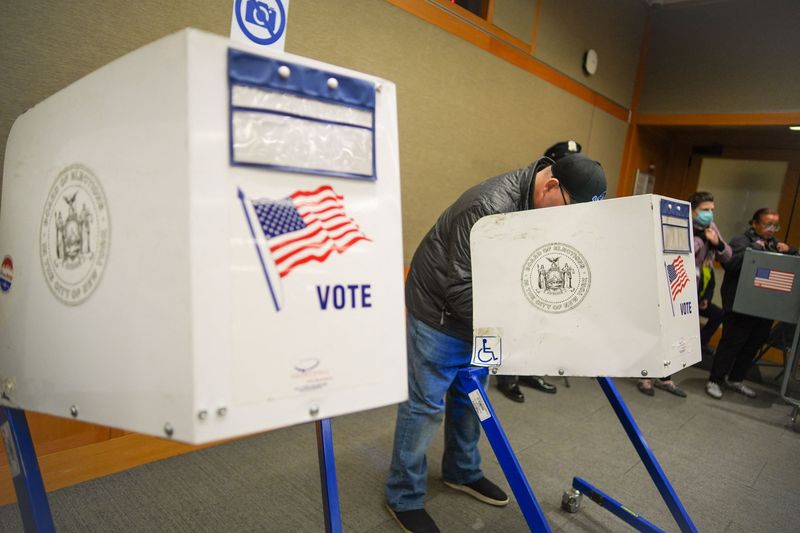


Republicans’ all-out fight to hold the Senate
In this year’s midterm elections on November 3, all 435 House members and 35 of the 100 senators will be elected. Gubernatorial elections will also be held in 36 of the 50 states. The current U.S. House consists of 218 Republicans, 214 Democrats, one independent (aligned with the Republicans), and two vacant seats. In the 100-seat Senate, Republicans hold 53 seats. Democrats hold 45, while the remaining two are independents who caucus with the Democrats. There are 26 Republican governors and 24 Democratic governors.Local polling organizations believe the race for the House and governorships has already tilted toward the Democrats. In a report released on the 23rd, the nonpartisan U.S. election analysis organization Cook Political Report projected that 204 seats for the Democrats were in the safe column, meaning they needed just 14 more to reach a House majority of 218. Republicans had secured 181 seats but needed 37 more to retain their majority. Fifty districts were considered toss-ups. Of those, Republican candidates had an advantage in 17. Meanwhile, the U.S. election analysis website Race to the White House projected on the 28th that after the midterms there would be 24 Republican governors and 26 Democratic governors.
The Senate is where Republicans can make their stand. According to Cook Political Report, Republicans are favored in 15 of the 35 states holding Senate elections this time, and Democrats in 13. The other seven are battleground states: Michigan, Iowa, Maine, Kansas, Ohio, Alaska and Texas. All except Michigan are seats currently held by Republicans. For Democrats to increase their current 47 seats to 51 and take the majority, they must hold Michigan and pick up four seats in the other battlegrounds. On the 28th, The Washington Post noted that the gap in support between the two parties’ candidates in the seven battleground states was 1–5 percentage points.
Shin Beomcheol, a former vice minister of national defense and senior research fellow at the Sejong Institute, said of the midterm outlook, “It is true that the Democrats have the advantage at this point. If President Trump manages to hold the Senate, that could be considered a decent showing.” Shin Won-gyu, head of the global economy team at the Korea Economic Research Institute (KERI), predicted, “I expect a divided government. Republicans in the Senate, Democrats in the House.”
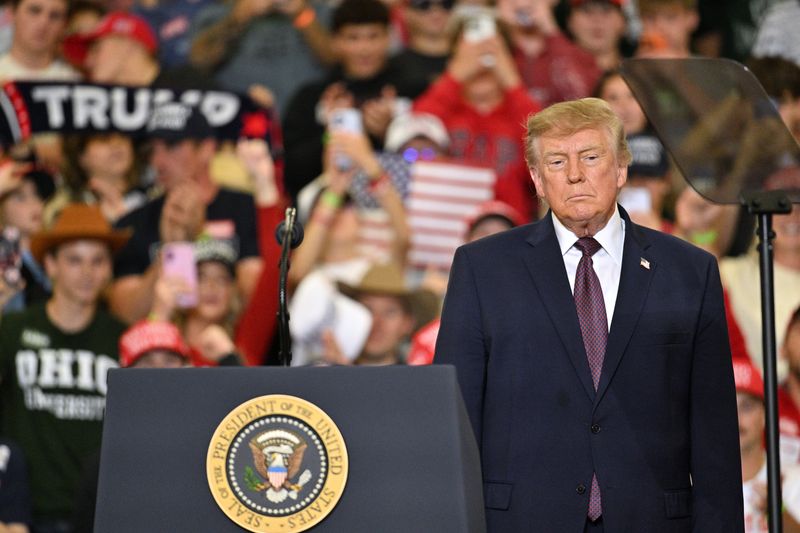
Soothe Trump to secure tangible benefits
Shin Beomcheol assessed, “If President Trump holds the Senate, he will continue his existing policies, and the momentum behind those policies will continue. But if Democrats take the Senate too, they will put the brakes on things at every turn.” Shin Won-gyu predicted that if Democrats take the House, “They can keep the Trump administration in check through control of the budget, hearings and investigations.” However, pointing to the presidential veto and the time required for Congress to pass legislation, he argued, “Opposition checks cannot fundamentally change the Trump administration’s tariff or foreign policies.” Shin Won-gyu predicted, “On the contrary, if legislation is blocked, given President Trump’s past behavior and unpredictability, the more cornered he becomes, the more aggressively he may use existing powers, including tariffs and export controls.”Shin Beomcheol said the possibility that President Trump could raise concerns about the trade surplus and make additional demands of South Korea after the election “cannot be ruled out.” He urged, “That is why we need to emphasize compliance with existing agreements while soothing Trump’s side. South Korea and the U.S. are currently facing conflicts over various issues, including Coupang, and I believe we should resolve them as early as possible.” Shin Won-gyu noted, “If the Trump administration sticks to its current tariff stance, it will ultimately be important to engage with lawmakers from states connected to South Korean investment, as well as state governments.”
On the scenario of Democrats taking control of the House, Shin Won-gyu explained, “Democrats are stepping up scrutiny of semiconductors and the implementation of subsidies, and they are also pushing to expand tariffs to protect small and medium-sized businesses. South Korea may need to build more connections with these Democratic House members as well.” Shin Beomcheol predicted that in this scenario, “Democrats could have a stronger policy voice by linking issues such as reductions in U.S. forces stationed in South Korea and alliance-related matters to the budget.” He added, “Even if Republicans lose ground in this election, we have, at the end of the day, an agreement reached last November. There is no need to needlessly antagonize the Trump administration.”
Meanwhile, Shin Won-gyu predicted, “The weaker President Trump’s political standing becomes, the more that if we respond generously on certain issues, he may respond in ways that improve our commercial prospects or business viability.” He said, “Japan handled that well,” and argued, “The Trump administration may also show greater flexibility on issues such as the entry of South Korean products, visas, and areas where South Korea makes purchases or provides support together with the U.S.”
[email protected] Hong Chae-wan, Park Jong-won Reporter