“There Is No Less Harmful Tobacco” ... Group 1 Carcinogens Found in All Tobacco Products in South Korea
- Input
- 2026-10-29 13:30:00
- Updated
- 2026-10-29 13:30:00
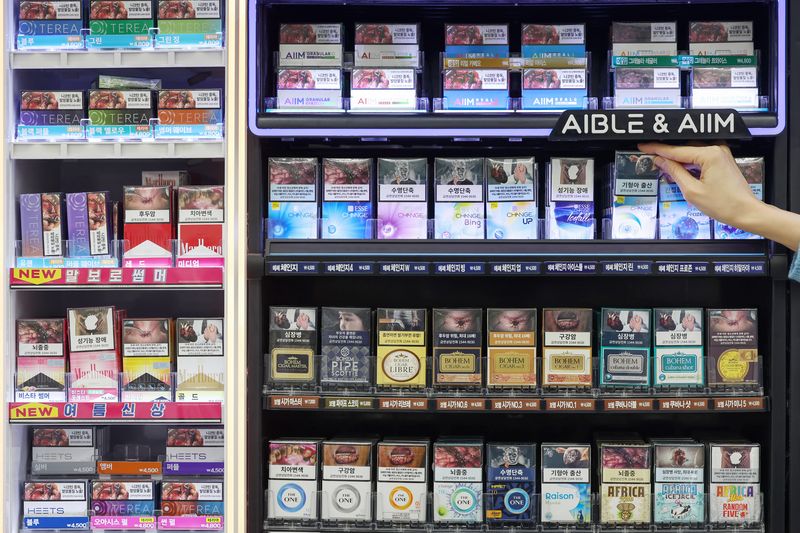
[Financial News] It has been officially confirmed that all tobacco products currently sold in South Korea, including e-cigarettes, contain Group 1 carcinogens such as formaldehyde and benzene.
On the 29th, the government released for the first time the results of tests for harmful substances in each type of tobacco product manufactured or imported and sold in South Korea, following deliberations by the Tobacco Harmfulness Management Policy Committee. The release came after the Act on the Management of Tobacco Harmfulness took effect in November 2025.
The disclosure covers a total of 465 tobacco products from 20 manufacturers and importers/sellers that were on the market when the Act took effect: 256 conventional cigarettes, 104 heated tobacco products and 105 liquid e-cigarettes.
The tests found that all products, including e-cigarettes, contained Group 1 human carcinogens designated by the International Agency for Research on Cancer (IARC), such as formaldehyde and benzene, in addition to nicotine and tar, which were already listed on cigarette packs.
Until now, cigarette packs have listed only the amounts of nicotine and tar and information indicating the presence of six carcinogenic substances, including nickel and cadmium. The government plans to provide information on harmful substances in tobacco products sold in South Korea, including e-cigarettes.
By product type, an analysis of 44 substances in emissions from 256 conventional cigarette products found nicotine and tar in every product. Nicotine was detected at 0.8–2.6 mg per cigarette, and tar at 11.7–40.4 mg per cigarette.
Carcinogenic substances classified by the International Agency for Research on Cancer (IARC) as “Group 1 carcinogens to humans” were also identified, including formaldehyde, 2-aminonaphthalene, 4-aminobiphenyl, NNN, NNK, 1,3-butadiene, acrylonitrile, benzene, arsenic, cadmium and benzo[a]pyrene.
An analysis of emissions from 104 heated tobacco products also detected nicotine and tar in every product. Nicotine levels ranged from 0.1 to 1.2 mg per stick, while tar levels ranged from 10.3 to 32.0 mg per stick.
Formaldehyde, NNN, NNK and benzo[a]pyrene were also identified among the substances classified by the International Agency for Research on Cancer (IARC) as “Group 1 carcinogens to humans.”
Tests of 105 liquid e-cigarette products found nicotine, propylene glycol and glycerin in every product. Nicotine was detected at levels ranging from 5.7 to 20.0 mg/g.
Formaldehyde, a substance classified by the International Agency for Research on Cancer (IARC) as a “Group 1 carcinogen to humans,” was found in most products, while NNN, NNK and arsenic were detected in some products.
The government explained, “Heated tobacco products and liquid e-cigarettes differ from conventional cigarettes in the raw materials and additives used in the products, as well as in their heating and vaporization methods, so there may also be new harmful substances present.”
According to the World Health Organization (WHO) and others, tobacco contains around 7,000 chemicals and more than 70 types of carcinogens, and is known to pose health risks to almost every part of the body.
An official from the Tobacco Harmfulness Management Policy Committee advised, “The types and amounts of harmful substances detected vary depending on the type of tobacco and the product, but the fact that some substances were detected at lower levels should not, on its own, lead to the conclusion that a tobacco product is less harmful to health.” The official added, “It is important to understand the scientific evidence as showing that all tobacco is harmful, for smokers to quit for their health, and for nonsmokers not to start smoking.”
The government plans to test and disclose harmful substances in synthetic nicotine tobacco products starting in 2027. These products were newly included in the definition of tobacco under an amendment to the Tobacco Business Act last April.
Oh Yu-kyung, Minister of Food and Drug Safety, said, “This disclosure of information is a first step toward transparently informing the public, based on scientific test results, about the harmful substances contained in tobacco products.” She added, “We will continue to pursue policies to manage harmful substances in tobacco based on scientific evidence.”
[email protected] Kim Seo-yeon Reporter