“Dermatology treatment first when visiting Korea” ... Medical tourism takes off on the K-beauty wave
- Input
- 2026-11-01 12:44:00
- Updated
- 2026-11-01 12:44:00
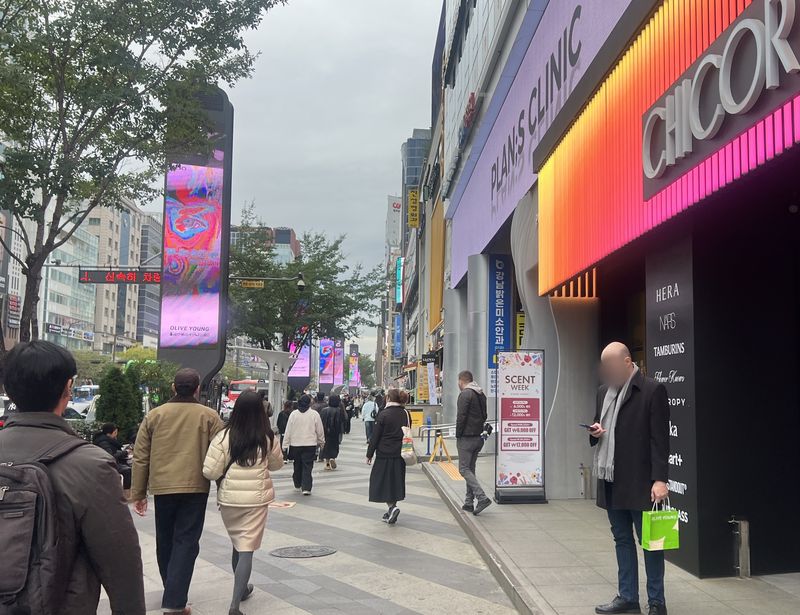
[Financial News] At a plastic surgery clinic identified as A near Gangnam station on Seoul Subway Line 2 in Seoul on the morning of the 27th, three groups of foreign tourists quickly gathered at the international-only information desk as soon as the doors opened. As they were checked in one after another, more tourists arrived, and within 15 minutes the lounge was full of people waiting.
Iris, 26, who came from China with Iris’s mother, said, “I came to Korea to travel and try getting dermatological care,” adding, “I have several friends who also want to come to Korea for skin treatments.”
Demand for medical tourism in Korea is growing rapidly alongside the K-beauty boom. According to the Korea Tourism Organization (KTO), foreign visitors’ spending on medical tourism totaled 1.8398 trillion won from January to September this year, up 57.9% from the same period a year earlier. That far outpaced the 47.7% increase in overall spending by foreign tourists over the same period. As interest in K-beauty links skin treatments with the purchase of cosmetics for aftercare in a single consumer journey, medical tourism is emerging as a new driver of inbound tourism.
In fact, plastic surgery clinic A operated separate consultation and treatment areas for Korean and foreign patients on different floors. Four Korean employees and one foreign employee were stationed at the international-only information desk. Christine, 40, a tourist from the Philippines who was the first to visit the clinic that day, had also come to Korea for dermatological care and received Potenza and Rejuran treatments. She said, “Dermatology clinics in Korea are very well-organized, and there were no communication problems at all,” adding, “I’m also satisfied with the treatment.” She continued, “I’ve been staying in France recently, so I’ve already bought Korean cosmetics—including masks, creams and treatments—to give to my friends,” and added, “Korean beauty products have become popular in France these days, and many people use them.”
Social media played a decisive role in their choice of clinic. Christine found the clinic on Instagram, while Iris found it through Xiaohongshu, a Chinese social media platform. According to the Ministry of Culture, Sports and Tourism’s Survey on Overseas Hallyu, the most common way people who had experienced K-beauty encountered it was through “social media videos and photos of ordinary users’ reviews” (39.1%), followed by influencer social media content (38.5%) and social media content from brands and Hallyu stars (34.6%). K-beauty encountered on social media is leading beyond product purchases to actual trips to Korea and treatment experiences.
Experts say that as the range of sectors benefiting from inbound tourism expands on the back of the Korean Wave, systematic support from the authorities could act as a catalyst for industry growth.
Kim Ju-deok, a professor in the Department of Beauty Industry at Sungshin Women’s University, said, “Korea’s skin-care and plastic surgery sectors, which were already internationally competitive, have recently been generating synergy as the Korean Wave and the current boom converge.” He added, “As this trend is likely to continue for some time, medical tourism needs systematic support through cooperation among relevant ministries, including measures to make travel more convenient.”
[email protected] Kim Hyun-ji, Kim Gyeong-tae Reporter