Disagreements predated the Czech nuclear project award; construction contract talks collapse, new contractor sought
- Input
- 2026-10-29 10:10:32
- Updated
- 2026-10-29 10:10:32
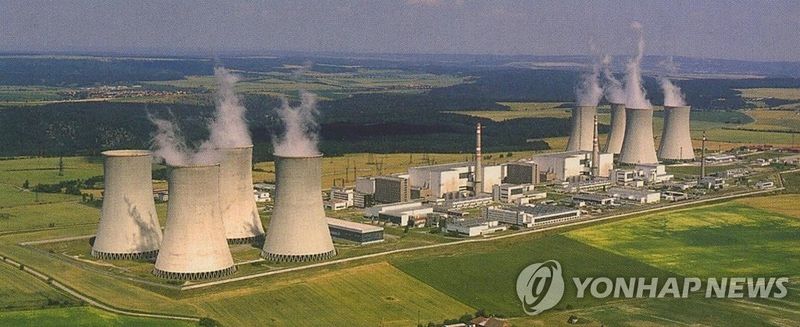
[Financial News] Construction contract negotiations for the new Dukovany nuclear plant project in the Czech Republic between Korea Hydro & Nuclear Power (KHNP) and the Daewoo Engineering & Construction–Doosan Enerbility consortium have ultimately collapsed. Unable to bridge differences over construction costs, the contract structure and risk-sharing, KHNP has decided to select a new contractor. With the construction framework of the ‘Team Korea’ originally formed to win the nuclear project being reorganized, attention is also turning to the possibility of higher project costs and schedule delays.
KHNP said on the 29th that it is officially ending construction contract negotiations for the Dukovany nuclear plant project in the Czech Republic with the Daewoo Engineering & Construction–Doosan Enerbility consortium and will begin the process of selecting a new contractor.
The two sides negotiated for about 15 months after the main contract was signed with Czech project owner EDU II last June, but failed to reach an agreement.
The main sticking points in the failed negotiations were how construction costs would be calculated and how contractual risks would be shared. KHNP maintained that the parties should retain the lump-sum fixed-price arrangement originally agreed upon, while the contractor side called for additional costs to be settled if actual construction quantities increased after detailed design.
Under a lump-sum fixed-price contract, the work is carried out for the amount set when the contract is signed. By contrast, under a quantity-based settlement arrangement, the contract amount can change depending on variations in the actual construction quantities. The central issue for the two sides was who would bear the additional costs resulting from design changes or increased quantities.
The two sides’ conflict was found to have begun even before the Czech nuclear project was finally awarded. KHNP and the contractor agreed on the price and contract terms for one unit during the initial bid in 2022 and the revised bid in 2023, but failed to reach agreement in the final bid for two units in April 2024.
KHNP therefore submitted its final bid at a price it had calculated itself, based on the unit price agreed upon during the initial bid and taking into account domestic nuclear plants, the Barakah nuclear plant in the United Arab Emirates (UAE), and local conditions in the Czech Republic.
KHNP said that during subsequent negotiations it proposed a compromise: raise the contract amount on the assumption that construction quantities would increase, and finalize the total amount when the basic design was approved rather than when the contract was signed. The parties nevertheless failed to reach an agreement.
KHNP said, “We were unable to bridge differences over key contract terms, including not only construction costs but also the contract structure, scope of work and whether the main contract terms would be reflected.”
As the negotiations dragged on, the Czech project owner also reportedly pressed for the contract to be signed. The owner had initially asked that the construction contract be finalized by the end of last September, and KHNP shared its plan to conclude the negotiations by the end of October at an implementation review council involving the Korean and Czech governments.
KHNP plans to select a new contractor through competitive bidding under the State Contract Act. Under the tentative schedule, it will hold a pre-bid briefing for prospective contractors next January, issue a tender notice in April and sign a new construction contract by July.
The concern is the impact of replacing the contractor on the project schedule and costs. The existing contractor side says the replacement could delay the project by a year or more. There are also concerns that costs could rise due to the expense of rebidding, initial mobilization costs and inflation following the selection of a new contractor.
KHNP, meanwhile, says it will adhere to the originally planned schedule to begin site-preparation work in January 2028 by selecting a new contractor quickly. It will carry out the necessary work itself until a new contractor is selected to minimize any gap. KHNP plans to manage any additional costs within the amount of the main engineering, procurement and construction (EPC) contract signed with the Czech project owner.
The Dukovany nuclear project involves building two South Korean-designed APR1000 reactors, each in the 1,000-MW class, in the Czech Republic. As of last June, the contract amount was about 27 trillion won. Under the original plan, Unit 5 is scheduled to begin commercial operation in April 2039 and Unit 6 in April 2040.
The failed negotiations will not affect Doosan Enerbility’s contract to supply the nuclear plant’s main equipment. Doosan Enerbility signed separate contracts with KHNP last December to supply reactor equipment and turbine generators. KEPCO Engineering & Construction Company’s comprehensive design services contract has also already been signed.
KHNP said, “We will work closely with the government, the project owner and our partners to minimize the impact on the main contract and proceed with the project as originally planned.”
[email protected] Ji-young Park Reporter