China’s old-age dependency ratio surpasses child dependency ratio for the first time... “A major turning point in population structure”
- Input
- 2026-10-29 10:17:48
- Updated
- 2026-10-29 10:17:48
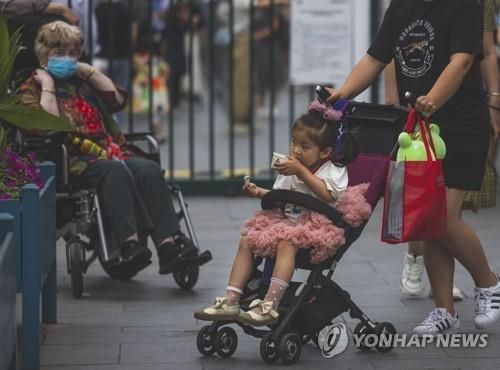
[Financial News] China’s old-age dependency ratio has exceeded its child dependency ratio for the first time. It measures the burden of supporting the population aged 65 and over.
According to the China Statistical Yearbook published by China’s National Bureau of Statistics (NBS) on the 29th, the old-age dependency ratio reached 23.1% last year, exceeding the child dependency ratio of 22.0%. This means that, last year, every 100 people of working age in China had to support about 23.1 older people and 22 children.
The old-age dependency ratio is the population aged 65 and over as a share of the working-age population, defined as those aged 15–64. The child dependency ratio is the population aged 0–14 as a share of the working-age population.
This is the first time China’s old-age dependency ratio has exceeded its child dependency ratio since census statistics began in 1953.
The old-age dependency ratio, which stood at 8.0% in 1982, rose sharply as the population aged, reaching 15.0% in 2016, 20.8% in 2021 and 22.8% in 2024.
Last year, China had 223.65 million people aged 65 and over, accounting for 15.9% of its total population.
By contrast, the population aged 0–14 totaled 212.76 million, or just 15.1% of the total, 10.89 million fewer than the older population.
Chinese demographer He Yafu told the state-run English-language Global Times that “the old-age dependency ratio exceeding the child dependency ratio for the first time marks a major turning point in China’s population structure.”
China’s population aging is on a larger scale and progressing faster than in other developed countries.
However, the consumer market related to population aging is growing rapidly. According to He Yafu, China’s silver economy reached 10 trillion yuan (about 2 quadrillion won) last year.
With about 90% of older people in China receiving care at home, demand is also rising for age-friendly home modifications such as elevators, slip-resistant bathrooms, grab bars and emergency-call systems.
He Yafu stressed that “population aging does not simply mean a burden; it also creates new market demand and opportunities for industrial development.”
He noted that responding to population aging requires strengthening a multi-tier pension system and establishing a long-term care insurance system, while also addressing disparities in elder-care services in rural areas.
He also stressed that, as the birth rate has already fallen to a low level, subsidies and welfare benefits to encourage childbirth should be expanded and the provision of affordable childcare services increased.
[email protected] Lee Seok-woo, international affairs specialist Reporter