Coupang brings medical care to village inside the Civilian Control Line; 300 local residents receive health checkups
- Input
- 2026-10-29 09:57:07
- Updated
- 2026-10-29 09:57:07
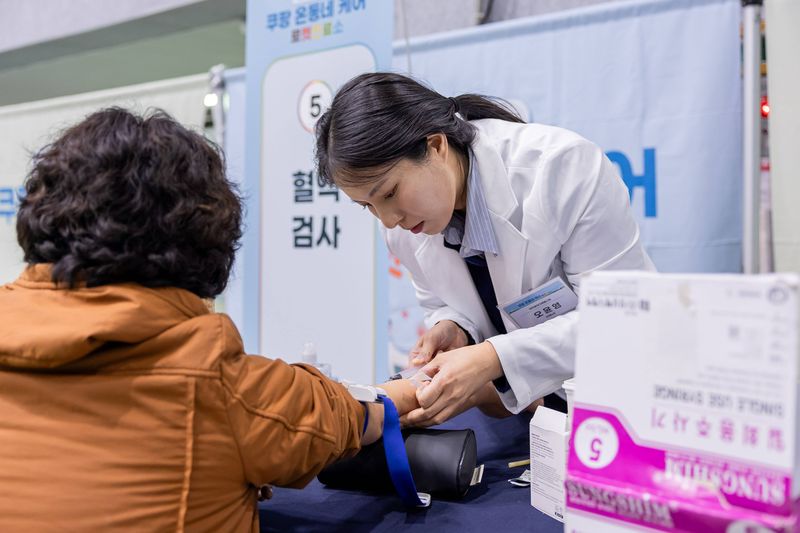
[Financial News] Coupang is working to close gaps in access to healthcare through a screening program that brings medical services directly to areas with limited medical infrastructure.
According to industry sources on the 29th, Coupang held free health screenings and provided medical volunteer services for local residents the day before at the Jeongok-eup Administrative Welfare Center in Yeoncheon County, Gyeonggi Province. In the afternoon, it went directly to Hoengsan-ri, a village within the Civilian Control Line (CCL), to provide medical services. The initiative was carried out jointly with Gyeonggi Province, Yeoncheon County and the Korean Central Medical Volunteer Association.
Yeoncheon County is an area experiencing population decline, with about 35% of its population aged 65 or older. In particular, residents of Hoengsan-ri, which lies within the CCL, have difficulty accessing medical facilities because of the restrictions on entry and movement that characterize border areas. Taking these local conditions into account, Coupang set up a screening site in Jeongok-eup and conducted separate medical visits for residents of Hoengsan-ri who have difficulty traveling to medical facilities.
About 300 residents received health screenings and medical care in Jeongok-eup. A range of specialties was offered, including internal medicine, neurosurgery, psychiatry, dentistry and traditional Korean medicine, along with a broad array of screening services, from blood pressure and blood glucose measurements to blood tests, bone density tests, and dementia and depression screenings. Children also received AI-based growth and development assessments. After the screenings, Coupang supported additional treatment and medication prescriptions tailored to each person’s health condition.
Later that afternoon, medical staff visited the village hall in Hoengsan-ri, a village of around 20 households,, to check on residents’ health and provide medical care. The aim was to enable residents of border areas who have difficulty traveling to medical facilities to receive care near their homes.
About 40 medical professionals from the Korean Central Medical Volunteer Association, including doctors, dentists, pharmacists and practitioners of traditional Korean medicine, took part in the initiative. Alongside the medical support, a “mobile photo studio” was set up at the site to take residents’ photos, print them on the spot and give them to the residents.
An official with Coupang’s Social Contribution Office said, “Neighborhood Care focuses on assessing the different healthcare conditions in each region and the needs of its residents in order to provide practical help,” adding, “We will continue to reflect the voices of people on the ground and support more residents in getting the medical services they need.”
Meanwhile, Coupang Neighborhood Care is a social contribution program that provides free health screenings and medical care in areas with relatively limited medical infrastructure. Since starting in Jangsu County, North Jeolla Province, last April, the program has operated in six areas across the country: Danyang County, North Chungcheong Province; Yeongdeok County, North Gyeongsang Province; Haenam County, South Jeolla Province; Hwacheon County, Gangwon Province; and now Yeoncheon County, Gyeonggi Province. The cumulative number of residents who have received health screenings through the program has exceeded 2,500.
[email protected] Jang Yu-ha Reporter