K-water marks 50th anniversary of Andong Dam’s completion, prepares for the “next 100 years” with smart water management
- Input
- 2026-10-29 09:56:41
- Updated
- 2026-10-29 09:56:41
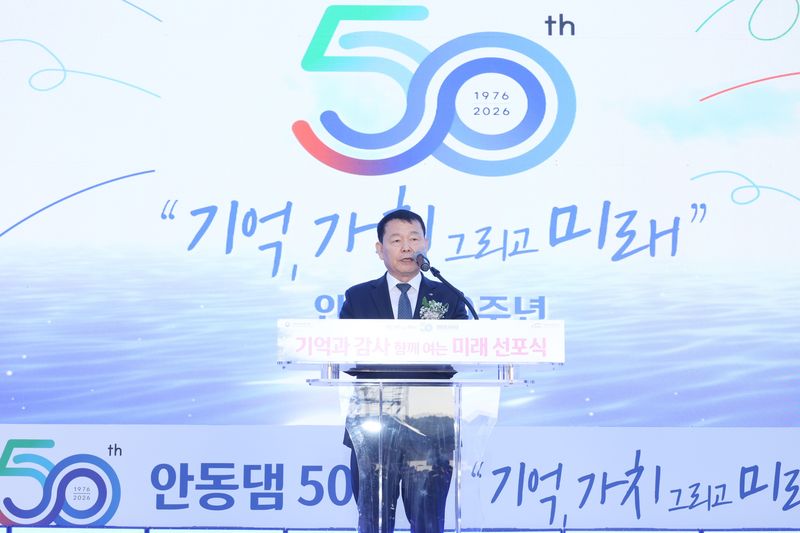
On the 29th, K-water said it had held a ceremony proclaiming “Memories and Gratitude, Opening the Future Together” on the 28th around Andong Dam in Andong-si, Gyeongsangbuk-do.
Completed in 1976, Andong Dam supplies 926 million tons of water annually and has supported water demand in major cities and industrial complexes in the Nakdong River basin. It also supplies irrigation water to 200,000 hectares of farmland.
The dam has a flood-control capacity of 110 million tons, and its 90-MW power facilities have generated 5,830 GWh of clean electricity to date. It has also contributed to local infrastructure, including the development of waterfront areas around Andong Lake and the creation of riverside parks along the Nakdong River and Talchum Park.
The future vision announced that day comprises four core values: increasing flood-control capacity and strengthening safety; smart water management based on AI and digital twins; promoting shared regional growth by making waterfront areas into attractions and restoring ecosystems; and sustainability for future generations.
K-water plans to strengthen its water-management capabilities in response to the climate crisis and develop Andong Lake and nearby waterfront resources into a leading regional brand. It will express its gratitude for the cooperation of the approximately 20,000 people displaced by dam construction and local residents, and expand support for welfare, improvements to living conditions and revitalization of the local economy.
President Yoon Seok-dae said, “Andong Dam is a leading multipurpose dam that has supported stable water management in the Nakdong River basin for the past 50 years,” adding, “Going forward, through AI- and digital-based smart water management and cooperation with the local community, we will develop Andong Dam into a future-oriented water-management model that drives both the supply of clean water and regional growth.”
[email protected] Choi Ga-young Reporter