Hyundai to invest 600 billion won in Alabama plant, expand local production of hybrids and EREVs
- Input
- 2026-10-29 09:16:39
- Updated
- 2026-10-29 09:16:39
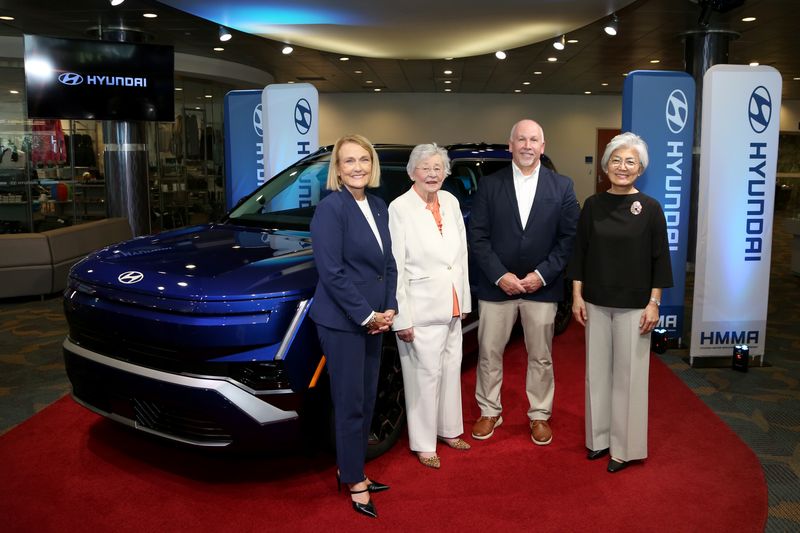
[Financial News] Hyundai Motor Company is accelerating efforts to expand production of hybrid vehicles and extended-range electric vehicles (EREVs), investing an additional 600 billion won at its Alabama plant in the United States. The company will shift production of the Hyundai Tucson Hybrid, currently made entirely in South Korea and exported to the United States, to its U.S. plant, while also building a production base for the next-generation Hyundai Santa Fe EREV. The strategy is seen as a way to reduce the burden of U.S. tariffs while responding to local demand for electrified vehicles.
Hyundai Motor Company said on the 29th that it would invest $450 million (about 604.6 billion won) to strengthen its production capabilities for hybrid vehicles and EREVs at its plant in Montgomery, Alabama, on the 28th (local time).
The investment is part of Hyundai Motor Group’s plan to invest a total of $26 billion in the United States by 2028. Once the additional investment is completed, cumulative investment in Hyundai Motor Manufacturing Alabama (HMMA) will rise to about $2.2 billion.
The funds will go toward expanding facilities for new engine production, building equipment to apply EREV technology, and upgrading production lines for next-generation vehicles. In particular, the company plans to strengthen its powertrain manufacturing capabilities so it can produce locally a range of engines used in hybrid vehicles and EREVs.
The key focus is localizing production of the Hyundai Tucson Hybrid. The model currently sold in the United States is produced entirely at the Ulsan plant and exported. With the Alabama plant set to produce the hybrid model in addition to the internal-combustion Tucson, it will be able to respond more flexibly to demand in the U.S. market. The burden of U.S. import tariffs on vehicles produced in South Korea is also expected to decline.
Hyundai is also moving to establish a production base for EREVs. It plans to produce the Hyundai Santa Fe EREV at its Alabama plant. An EREV is powered by an electric motor, while its internal-combustion engine serves as a generator to recharge the battery. Hyundai aims to launch the Santa Fe EREV in the first half of next year and achieve a range of at least 960 km on a single charge and refueling.
HMMA has also begun preparations to produce the next-generation Tucson and refreshed Santa Fe models. It plans to introduce new equipment and dies, improve production infrastructure, and expand its capacity for mixed production of vehicles with various powertrains.
Hyundai Motor Company President and CEO José Muñoz previously unveiled plans to produce the Hyundai Tucson Hybrid and Hyundai Santa Fe EREV in Alabama at the 2026 Automotive News Congress, held in Detroit, United States, last month.
Mark Rader, HMMA’s chief operating officer (COO), stressed, “This investment will strengthen our manufacturing capabilities and support future-vehicle production, while providing a foundation for the Alabama plant to continue serving as Hyundai’s key North American production hub.”
Alabama Governor Kay Ivey said, “Hyundai and Alabama have maintained a successful partnership,” adding, “This major investment will further strengthen the partnership between the two sides.”
[email protected] Kim Dong-ho Reporter