Sold a home to younger sibling, bought it back, and used corporate funds to buy property ... 678 suspected illegal real estate transactions
- Input
- 2026-10-29 11:00:00
- Updated
- 2026-10-29 11:00:00
On the 29th, the Ministry of Land, Infrastructure and Transport said that its investigation of direct home transactions nationwide and apartment transactions in Seoul and Gyeonggi Province reported over the one-year period from March last year through March this year found a total of 678 suspected illegal transactions: 351 and 327, respectively.
In its investigation of direct home transactions nationwide, the ministry used an AI-based screening system and other methods to identify 741 unusual transactions for review. Among these, it identified 424 suspected violations across 351 transactions suspected of being illegal. If multiple legal violations are suspected in a single transaction, the relevant agencies are notified of each suspected violation.
By type, disguised gifts and excessive borrowing from related parties were the most common, with 275 cases. There were 122 cases involving false reports of prices or contract dates, among other things, and 16 involving misuse of loan funds for purposes other than those intended. The investigation also identified six cases of suspected nominee ownership, four violations of the Licensed Real Estate Agents Act, and one suspected case of jeonse fraud.
Seoul accounted for 224 cases, or 64% of the suspected illegal direct transactions nationwide. The three Gangnam districts (Gangnam, Seocho and Songpa) accounted for 140 cases, equivalent to 40% of the nationwide total and 63% of Seoul’s total.
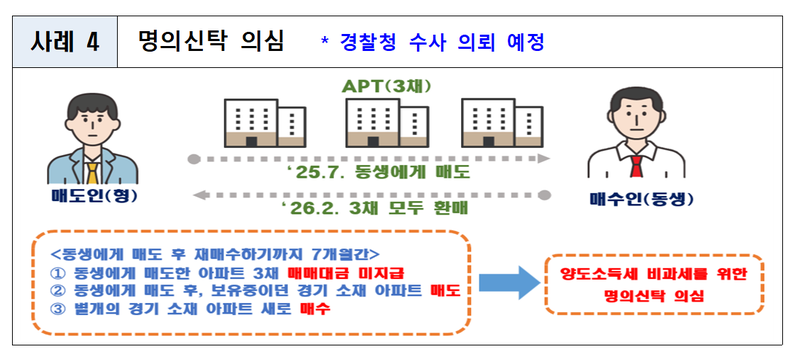
In one major case, a seller who owned four homes sold three apartments in North Gyeongsang Province directly to a younger sibling in July last year, then bought them back in February this year. In the meantime, the seller sold another apartment they owned in Gyeonggi Province to a third party. Based on factors including the fact that no payment was actually made between the siblings, the Ministry of Land, Infrastructure and Transport suspects nominee ownership intended to secure a capital gains tax exemption for a household owning one home, and plans to refer the case to police for investigation.
The number of reports of suspected illegal practices, including disguised gifts through direct transactions between related parties, has risen every year over the past four years, from 23.4% in 2022 to 51.9% this year.
In another case, a buyer purchased a detached house in Gyeonggi Province for 585 million won from a corporation the buyer heads. The buyer borrowed 540 million won of the purchase funds from the corporation, then signed a lease agreement naming the corporation as the tenant, with a deposit of 540 million won, using the deposit to settle the loan. The ministry considers this an excessive deposit transaction between related parties and plans to notify the National Tax Service (NTS).
Another corporation borrowed 930 million won ostensibly for business operating expenses and used the money to buy a mixed-use residential and commercial property owned by its representative for 645 million won. The case will be reported to the Ministry of the Interior and Safety on suspicion that the loan was used to buy a home unrelated to the business.
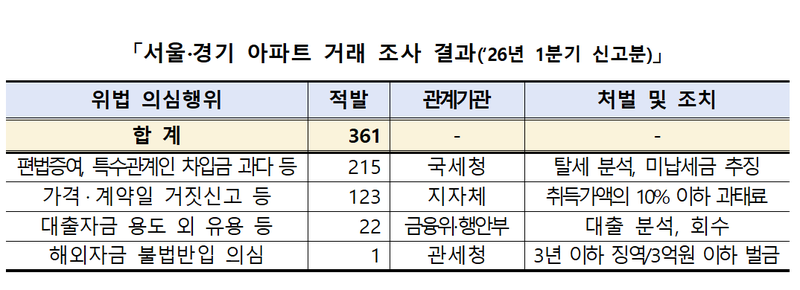
The Ministry of Land, Infrastructure and Transport plans to notify the National Tax Service, local governments, financial authorities, police and other relevant agencies of the findings so that follow-up measures can be taken, including tax collection, fines, loan recovery and investigations.
Kim Young-guk, head of the Housing and Land Office, said, “We will continue to actively conduct targeted investigations into direct transactions as well as brokered transactions, and respond firmly to illegal transactions to establish a sound order in real estate transactions.”
[email protected] Choi Ga-young Reporter