Samsung SDI posts 407.8 billion won in Q3 operating profit, its highest in 12 quarters
- Input
- 2026-10-29 09:09:48
- Updated
- 2026-10-29 09:09:48
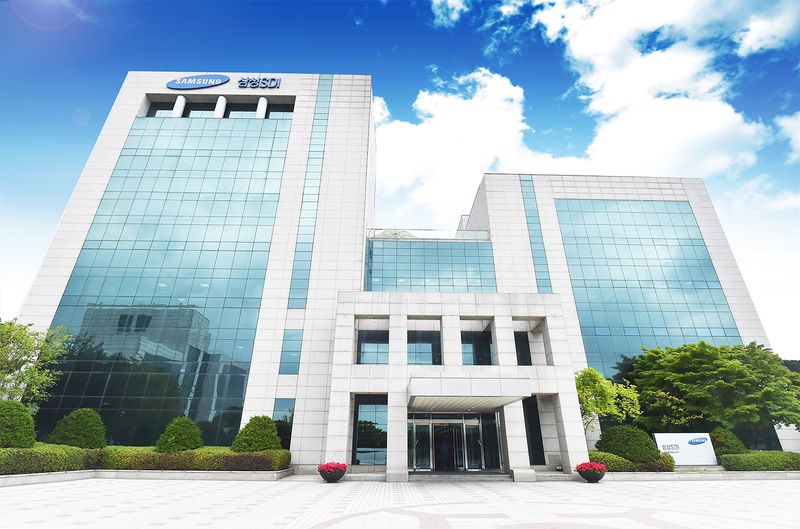
On the 29th, Samsung SDI announced these preliminary consolidated results. Revenue rose 52.6% from 3.0714 trillion won in the same period last year and 20.9% from 3.8765 trillion won in the previous quarter. Operating profit was about twice the previous quarter’s 203.8 billion won. Net profit was 342.2 billion won.
By business segment, the battery division’s revenue rose 55.3% year over year to 4.4099 trillion won, and it swung to an operating profit of 361.9 billion won. Samsung SDI said results improved as sales of energy storage systems (ESS) and battery backup units (BBUs) rose sharply, driven by growth in the global AI data center market, while sales of cylindrical batteries for power tools and electric vehicles also increased.
The electronic materials division posted revenue of 275.7 billion won and operating profit of 45.9 billion won, up 18.9% and 18.3%, respectively, from the same period last year. Sales of semiconductor patterning materials and display film materials for foldable smartphones increased.
Samsung SDI cited stronger leadership in the U.S. ESS market, the launch of its LFP (lithium iron phosphate) battery business, and progress in next-generation technologies and new applications as its third-quarter achievements. It strengthened its local production and supply system for its U.S. ESS business and has secured orders totaling at least 60 GWh so far this year. The company plans to use its Synergy Cells plant in Indiana as a production hub for ESS batteries, which are in high demand, and expand the facility in stages. It has also signed long-term supply agreements for LFP cathode materials with major domestic materials suppliers to meet U.S. demand for alternatives to Chinese supply.
This month, the LFP business began mass production of high-capacity prismatic LFP cells at its StarPlus Energy (SPE) plant in the United States. In Europe, it secured an LFP battery project for electric vehicles and is continuing to pursue additional orders. It recently also unveiled cylindrical LFP cells for BBUs.
The company is also accelerating the development of next-generation technologies. It shipped solid-state battery samples for humanoids and continued customer evaluations and preparations for commercialization. Its cylindrical batteries secured new customers in areas including aerospace and humanoids.
Samsung SDI expects growth in the ESS market to continue in the fourth quarter. It forecasts rising electric vehicle demand in Europe, while the U.S. market slowdown is expected to persist for the time being. Accordingly, it plans to accelerate the conversion of its U.S. LFP battery lines and finalize within the year long-term supply agreements currently under discussion for grid-scale ESS and uninterruptible power supply (UPS) systems. It will also participate in the third domestic Central Contract Market tender.
For electric vehicle batteries, the strategy is to proceed as planned with the establishment of mass-production lines and a supply chain at its production hub in Hungary, and to secure new orders by diversifying its product portfolio to include high-nickel, LFP, and mid-nickel batteries. For small batteries, the company will expand its lineup, including cylindrical LFP batteries, increase volumes for global cloud service providers (CSPs), and seek new customers. The electronic materials business will focus on expanding sales of semiconductor patterning materials and entering new platforms for OLED materials.
A Samsung SDI representative said, “We will continue to pursue profitable mid- to long-term growth,” adding, “We expect the ESS and small battery businesses to maintain solid growth in the fourth quarter and to continue generating profits.”
[email protected] Kim Dong-chan Reporter