Top concern for new-car buyers: “No confidence they’re getting the lowest price” ... 85% of car owners experience damage after delivery
- Input
- 2026-10-29 09:01:15
- Updated
- 2026-10-29 09:01:15
On the 29th, Chabot Mobility reported the results of its “Vehicle Purchase and Maintenance Perception Survey,” conducted among around 300 current car owners and people planning to buy a new car within a year. The biggest concern when buying a car was “not being sure it’s the lowest price” (59%). This was followed by difficulty comparing financing options (installment plans, leases and cards) (45%), delivery wait times (29%), and a lack of trust in salespeople and dealers (29%).
The most-wanted benefit was a “discount on the vehicle price” (72%). This was followed by vehicle maintenance services after delivery (12%) and gift certificates or other cash-equivalent gifts (7%). Chabot Mobility said its analysis showed that consumers want bigger discounts but find it difficult to judge whether the price and terms they received are the best available.
The influence of benefits on decision-making, measured on a five-point scale, was higher for “choice of where to buy” (3.46) than for “choice of brand and model” (3.29). Among imported-car owners, the influence on where to buy reached 4.18. Chabot Mobility said this suggests that benefits come into play when consumers decide where to buy after choosing a model.
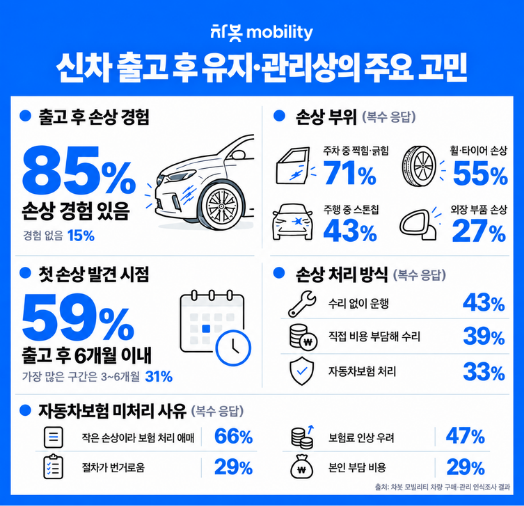
Eighty-five percent of vehicle owners said they had experienced damage after taking delivery. Among those who had experienced damage, dents and scratches sustained while parking were most common (71%), followed by wheel and tire damage (55%), stone chips while driving (43%), and damage to exterior parts such as side mirrors and bumpers (27%). The most common time for first noticing damage was three to six months after delivery (31%), while 59% said they noticed damage within six months.
The most common way of handling damage, with multiple responses allowed, was “driving without repairs” (43%). “Paying for repairs out of pocket” accounted for 39%, and “filing a claim through auto insurance” for 33%. The most common reason for not filing an insurance claim was that “the damage was minor, making it unclear whether to file a claim” (66%). This was followed by concerns about higher premiums (47%), the hassle of the claims process (29%), and out-of-pocket costs when filing a claim (29%). Sixty-one percent said the burden of damage and repair costs after delivery was “high.”
Under the same pricing terms, 58% said they would choose a dealer offering a 300,000-won gift certificate, compared with 26% who would choose one offering “repair-cost coverage for damage for 100 days after delivery.” This indicates that cash-equivalent benefits are still preferred. However, among those planning to buy a new car within a year, 44% chose repair-cost coverage—twice the share who chose a gift certificate (22%). Among respondents who said repair costs were a heavy burden, 31% chose repair-cost coverage, about twice the share among those who said the burden was moderate or lower (17%). Sixty-one percent also agreed that “the practical usefulness of new-car benefits matters more than their monetary value.”
A Chabot Mobility representative said, “This survey confirmed that new-car buyers’ concerns do not end when they sign the contract but continue into everyday life after delivery. Consumers want not only a discount but also confidence that the terms they received are the best available, as well as peace of mind about unexpected repair costs after delivery.”
The representative added, “In particular, minor damage that is not clear-cut to handle through insurance occurs frequently, but drivers often have to deal with it on their own. Chabot plans to continue expanding ‘zero-risk commerce’ to reduce risks after purchase, from transparent quote comparisons during the new-car buying process to Chabot Care, which eases the burden of repair costs for everyday damage after delivery, such as stone chips, dents and scratches.”
[email protected] Kim Dong-chan Reporter