Spain declares mourning after its worst train disaster in 13 years... setback ahead of general election
- Input
- 2026-10-29 09:55:26
- Updated
- 2026-10-29 09:55:26
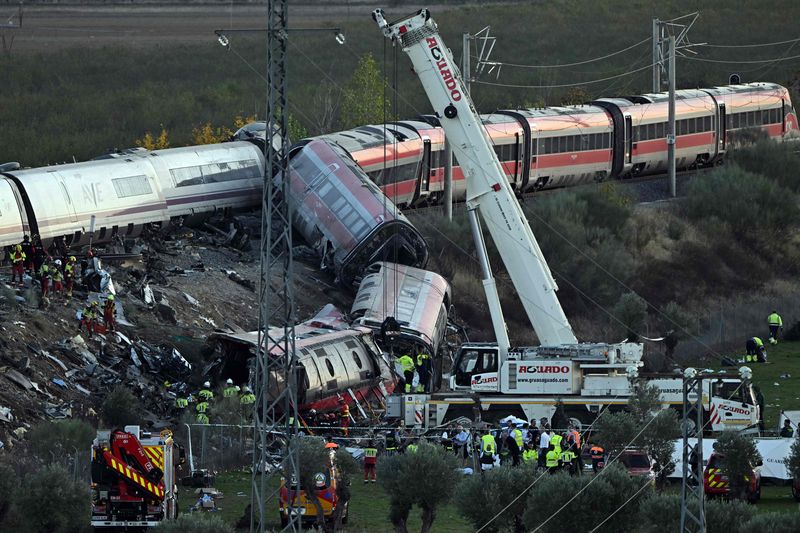
[Financial News] Spain has declared a period of national mourning after a train disaster—the worst in Europe in about 13 years—occurred in the country. The incident, which left Koreans among the injured, is expected to be a setback for the Spanish government ahead of next month’s general election.
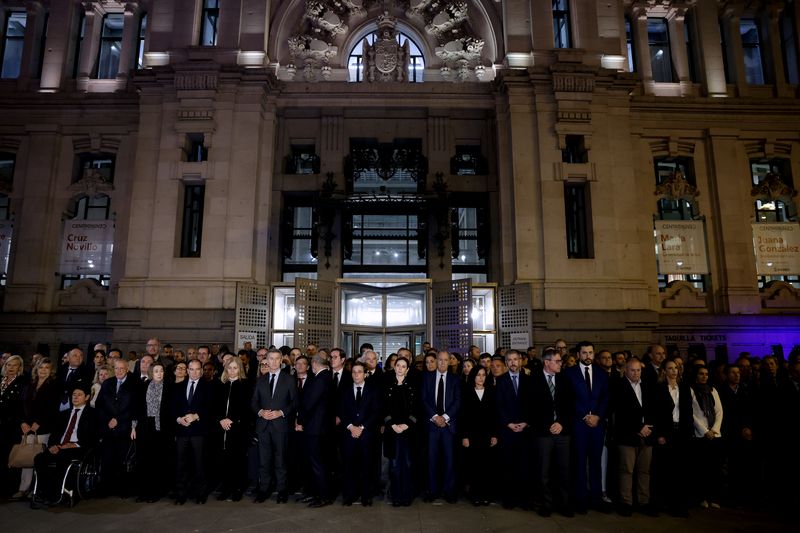
According to the Associated Press and other foreign media, Spanish Prime Minister Pedro Sánchez declared three days of national mourning starting on the 29th, saying near the crash site on the 28th (local time), “Today, all of Spain is plunged into grief.”
At 8:54 a.m. that day, two trains collided on the southbound track near Urda in Toledo province, part of the autonomous community of Castile-La Mancha, southwest of Spain’s capital, Madrid. The trains had departed from Madrid and were heading to Seville in the southern region of Andalusia. At the time of the crash, a high-speed train (AVE) operated by state-owned Spanish railway company Renfe rear-ended a train operated by private railway company Iryo, which was stopped on the tracks, at about 200 km/h.
According to Spanish transport authorities, the crash occurred while all train services on a 69-km stretch, including the site of the accident, were suspended because of a technical fault in the automatic control system. The Renfe train resumed service before the system responsible for the problem had been restored, and struck the stopped private train after traveling 25 km.
Local media reported that at least 68 people were killed and 179 injured in the crash. Ester Padilla, a spokesperson for the regional government of Castile-La Mancha, said that 397 people were aboard the Renfe train and 147 the Iryo train, for a total of 544 people involved in the crash. Of the injured, 58 were taken to hospital, 15 of them in critical condition. According to the South Korean Embassy in Spain, 10 Koreans were aboard the two trains, and two were injured and received hospital treatment.
The crash had the highest death toll of any train accident in Europe since a high-speed train derailed near Santiago de Compostela in northwestern Spain in 2013, killing 80 people and injuring 145. Concerns about infrastructure maintenance are growing in Spain, which operates Europe’s largest high-speed rail network, with a total length of about 4,000 km, after another high-speed train accident in January. At the time, two high-speed trains collided near Adamuz in Córdoba province, Andalusia, killing 46 people and injuring at least 150.
On the 28th, Sánchez promised a thorough investigation into the cause of the accident and said that the successive occurrence of two major train disasters this year was “unacceptable.” He faces an early general election on the 29th of next month, while support for his ruling Spanish Socialist Workers’ Party (PSOE) is under pressure from the right-wing People’s Party and the far-right Vox.
Immediately after the crash that day, the People’s Party posted a message on social media platform X saying, “Enough is enough.” The party’s leader, Alberto Núñez Feijóo, said, “The Spanish people have a right to know what is happening to their country’s infrastructure.” Vox leader Santiago Abascal denounced the Sánchez government as a “criminal organization,” then said, “We will continue our work exposing the deterioration of public facilities and services.”
That day, protesters gathered outside the Transport Ministry building in Madrid to criticize the Sánchez government. The largest labor union, CSIF, also called for Transport Minister Óscar Puente to resign and take responsibility for the high-speed train collision. That same day, Puente said that the reason the Renfe train was moving during the crash was “a matter for the control center,” adding that he did not understand why it had made that decision.
[email protected] Park Jong-won Reporter