‘Final Interview’ makes the cut with a clever premise, genre thrills and comfort for young people [This Movie]
- Input
- 2026-10-29 09:13:02
- Updated
- 2026-10-29 09:13:02
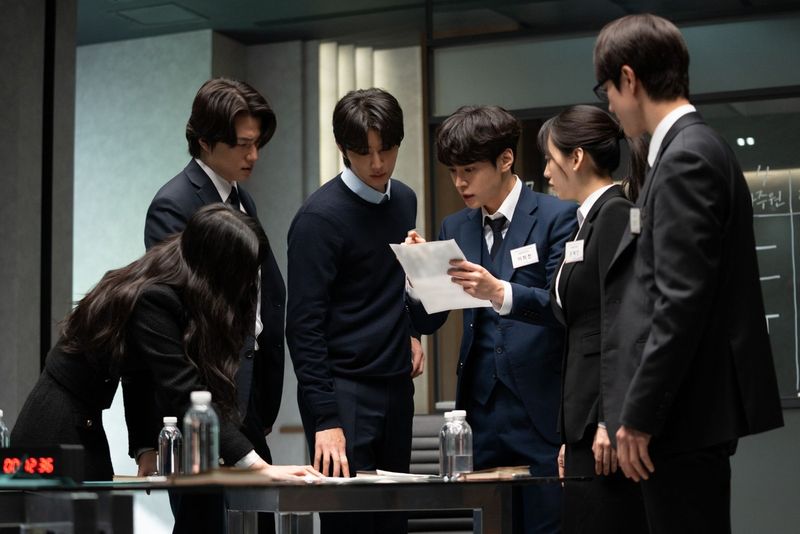
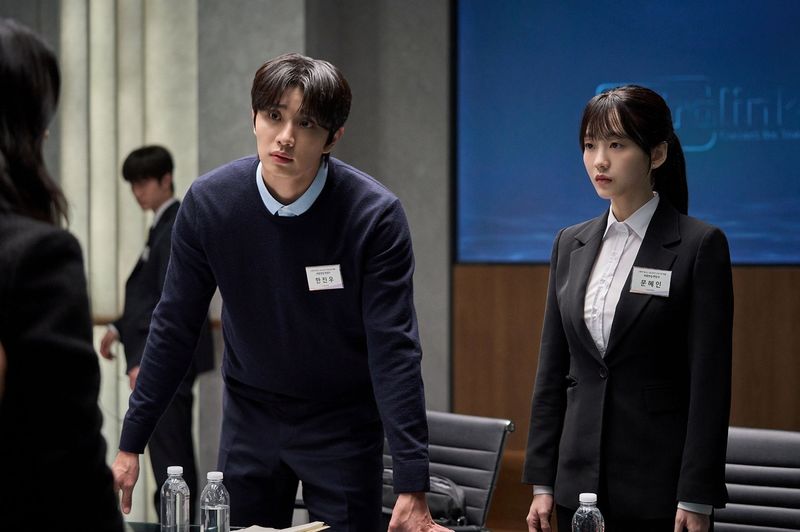
[Financial News] Only one of the colleagues who have worked together for a month will survive. The applicants themselves decide who gets the job. Opening on November 4, director Kim Jung-hoon’s ‘Final Interview’ adds an ingenious premise to the familiar reality of job hunting, delivering both genre thrills and warm consolation in a locked-room psychological thriller and suspense drama.
From colleagues to competitors: a battle of revelations rocks the interview room
Competition has become part of everyday life. It is no longer unusual to see colleagues who work together on various survival programs turn into enemies they must eliminate the very next moment. The film also reflects a social climate in which, as soon as someone makes an accusation against another person, people rush to condemn them before even looking into the story behind it.
The film is set during the COVID-19 pandemic. Even amid an infectious disease that upended daily life around the world, young people put on masks and entered the job market. The six applicants who make it to the final interview at a global IT company are talented candidates who beat odds of 5,000 to 1. Having grown close while preparing for team discussions over the course of a month, they dream of all being hired. But the task they receive on interview day is coldly simple: hold a discussion and vote within the two-hour time limit, then choose just one successful candidate.
The film is broadly divided into a first half showing what happened in the interview room and a second half that investigates the truth about that day. Driving the first half is a mysterious envelope discovered by the applicants as they discuss how to choose the successful candidate. Inside each envelope, marked with one of their names, is another person’s past—something they would rather keep hidden. With each envelope that is opened, the trust they have built begins to falter, and the way they look at one another changes.
What revelation will the next envelope contain? How will the person singled out react? Above all, who brought the envelopes there, and why? The two-hour time limit, five rounds of voting and repeated twists heighten the tension. The audience, too, joins in the mystery, taking turns suspecting each of the six people.
The interviewers’ interest as they watch the applicants on monitoring cameras adds a bitter note. For the applicants, this is a desperate moment with their lives on the line, but for someone offscreen, it is entertaining to watch. It is no different from the way people consume others’ lives online.
It is also clever to intercut the story with someone investigating what happened years later. Even as viewers become absorbed in the situation in the interview room, they find themselves wondering what came of that day to prompt someone to revisit it after all this time.
The second half retraces the events of that day while pursuing the culprit. What comes to light is not just the culprit’s identity. The film gradually reveals what lay behind the revelations that drove the applicants into a corner, and what context was missing from the words and actions seen in the interview room. At this point, the film’s mystery gives way to compassion and consolation for the realities facing young people. The tone becomes more emotional than in the first half, leaving one curious about how younger audiences will respond.
The truth revealed after a series of twists, and a warm gaze toward young people
With its straightforward title, ‘Final Interview’ stands out for combining the realistic subjects of job hunting and interviews with the mystery genre. The desperation of young people driven into a fierce job market and a race to build up their credentials adds both immersion and credibility to the psychological battle in the interview room.
Above all, the film does not stop at the genre thrills of unmasking the culprit. It holds compassion for young people pushed into competition until even friendship has become a luxury, a critical view of today’s social climate, and questions about how to live in such a reality. Its message seeps in as gently as the moonlight Han Jin-woo (played by Kim Jae-won) says he used to watch while participating in a walking club in college.
The film leaves viewers with the thought that even when people are driven into the same competition, they do not have to treat others the same way or make the same choices. By the time the film ends, viewers find themselves thinking not only about how to survive, but also about what kind of person to be.
It is also a pleasure to see young Korean film actors Cho Yi-hyun, Kim Jae-won, Shin Seung-ho, Kang You-seok, Kwak Dong-yeon and Bae Gang-hee gathered in one place. Their being together is a delight in itself. From Moon Hye-in, who calmly takes stock of the situation, to the idealist Han Jin-woo, action-oriented leader Baek Seung-bin, mediator Lee Hee-chan, strategist Jeon Yo-han and perfectionist Cha Ju-won, the actors each display their distinct personalities as if their roles were tailor-made for them.
Their ensemble raises hopes for a generational shift in Korean theaters. With winning over audiences in their 20s and 30s seen as a major challenge for box-office success, the film is a timely reminder of why fresh faces are needed on screen.
The film was directed by Kim Jung-hoon, whose credits include ‘Petty Romance,’ ‘The Accidental Detective’ and ‘The Pirates: The Last Royal Treasure.’ Kim said, “If the usual locked-room mysteries are films about finding the culprit, ‘Final Interview’ is a film about finding the truth hidden behind the facts.”
[email protected] Shin Jin-a Reporter