Defense Acquisition Program Administration (DAPA) opens Airbus SE’s supply chain, as 100 Korean firms set out to conquer ‘European aerospace territory’
- Input
- 2026-10-29 09:28:37
- Updated
- 2026-10-29 09:28:37
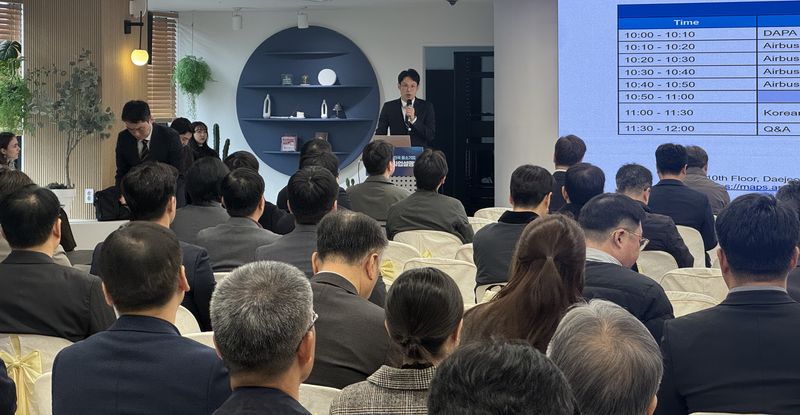
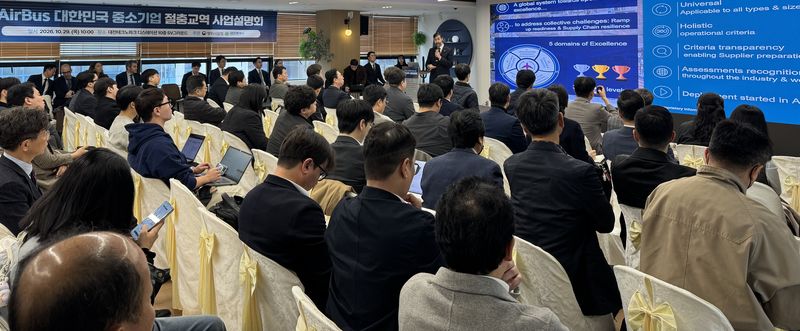
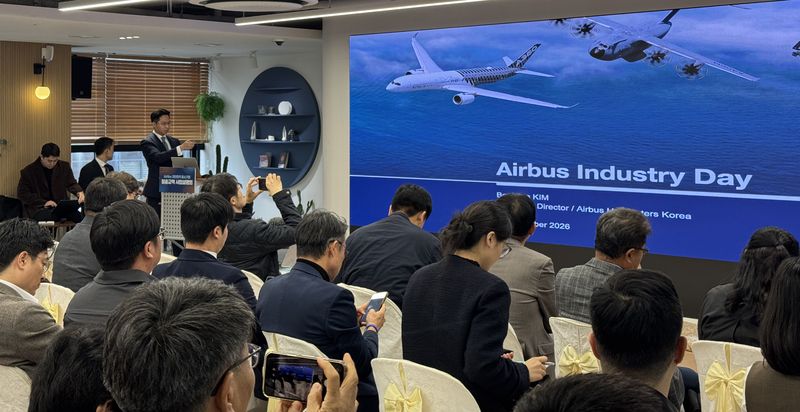
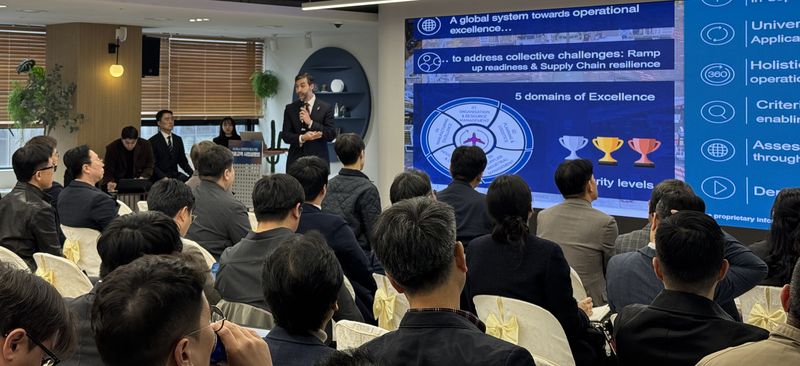
The briefing was organized to strengthen global competitiveness by directly involving outstanding Korean SMEs in Airbus SE’s global supply chain. Airbus SE, which develops and produces military and civilian aircraft and aviation equipment, will share with Korean companies its needs in key advanced fields where it hopes to cooperate in the future, including civilian and military aircraft and space systems. Around 100 representatives of promising Korean SMEs, including government-designated defense innovation companies, will attend and discuss various approaches to long-term technology cooperation and entry into the supply chain.
Lee Hyeong-seok, director general of DAPA’s Defense Industry Promotion Bureau, emphasized, “Offset trade is an important policy tool that goes beyond simply securing compensation, enabling our SMEs to enter global supply chains and strengthen their global export competitiveness.” He added, “We will spare no effort in providing whole-of-government support so that Korean defense companies can work closely with major overseas defense companies.”■ The T-50’s success story of independent design and lessons in technological dependence from major satellite importsDefense experts advised that, to turn this expansion of the Airbus horizon into tangible results, the Korean military must thoroughly revisit the cases it encountered in the history of past offset trade.
A leading success story is the development of the domestically produced T-50 Golden Eagle advanced trainer. At the time, as the Korean government procured frontline fighter aircraft from the United States, it imposed stringent offset trade conditions and secured supersonic aircraft design and systems integration technologies from Lockheed Martin Corporation. This technological foundation later became a decisive seed for Korea Aerospace Industries (KAI) to export domestically built complete aircraft around the world, led by the FA-50 light attack aircraft, including to Poland and Malaysia.
There is also the shadow of painful failures. When large numbers of major military satellites or large platforms for special operations by the Army, Navy and Air Force were imported in the past, overseas defense giants strictly controlled the transfer of key technologies during contract performance, citing security and intellectual property rights. As a result, there have been cases in which the country failed to increase localization rates even after acquiring key capabilities and could not break the cycle of technological dependence, having to pay enormous sums to overseas original manufacturers every time parts needed maintenance or equipment needed performance upgrades.■ What it takes to enter the global value chain... ‘Technology accumulation’ and ‘precise matching infrastructure’Defense experts and industry officials say that an advanced approach by defense authorities and industry is essential if the Airbus offset trade initiative is to move beyond the past practice of ‘low-value implementation centered on simple assembly and processing’ and develop into high-value-added industrial cooperation.
Above all, Korean SMEs and venture companies seeking to enter the supply chain must first secure international standards used in the global aerospace industry, such as AS9100 (Aerospace Quality Management System), as well as their own process-control capabilities. Even if a major global company such as Airbus SE, a prime contractor, looks to Korean firms to meet its institutional obligations (Offset Credit), final inclusion in the supply chain is determined by strict global quality approval standards. Accordingly, rather than simply participating as beneficiaries, Korean companies must first build their own ‘technology accumulation’ by proving they have specialized capabilities that cannot be replaced within Airbus SE’s proprietary value chain.
DAPA, as the policy designer, must also move away from administratively convenient matching and operate a precise ‘company-filtering system.’ From the contract stage, DAPA is responsible for building ‘capability-based matching infrastructure’ that carefully assesses and compares, from multiple angles, the overseas original manufacturers’ genuine technology needs (Tech-Demand) with the actual technological readiness levels (Tech-Readiness Level) of Korean SMEs. Only by establishing a transparent platform that fairly selects qualified, strong SMEs without controversy over lobbying or preferential treatment can the defense offset trade program be expected to deliver on its policy goals: ‘improving the resilience of the domestic defense industry ecosystem’ and ‘securing a lasting export engine.’
[email protected] Lee Jong-yoon Reporter