Is the U.S. trying to rein in South Korea’s National Assembly? Foreign Ministry increasingly concerned as ruling-party lawmakers face repeated visa denials
- Input
- 2026-10-29 07:55:40
- Updated
- 2026-10-29 07:55:40
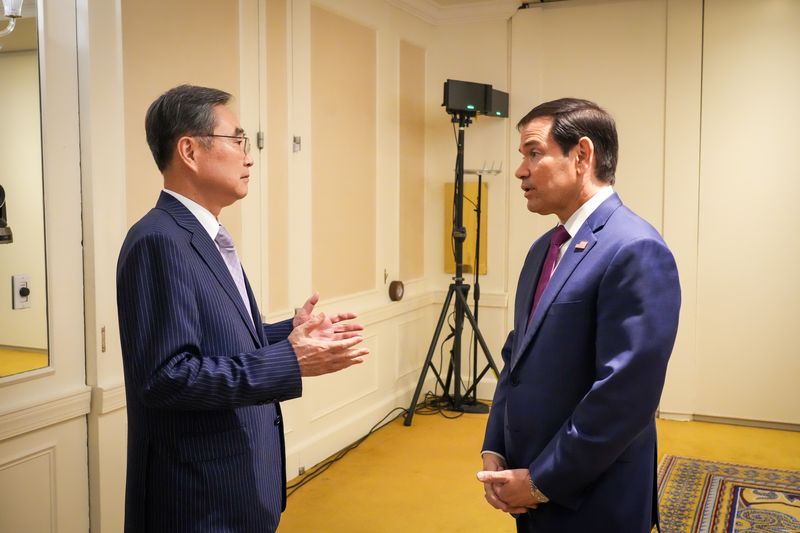
Diplomatic sources said on the 29th that South Korea is expected to express its position on the U.S. denial of entry to South Korean lawmakers at an upcoming meeting between the two countries’ foreign ministers in the United States in the coming days. Foreign Minister Cho Hyun is scheduled to visit Atlanta from the 29th through November 2 to attend the Group of Twenty (G20) Foreign Ministers’ Meeting and meet with U.S. Secretary of State Marco Rubio.
Earlier, during a recent parliamentary audit session of the National Assembly’s Foreign Affairs and Unification Committee, Minister Cho pledged to send the U.S. side a letter protesting the denial of a U.S. visa to lawmaker Chung Cheong-rae.
For now, the Foreign Ministry believes that the U.S. visa denial to lawmaker Jin has not been fully resolved.
A Foreign Ministry official said, “Information related to individual visa applications and screening results is handled confidentially under U.S. domestic law and procedures, and we understand that the relevant process has not yet concluded,” adding, “It is difficult to confirm the details of the screening because the U.S. side does not disclose them.”
The United States has denied visas to some ruling-party lawmakers, citing their past activities, from earlier cases through more recent ones.
Lawmaker Chung’s history of occupying the U.S. Embassy when he was young became an obstacle, while recent critical remarks by lawmaker Jin about General Xavier T. Brunson, commander of U.S. Forces Korea, appear to have become an issue.
Lawmaker Jin, chair of the National Defense Committee of the National Assembly, applied for an A-2 official visa to visit the United States Pacific Command (USPACOM) in Hawaii with committee members from both the ruling and opposition parties, but did not receive the visa.
The National Defense Committee had planned to organize a delegation to visit the U.S. Pacific Command from November 1 to 5 to strengthen South Korea-U.S. security cooperation and discuss ways to develop the alliance. The delegation comprised committee chair Jin as its head, DPK committee secretary Kim Byung-joo, People Power Party committee secretary Lim Jong-deuk, and Reform Party lawmaker Chun Ha-ram. Meetings with key figures, including U.S. Pacific Command chief Admiral Samuel Paparo, had also been confirmed.
Meanwhile, since the Lee Jae Myung administration took office, the U.S. government’s sidelining of South Korean lawmakers and government officials has begun with Unification Minister Chung Dong-young. Minister Chung is also a sitting DPK lawmaker.
The U.S. government has restricted intelligence sharing between South Korea and the United States on North Korea for more than six months, voicing its displeasure with Minister Chung over his leaking of security secrets related to North Korea’s nuclear program. Meanwhile, Minister Chung has been trying to arrange a meeting with U.S. Ambassador to South Korea Michelle Park Steel but has been unable to do so for months. Ambassador Steel has continued meeting with figures in South Korea’s political and business circles, but has conspicuously snubbed Minister Chung.[email protected] Kim Kyung-soo Reporter