U.S. Fed holds rates steady despite high inflation; odds of a December hike at 81%
- Input
- 2026-10-29 06:20:47
- Updated
- 2026-10-29 06:20:47
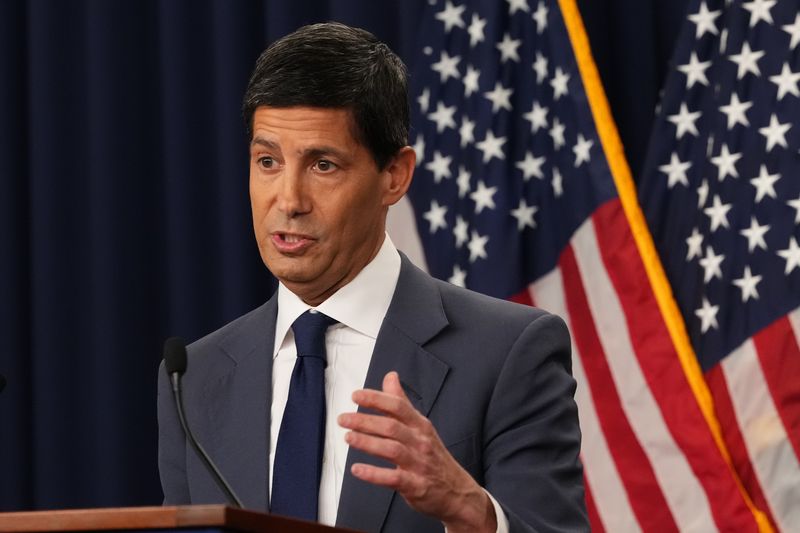
[Financial News, New York — Lee Byung-chul, correspondent]The U.S. Federal Reserve (Fed) held its benchmark interest rate steady in line with market expectations, but internal divisions over monetary policy widened. At the Fed, which raised rates unanimously in September, two members dissented this time, calling for another hike. With inflation still high, Fed Chair Kevin Warsh said long-term inflation expectations appeared stable, while remaining cautious about the future path of rates and saying he would wait for more economic data.
Fed’s unanimity broken...Cook casts first dissent
The Fed held a regular meeting of the Federal Open Market Committee (FOMC) on the 28th (local time) and kept its benchmark interest rate at 3.75–4.00% per year. It opted to pause after raising rates by 0.25 percentage points last month.
The decision was made by 10 votes to 2. Fed Governor Lisa Cook and Federal Reserve Bank of Cleveland President Beth Hammack argued that the benchmark rate should be raised by another 0.25 percentage points.
Cook’s dissenting vote drew particular attention. It was the first time Cook, who was appointed by former President Joe Biden, had dissented in a monetary policy decision since taking office in 2022. The decision also drew attention because it came as President Donald Trump was seeking to remove Cook over allegations related to mortgage applications. Cook denies the allegations.
The divisions within the Fed show that price pressures are not easing easily. In a statement that day, the Fed said, “Inflation remains elevated,” adding, “As additional information accumulates, it will help us assess the appropriate stance of monetary policy to return inflation to our 2% target in a timely manner.”
By contrast, the Fed upgraded its assessment of the U.S. economy. It said economic activity “has been expanding at a strong pace,” a step up from the “solid pace” cited in its September statement. It said consumer spending had remained resilient, while productivity and business investment in equipment continued to show strength.
Warsh: “2% inflation target”...December hike possible
Markets focused on why the Fed had delayed a rate hike despite high inflation and strong growth.
At a press conference that day, Warsh emphasized, “There is no such thing as a softer inflation target. Our price stability goal is 2%, as measured by the Personal Consumption Expenditures Price Index (PCE).” He added, “We have not yet achieved price stability,” reaffirming his commitment to curbing inflation.
He also acknowledged that recent increases in energy prices were putting a strain on consumers. “Consumers are going to gas stations and seeing for themselves that prices have gone up,” Warsh said, adding that “short-term inflation expectations have also risen considerably.”
He was relatively positive, however, about the long-term outlook for prices. “Looking at most long-term indicators, households, businesses and financial markets remain confident that the central bank will achieve price stability,” he explained.
One factor behind the Fed’s decision not to raise rates immediately was its assessment that strong economic growth does not necessarily lead to higher inflation.
“The economy is strong, but most of my colleagues do not think it is overheating,” Warsh said. “Productivity gains may be increasing the economy’s growth potential.” He added, “I don’t think strong economic growth necessarily fuels more inflation and makes it harder to achieve our price stability goal.”
Asked whether the current level of the benchmark rate was appropriate, Warsh replied, “We have not yet reached a firm conclusion,” adding, “If there had been a clear consensus, we would have announced it today.”
Markets are now turning their attention to December, when the year’s final FOMC meeting will be held. Futures markets are pricing in a strong likelihood of another 0.25-percentage-point hike in December. Michael Pearce, chief U.S. economist at Oxford Economics, told CBS News, “The two dissents advocating a rate hike, the wording of the monetary policy statement and the Fed officials’ earlier comments all point to a December rate hike.” According to the Chicago Mercantile Exchange (CME) FedWatch Tool, following the Fed’s announcement that day that it would hold rates steady, markets put the probability of a 0.25-percentage-point hike in December at 81.4%. That was up 6.3 percentage points from 75.1% on the previous morning.
Warsh did not, however, lay out a specific path for interest rates. “Unless we are in a crisis, I don’t think forward guidance is helpful,” he said, adding, “We can’t say in advance what will happen six weeks from now.” He emphasized, “With more information over the next six weeks, we will be in a better position to make appropriate monetary policy decisions.”
Warsh also announced a plan to gradually reduce the number of FOMC meetings at which rates are decided. The total number of meetings each year will remain at eight, but one meeting in 2027 and two in 2028 will be devoted solely to discussions of monetary policy strategy. As a result, the number of meetings at which rates are actually decided is expected to fall to seven next year and six in 2028.
[email protected] Lee Byung-chul, correspondent Reporter