U.S. Fed holds rates steady despite inflation pressures; Warsh: “Need to keep watching”
- Input
- 2026-10-29 04:31:13
- Updated
- 2026-10-29 04:31:13
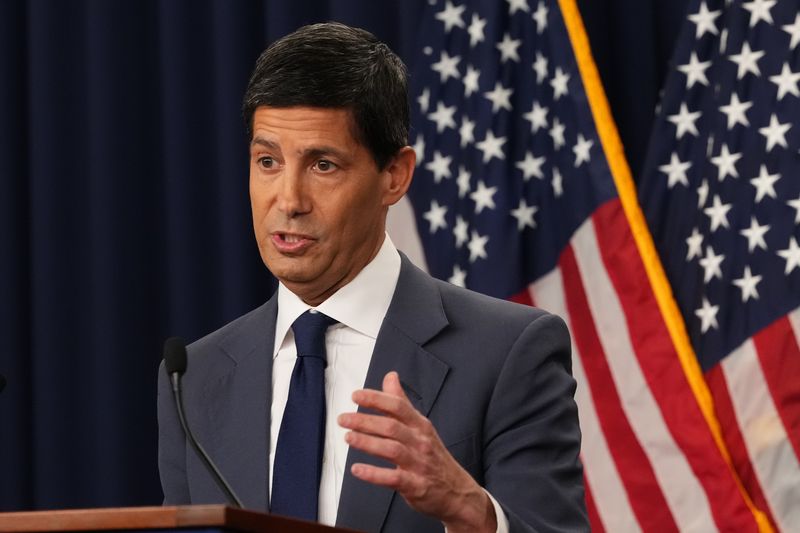
At a press conference after the Federal Open Market Committee (FOMC)’s regular meeting on the 28th (local time), Fed Chair Warsh emphasized, “There is no such thing as a more accommodative inflation target. Our price-stability goal is 2%, based on the Personal Consumption Expenditures (PCE) price index.”
“Inflation has affected consumers over the past six years,” he said, adding, “Consumers can see for themselves at gas stations that prices have actually gone up.” He continued, “Short-term inflation expectations have risen considerably, but long-term indicators show that households, businesses and financial markets continue to believe the central bank will achieve price stability.”
He stressed that more information was needed to explain why rates had not been raised despite high prices. Asked whether the current interest-rate level was appropriate, Warsh replied, “We have not yet reached a firm conclusion,” adding, “If there had been a clear consensus, we would have announced it today.”
The Fed held its benchmark interest rate at 3.75%–4.00% a year. However, two of the 12 FOMC members—Fed Governor Lisa Cook and Beth Hammack, president of the Federal Reserve Bank of Cleveland—dissented, arguing for a 0.25-percentage-point increase.
Warsh said policy is focused on preventing price pressures stemming from the recent rise in oil prices from spreading across the broader economy. “The goal is to keep relative price changes in some sectors from spreading through the economy as a whole and to ensure that inflation expectations remain stable,” he explained.
He also stressed that strong growth in the U.S. economy does not necessarily mean further inflation. Warsh said, “The economy is strong, but most of my colleagues do not think it is overheating,” adding, “Productivity gains may have increased the economy’s growth potential.”
He said, “I don’t think strong economic growth necessarily fuels more inflation and makes it harder to achieve our price-stability goal,” adding, “We don’t want people to lose their jobs or the economy to weaken.”
He made clear that increased investment in artificial intelligence (AI) was not beyond the reach of interest-rate policy. Warsh said, “Interest rates affect almost everything, directly or indirectly,” adding, “AI investment is not separate from the economy either.” He explained that financial conditions had tightened somewhat recently and that investor decision-making had also shifted.
He avoided giving specifics about when rates might be raised. Warsh said, “Unless there is a crisis, I don’t think forward guidance is helpful,” adding, “I can’t say in advance what will happen six weeks from now.”
[email protected] Lee Byung-chul, correspondent Reporter