At least 68 killed in Spain high-speed train collision; signal failure and ‘control-room error’ behind disaster (roundup)
- Input
- 2026-10-29 01:06:21
- Updated
- 2026-10-29 01:06:21
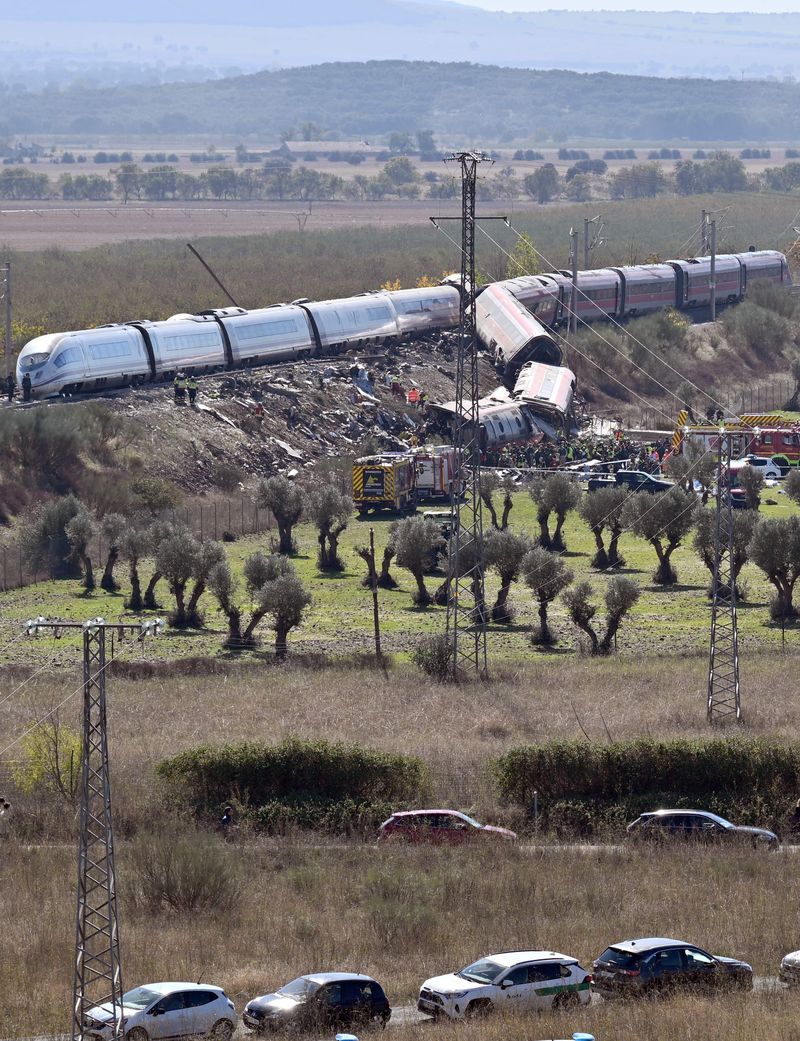
[Financial News] At least 68 people were killed in a major disaster when two high-speed trains collided near Toledo in central Spain. A faulty order from the control center to resume operations amid a railway signaling system failure is believed to have caused the crash. Two of the 10 Korean nationals aboard the trains were also confirmed injured.
■ Disaster caused by reckless order to resume operations amid signal failure
At around 8:54 a.m. on the 28th (local time), a high-speed train operated by state-owned railway company Renfe rammed the rear of an Iryo train, run by private railway company Iryo, which was stopped on the tracks in the Urda area near Toledo, in the Castile-La Mancha region, about 120 km south of Madrid, Spain. The impact sent several carriages of the Iryo train off the tracks and down an embankment, badly damaging them.
According to Spain’s Transport Minister Óscar Puente, a computer error in the train signaling system had caused trains in the area to stop automatically shortly before the crash. However, the control center of Adif, Spain’s railway infrastructure manager, wrongly instructed the Renfe train to resume operations without a speed limit, even though the red signal prohibiting train movement was still on. The Renfe train is believed to have traveled about 25 km at around 200 km/h before rear-ending the train stopped ahead.
■ At least 68 dead; two Korean passengers injured
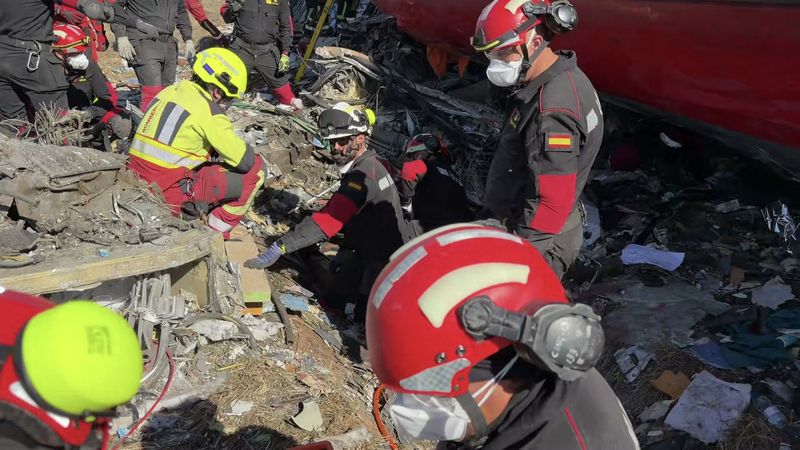
A total of 544 people were aboard the two trains at the time of the crash (397 on Renfe and 147 on Iryo). The regional government of Castile-La Mancha said at least 68 people had been killed and 58 were receiving treatment in hospital so far. Military units, helicopters and heavy equipment have all been deployed to search the damaged carriages, and the casualty toll is feared to rise further.
Ten Korean nationals were also confirmed to have been aboard the trains. The South Korean Embassy in Spain said a consul dispatched to the scene checked the passengers in person, one by one, and confirmed that two of the 10 were injured (one lightly and one with a jaw injury) and had been taken to hospital for treatment, while the other eight were safe. Earlier reports gave conflicting figures for the number of injured Koreans, ranging from six to nine, amid confusion at the scene, but the final count was two.
■ Spain reeling from another major disaster just nine months later; European countries mourn
Spanish society was deeply shocked that another major rail disaster had occurred just nine months later. In January, trains operated by the same two railway companies collided near Adamuz in southern Córdoba province, killing 46 people.
Pedro Sánchez, Spain’s prime minister, postponed all campaign events ahead of an early general election and held a news conference near the crash site. He said, “It is unacceptable for a country like Spain to have two high-speed rail accidents in a single year,” and promised a thorough investigation, saying, “If there was negligence, we will make sure it is uncovered and take action as decisively as possible.”
The international community also expressed its condolences following the disaster. European Commission President Ursula von der Leyen expressed solidarity, calling it “a heartbreaking tragedy,” while European leaders including French President Emmanuel Macron and Italian Prime Minister Giorgia Meloni pledged their full support.
[email protected] Park Ji-hyun Reporter