“Park Chung-hee behind the shooting of Yuk Young-soo? I couldn’t even bear to imagine it” ... ‘Assassin(s)’ director Hur Jin-ho explains
- Input
- 2026-10-29 04:40:00
- Updated
- 2026-10-29 04:40:00
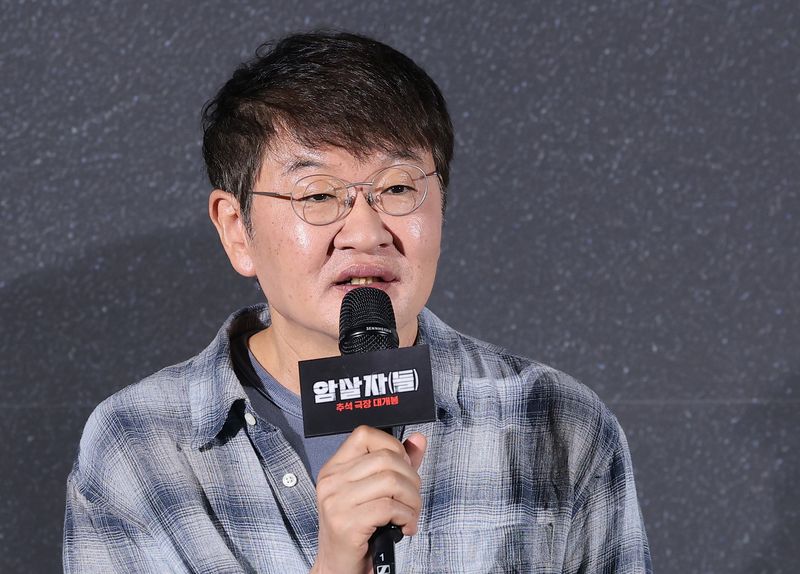
[Financial News] Director Hur Jin-ho said that he had never portrayed former President Park Chung-hee as being behind the shooting of Madam Yuk Young-soo in the film ‘Assassin(s),’ which has been at the center of controversy over historical distortion. He explained that he had excluded that idea from the film from the outset.
Hur appeared on MBC’s current-affairs program ‘PD Notebook’ on the 27th and recalled learning about the shooting of Madam Yuk Young-soo as a child. He said, “Madam Yuk Young-soo died when I was in fifth grade. At the time, I think not only my parents but also my older sisters and I were very sad,” adding, “It seemed the whole country was overcome with grief, and I kept remembering the incident.”
He said that after watching documentaries about the incident, he began thinking about making it into a film. Hur said, “Then I watched a documentary that had come out at the time, and there was a big gap between the 1974 investigation announcement and what came out in 2005,” adding, “I thought it was a compelling subject that I wanted to explore in a film.”
What Hur focused on was the difference between the 1974 investigation announcement and an investigative documentary broadcast in 2005. He said he chose the subject for his film by comparing the material covered in MBC’s ‘Now I Can Speak’ and SBS’s ‘Unanswered Questions’ with the existing investigation findings.
He made clear that he had never considered from the outset the premise that former President Park Chung-hee was involved in the incident. Hur said, “‘President Park knew about the shooting of Madam Yuk Young-soo and either turned a blind eye to it or planned it himself’—that premise itself didn’t feel right to me. I thought, ‘If I were president, could I order something like that? My own wife?’ I couldn’t even bear to imagine it,” adding, “So I think I started by excluding that part.”
He explained that, in making the film, he tried to address both the past investigation findings and the questions raised later. Hur said, “I think there were people who believed the 1974 investigation announcement was true. But I think new facts also came to light in 2005,” adding, “In a way, major media outlets and historians raised questions about this. I made the film based on those questions and dramatized them.”
Hur said he also drew on testimony from people involved in the incident that was featured in the 2005 documentary. He said, “For the documentary, we actually interviewed so many people, including security officers who were there at the time of the incident, the head of the forensics section, and even the head of security who had been responsible for letting Mun Se-gwang in,” explaining that he built the film around the suspicions raised at the time.
He said there were no reactions at the pre-release screenings that interpreted former President Park Chung-hee as being behind the incident. According to Hur, the film had large-scale preview screenings for at least 20,000 audience members ahead of its release, as well as a press screening. But, he said, no one among those who attended at the time said they had thought of former President Park as the person behind it.
Regarding the controversy over historical distortion that erupted after the film’s release, Hur said, “I’m really curious myself about how things ended up this way.”
According to the Korean Film Council’s integrated computer network, ‘Assassin(s)’ had drawn a cumulative audience of 3,382,132 as of 7 a.m. on the 27th. It continues to rank highest among Korean films at the box office in its sixth week of release.
[email protected] Han Seung-gon Reporter