After Jung Cheong-rae, Jin Sung-joon Also Denied a U.S. Visa; Ruling Party Expresses “Strong Regret”
- Input
- 2026-10-28 19:06:47
- Updated
- 2026-10-28 19:06:47
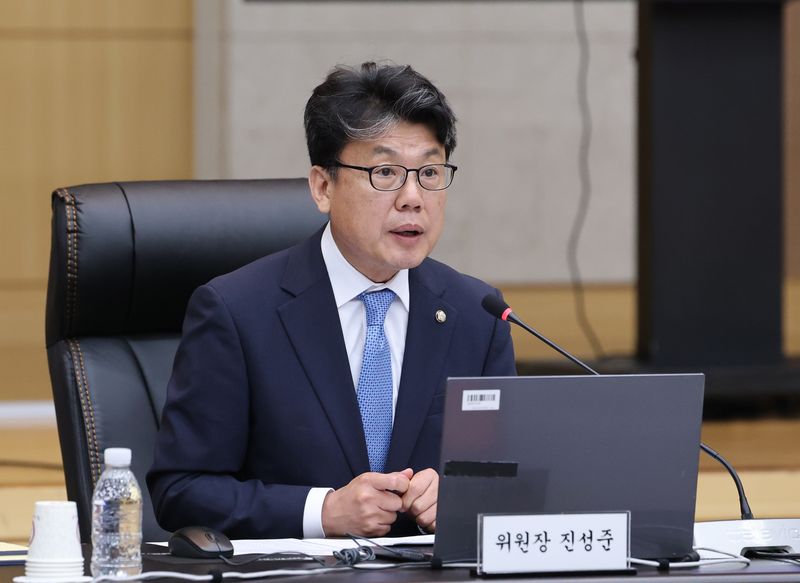
On the 28th, Chair Jin posted on social media (SNS), saying, “The U.S. refusal to issue a visa to the chair of the defense committee of an allied country’s legislature, who is also a lawmaker elected by the people of the Republic of Korea, disregards the standing of the National Assembly of the Republic of Korea.” He expressed strong regret.
The National Defense Committee of the National Assembly’s delegation to the U.S., comprising Chair Jin, Kim Byung-joo, a special adviser on defense policy at the Blue House, People Power Party lawmaker Lim Jong-deuk, Reform Party lawmaker Chun Ha-ram, and others, had been scheduled to visit the United States Pacific Command (USPACOM) from November 1 to 5 to discuss ways to strengthen ROK-U.S. security cooperation and advance the alliance. It was also reported that meetings had been scheduled with senior U.S. military leaders, including Samuel Paparo, commander of U.S. Pacific Command, and the commanders of the Pacific Fleet and the Air Force. The A-2 visa Jin applied for is an official visa issued to foreign government officials and others visiting the United States to perform official duties.
Chair Jin criticized the U.S. refusal to issue a visa to the chair of the National Defense Committee, saying, “This was not simply a restriction on an individual’s entry into the country; it obstructed the National Assembly’s official legislative activities representing the people of the Republic of Korea.” He also pointed out that he had visited the U.S. Pacific Command in March 2014, when he was a member of the National Defense Committee during the 19th National Assembly, and said, “That makes this action even harder to understand.”
In particular, referring to the recent case in which DPK lawmaker Jung Cheong-rae was denied a visa while trying to travel to the United States for a parliamentary audit of the Embassy of the Republic of Korea in the United States of America in his capacity as a member of the National Assembly’s Foreign Affairs and Unification Committee, he stressed, “After constraining the sovereign activities of the National Assembly of the Republic of Korea, the United States is now restricting even legislative activities aimed at advancing the ROK-U.S. alliance. I once again express my strong regret.”
Lee Yong-woo, a lawmaker from the same party, also wrote on social media (SNS) that day, “It is difficult to understand that an ally would block a visit intended to strengthen the alliance,” and urged, “The U.S. government should promptly rectify this.” He added, “I hope our government, too, will take active steps through diplomatic channels,” calling for a diplomatic response at the government level.
[email protected] Jiwon Song Reporter