[Editorial] Semiconductor firms post record profits: Invest before returning money to shareholders
- Input
- 2026-10-28 18:40:09
- Updated
- 2026-10-28 18:40:09
The two companies also announced plans to return a total of 210 trillion won to shareholders. This is welcome insofar as it provides shareholders with ample compensation. But concerns are being voiced that, after paying out hefty incentives to employees, the companies may be popping the champagne too early with their shareholder returns as well. In other words, securing sufficient funds for future investment in preparation for a downturn in the semiconductor market should take precedence over shareholder returns.
The results were driven by demand for AI memory and rising prices. Samsung Electronics and SK Hynix have reportedly sold virtually all their DRAM and high-bandwidth memory (HBM) output, and are even receiving requests for long-term supply contracts from major Chinese cloud companies. Semiconductors also played a major role in helping gross domestic product (GDP) grow 1% in the third quarter from the previous quarter.
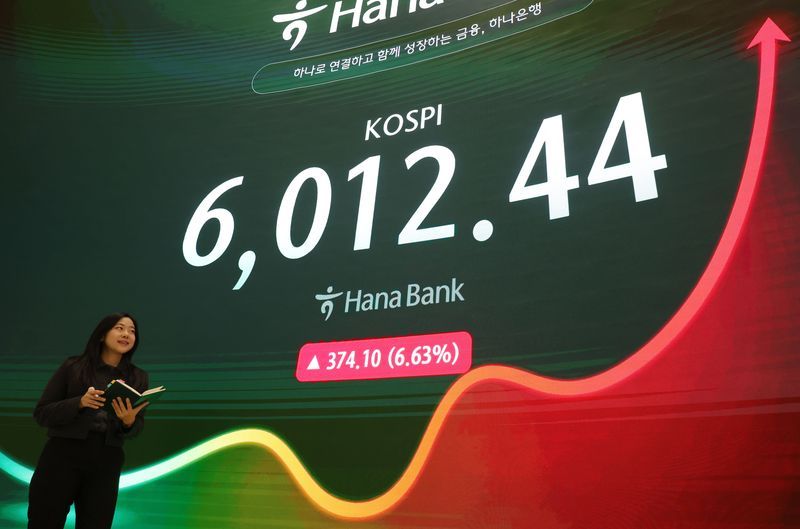
The market responded more to shareholder returns than to the scale of the companies’ earnings. In response to news that SK Hynix would return up to 100 trillion won and Samsung Electronics up to 110 trillion won, the KOSPI surged into the 5% range intraday, triggering a buy-sidecar, and regained the 6,000 level for the first time in 10 trading days. There is no doubt that enhancing shareholder value is a corporate responsibility. Stable dividends and transparent return policies build confidence in capital markets and help companies receive a proper valuation. There may also be concern that companies simply accumulating cash during a boom could lead to inefficient investment.
But semiconductors are an industry characterized by rapid technological change and large-scale investment. It is impossible to know how long memory prices will continue to rise. As Japan’s experience shows, once a country or company falls behind in semiconductors, catching up with those in the lead is difficult—and even when possible, it comes at enormous cost. Japan, which held at least 50% of the global semiconductor market in the mid-1980s, repeatedly missed investment opportunities during the memory industry’s distinctive boom-and-bust cycles because of consensus-based decision-making by corporate boards. Samsung, by contrast, continued to make countercyclical investments during downturns, thanks to bold decisions by its owner. Those investments are now paying off in record-breaking results.
Investment must take priority over shareholder returns. Companies should establish a principle of first securing the funds needed for investment and then returning any surplus to shareholders. They should also disclose which areas they will invest in, how much they will allocate, and how they will assess results. That would also help increase shareholder value over the long term.
The semiconductor industry’s strong results must not become a cause for celebration within the industry alone. They should lead to a broader industrial ecosystem that strengthens the technological capabilities and production base of suppliers in the semiconductor supply chain and creates more quality jobs. The government also has an important role to play. Tax revenue generated by these record-breaking results should be invested in building power, water and transmission infrastructure. Greater flexibility in working hours for semiconductor R&D personnel should also be put in place.
This is a moment that brings to mind the “crisis warning” emphasized by the late former Samsung chairman Lee Kun-hee, a leading contributor to the development of the semiconductor industry. “When I think about what we’ll live on 10 years from now, I break out in a cold sweat,” he said during his lifetime. Companies must clearly prioritize investment, while the government and the National Assembly of the Republic of Korea must move quickly to improve infrastructure and institutions.