[Exclusive] “U.S. faces shortage of skilled construction workers for semiconductor plants ... Korean companies should receive subsidies” [Advice from a U.S. think tank]
- Input
- 2026-10-28 18:31:21
- Updated
- 2026-10-28 18:31:21
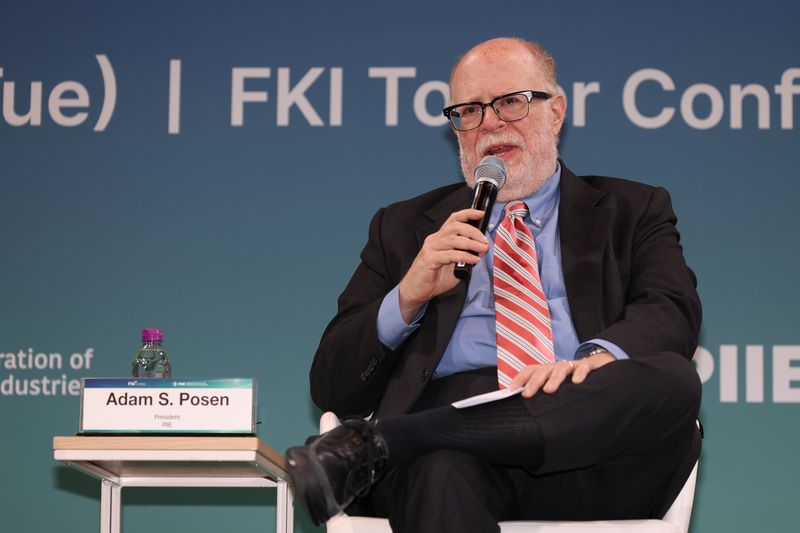
In an exclusive interview with Financial News at FKI Tower in Yeouido, Seoul, on the afternoon of the 27th, Posen said, “There may be a shortage of skilled construction workers needed to build semiconductor plants in the United States,” adding, “In that case, providing special subsidies so the government can secure an adequate construction workforce could be a worthwhile measure.”
The point is that even if a semiconductor plant is viable in its own right, construction delays caused by a labor shortage can make it difficult to realize the benefits of the investment. The conditions needed to actually build and operate the plants should be put in place before increasing the investment or encouraging participation in the projects. The success of investment in the United States, the analysis suggests, depends less on the amount invested than on how accurately on-the-ground obstacles are identified and resolved.
A leading global think tank focused on international trade and finance, PIIE is a nonpartisan research institution that influences economic policy discussions among governments and international organizations. Posen is a macroeconomic expert who previously served as an economist at the Federal Reserve Bank of New York and as a member of the Bank of England’s Monetary Policy Committee.
Posen stressed, “Once the initial obstacles are resolved, semiconductor plants themselves can be commercially viable projects,” adding, “The key is to identify what the private sector lacks.”
He explained that there is no need to be wary of investment simply because it involves government support. Government subsidies, tax benefits and regulatory measures are important factors in private investment in both Korea and the United States. However, he drew a line at government intervention being driven by the preferences of a particular politician. Posen said, “The important thing is not to avoid projects involving the government, but to avoid investing only in projects personally favored by a particular politician, such as President Donald Trump.”
He raised more direct questions about the Alaska LNG project.
Posen said, “There is no shortage of LNG supply in the United States and its democratic allies,” adding, “What is lacking, instead, is port terminal capacity that ships can access.”
He said, “South Korea and Japan should be made to build additional LNG loading terminals on the U.S. West Coast,” adding, “I can’t understand why President Trump wants the Alaska LNG project.” Energy investments, he explained, should be judged not by their political symbolism or a particular leader’s preferences, but by the facilities lacking in the actual supply chain and by commercial viability.
[email protected] Lim Su-bin, Kim Hak-jae and Park So-hyun, reporters
[email protected] Park So-hyun, Kim Hak-jae, Lim Su-bin Reporter