Ruling party criticizes Gyeonggi Gov. Choo Mi-ae day after day ... Gyeonggi provincial administration on shaky ground
- Input
- 2026-10-28 16:40:22
- Updated
- 2026-10-28 16:40:22
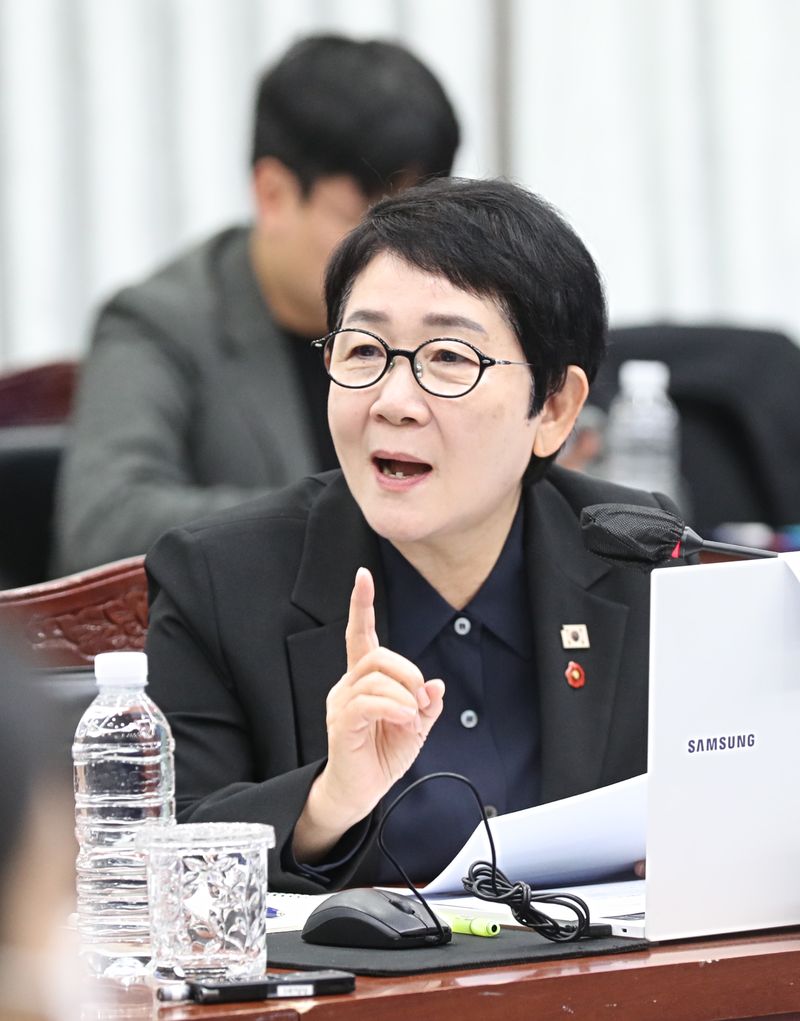
On the 28th, Democratic Party lawmaker Park Jeong-hyeon, the six sectoral councils for social solidarity economy in Gyeonggi Province, and Korea Social Solidarity Economy held a press conference at the National Assembly’s Communication Hall, calling for the province to reverse its decision to abolish the Department of Social Innovation and Economy.
Lawmaker Park, who is running for chair of the Social Solidarity Economy Committee in the Democratic Party’s current national committee chair election, strongly criticized Gyeonggi Province for issuing advance notice of an organizational restructuring plan that includes abolishing the department.
“On August 20, the Framework Act on Social Solidarity Economy passed the National Assembly for the first time in 13 years. Local governments are preparing to draw up implementation plans suited to conditions on the ground and further strengthen their support systems,” Park said. “Yet at this crucial moment, Gyeonggi Province is taking a course of action that is utterly incomprehensible. It plans to abolish the Department of Social Innovation and Economy, the focal point for policy, and cut all project funding for the Social Economy Agency, which has supported work on the ground.”
Park warned that the decision would dismantle the expertise and networks of cooperation built up on the ground and create critical gaps in jobs for vulnerable groups and local care services.
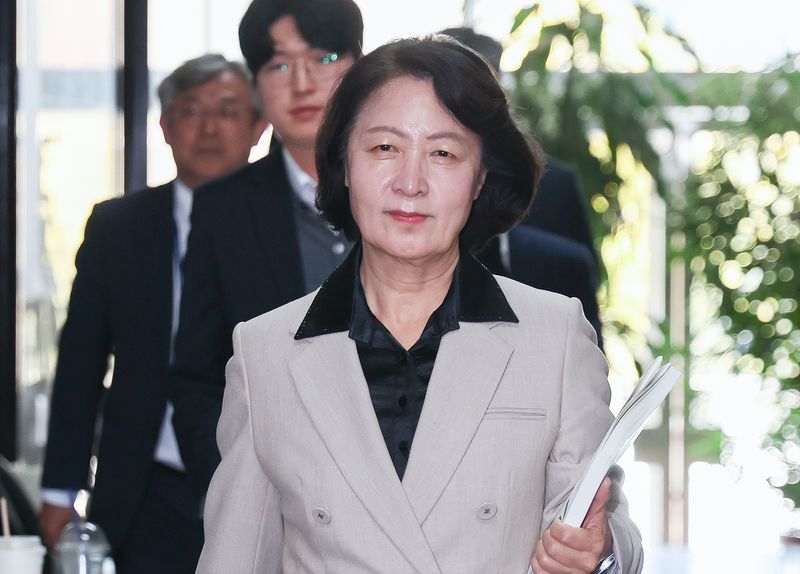
As the criticism continued, Choo ordered on the 27th that comments submitted during the advance-notice process for the organizational restructuring plan be reviewed again. Faced with strong public criticism, she took a step back for now.
Earlier, on the 26th, Supreme Council member Seo Mi-hwa also strongly criticized Choo, likening her to Seoul Mayor Oh Se-hoon of the People Power Party over the removal of a budget item for public jobs for people with the most severe disabilities from Gyeonggi Province’s proposed budget for next year.
Seo said, “Gyeonggi Province has removed the budget item for its rights-based, tailored public jobs program for people with severe disabilities from next year’s budget, effectively signaling its abolition. If the program is abolished, 880 people with the most severe disabilities will be fired overnight—at least twice the 400 people Mayor Oh dismissed.”
She continued: “This is something that simply cannot happen in our Democratic Party, which has always put people first and stood with the public.” She added, “It is very difficult for the Democratic Party to bear the criticism that Gov. Choo is just like Mayor Oh, who fired 400 workers with severe disabilities overnight—if anything, she has done just as much, if not more.”
In response, Choo immediately offered an explanation via social media on the same day. She said, “Gyeonggi Province’s available fiscal resources are expected to fall by as much as 2 trillion won in 2026, from 3.5 trillion won. Even if we have no choice but to issue the maximum amount of local bonds and scrape together every last bit of remaining funds, it will be difficult to include all the programs and budgets at the same level as in 2026.”
She added, “We will examine even more carefully the disability-related budget that has raised concerns this time, and take special care to ensure that the lives of the people concerned and their families are not made more difficult. Talking about the severity of the fiscal crisis does not mean giving up on necessary programs. It means finding solutions together to protect people’s livelihoods, which must be safeguarded even in difficult circumstances.”
There is understood to be serious concern within the party that Choo is making decisions that run counter to the policy directions and principles the Democratic Party has pursued. There are also significant concerns that public sentiment in Gyeonggi Province, a key stronghold for the party, will worsen as the 2028 general election approaches. It is also reported that party members are concerned that her earlier remark about fire services being a “drain on public finances” stoked public anger.
One Democratic Party official said, “What worries us most is that the assessment of Choo’s administration of Gyeonggi Province will become an assessment of the party. There is a gap between the various policies the party is pursuing and Choo’s decisions. If Gov. Choo is also a member of the party, she needs to reflect on this and make an effort to find proper solutions and alternatives, rather than abolishing programs or cutting funding.”
[email protected] Kim Hyeong-gu Reporter