“Criteria for calculating spectrum reallocation fees are opaque... consultations on fund allocation held just once”
- Input
- 2026-10-28 16:22:40
- Updated
- 2026-10-28 16:22:40
No criteria for calculating reallocation fees...timing for incorporating study findings also undecided
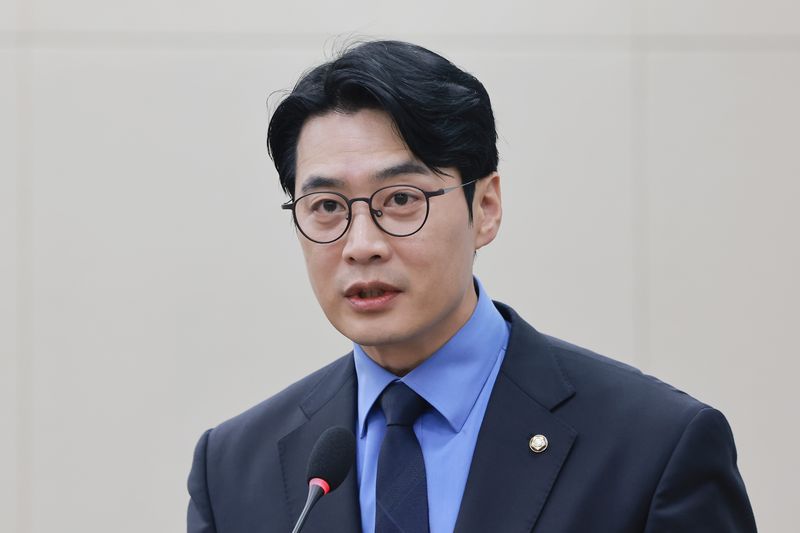
On the 28th, Han Jun-ho, a Democratic Party of Korea lawmaker who serves as secretary of the National Assembly’s Science, ICT, Broadcasting, and Communications Committee and represents Goyang B in Gyeonggi Province, said that, based on an analysis of materials submitted by the Ministry of Science and ICT and the Korea Media and Communications Commission (KMCC), the country’s three telecom operators will pay the government a total of 2.8699 trillion won to have 370 MHz of spectrum for 3G and LTE reallocated this year.However, current radio-wave laws and regulations set no criteria for calculating fees when spectrum is reallocated, so in practice the rules for new allocations are applied by analogy.
Experts say the value of spectrum differs between the time it is first won at auction and the time it is reallocated.
It is difficult to apply the same value to spectrum acquired through an auction and to previously used spectrum being reallocated, and the revenue that can be generated from using spectrum also varies over time.
According to Ministry of Science and ICT data, LTE traffic has fallen by about 35% in a year, making it increasingly difficult to assess spectrum value. The lack of calculation criteria was also raised during the 2020 parliamentary audit. That year, a bill to amend the Radio Waves Act was introduced to move the criteria from an enforcement decree into statute. The ministry also drew up a proposal to do so in 2021, but the bill was scrapped when the 21st National Assembly’s term ended in May 2024. The ministry formed a research group to improve the system this August, but it has yet to decide when or under which laws the findings will be incorporated.
Rationale for fund-allocation ratios also unclear...Korea Media and Communications Commission’s share below one-quarter for four straight years
The criteria for distributing allocation fees have also been criticized as opaque. Under a Ministry of Science and ICT notice, spectrum allocation fees are divided between the Information and Communications Promotion Fund, which receives 55%, and the Broadcasting and Communications Development Fund (BCDF), which receives 45%. The ratio has not changed once since the notice was issued in 2011. One percentage point of the allocation ratio represents about 15.5 billion won in annual revenue, based on this year’s allocation-fee income, but the ministry provided no separate rationale when a lawmaker’s office requested materials on how the ratio was determined.The current notice expires on December 31. Citing difficulties in the broadcasting and media industries, the KMCC asked to raise the BCDF’s share to 46–47%, but consultations between the two agencies amounted to just one working-level discussion in September.
There are also concerns that the KMCC receives too little from within the BCDF. According to a report by the National Union of Media Workers, the KMCC’s share of the fund over the past four years ranged from 18% to 25%, falling short of one-quarter. Funding is allocated between ministries according to spending ceilings notified annually by the Ministry of Planning and Budget, and there are no separate allocation criteria that reflect public needs in the broadcasting and media sectors.
At the KMCC’s parliamentary audit on the 22nd, Han criticized the fact that consultations between the ministries ahead of the notice’s expiration had amounted to only one working-level discussion. “Shouldn’t they have presented a quantitative assessment or the grounds for seeking an increase, and consulted with each other?” he asked. He also noted that the KMCC’s share of the BCDF had remained below one-quarter for four years running and urged the commission to act proactively to secure funding during the remaining period.
“The criteria for setting and distributing the fees must be clear so operators can predict their investments and the public can know how the funds are used. The principles for calculating the fees should be set out in law, the detailed formula in an enforcement decree, and the rationale and review cycle for the allocation ratio should also be clearly defined,” Han said. He added, “We must complete the system reforms before the reallocation of 3.5 GHz, a key 5G band, in 2028.”
[email protected] Yoon Hong-jip Reporter