Google and Apple fined 63.7 billion won over ‘abusive in-app payment practices’; sanctions finalized after three years
- Input
- 2026-10-28 16:42:36
- Updated
- 2026-10-28 16:42:36
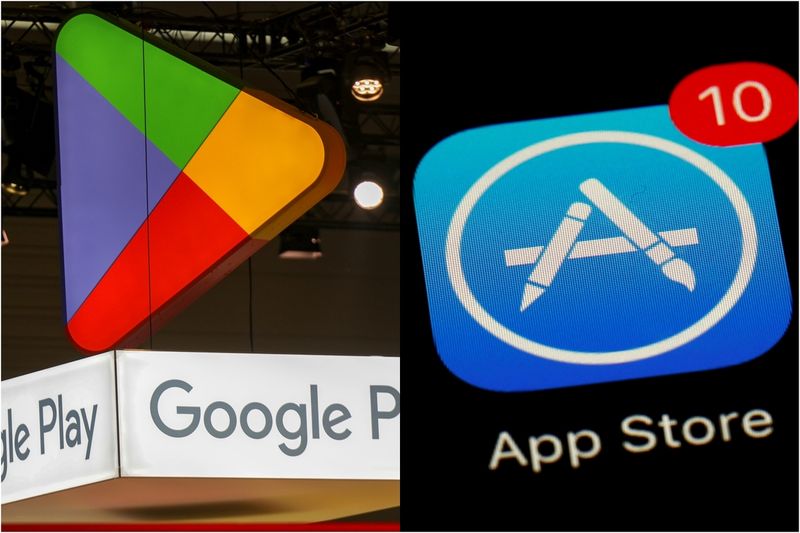
[Financial News] Google and Apple have been fined a total of 63.71 billion won on charges of forcing app developers to use specific payment methods and imposing unfavorable terms on third-party payments. The determination was that, despite allowing third-party payments, they effectively restricted developers’ choices by applying high fees and burdensome procedures. Final sanctions came about three years after the sanctions plan was notified in advance in 2023, making changes to the two companies’ app marketplace payment policies inevitable.
Third-party payments allowed, but under unfavorable terms
The Broadcasting and Media Communications Commission (BMCC) determined that the companies’ conduct—allowing only their own in-app payment systems and third-party payment methods subject to unfair conditions, while restricting other payment methods—amounted to forcing developers to use specific payment methods. In-app payments are payment methods Google and Apple provide themselves to enable purchases within apps, while third-party payments allow purchases within apps through systems set up by app developers themselves.
Google and Apple charged developers a 26% fee for adopting third-party payment methods, even though they allowed their use. The companies withheld some features, such as subscription management, from developers who adopted third-party payments—features available through their own in-app payment systems. Google restricted how prices could be displayed depending on the payment method, while Apple imposed additional conditions, including requiring developers seeking to use third-party payments to submit a separate app.
Google argued that it had not forced developers to use a specific payment method because it allowed third-party payments. However, the BMCC found that developers’ total costs could actually rise once payment gateway (PG) fees, the costs of building and operating payment systems, and fee settlement costs were taken into account. It also pointed to separate user experience (UX) guidelines for third-party payments, finding that they hindered adoption by requiring more cumbersome procedures than those for using only the company’s in-app payment system.
As for Apple, the BMCC recognized its superior bargaining position, given that the App Store is the only app distribution channel on the iOS operating system. Apple argued that developers were not unilaterally dependent on the App Store because it competed with other app marketplaces, including the Google Play Store, but the argument was rejected.
The sanctions also covered unjustified delays in app reviews. The investigation found that when app reviews were delayed, Google and Apple either did not provide specific reasons or failed to clearly explain the reasons for the delay and the expected timeline, even in response to individual inquiries from developers. The BMCC determined that such conduct could disrupt developers’ business operations.
Apple’s discriminatory treatment of domestic and overseas developers in its fees was also found to violate the Telecommunications Business Act. From July 2015 through January 2023, Apple charged overseas developers a 30% fee based on the supply price excluding value-added tax, while charging domestic developers 30% based on the final consumer price including value-added tax. Apple argued that the difference resulted from amendments to the Value-Added Tax Act, but the BMCC found the discriminatory charges unlawful, noting that the same fee basis could be applied to domestic and overseas developers.
Corrective orders to address restrictions on payment choice and improve app review procedures
The BMCC therefore ordered Google and Apple to improve policies restricting developers’ choice of payment methods and their app review procedures. It also ordered Apple to prevent a recurrence of its discriminatory fees for domestic and overseas developers. It decided not to file criminal complaints, finding that the severity of the legal violations did not meet the requirements for doing so.
The sanctions come about three years after the BMCC notified Google and Apple of proposed corrective measures in October 2023. After amending the Telecommunications Business Act in 2021, the BMCC conducted inspections and investigations, then sent the companies proposed corrective measures in October 2023 and July 2024. Deliberations were delayed by issues with the committee’s formation and operation. Discussions resumed after the BMCC was formed this April. After hearing Google and Apple’s views last August, the commission went on to verify additional facts and review possible corrective measures.
Meanwhile, Google announced a payment policy overhaul last March that included allowing external payments and lowering service fees, while Apple also outlined to the BMCC its voluntary plans to improve the app marketplace transaction environment. The BMCC plans to continue monitoring market trends to help the two companies’ payment policy changes take root in the domestic market.
BMCC Chair Kim Jongcheol said, “I hope these sanctions can serve as a turning point for substantive changes in the market structure that app developers and end users can feel,” adding, “We will continue to enforce the law fairly, without discrimination between domestic and overseas operators.”
[email protected] Choi Hye-rim Reporter