Minister Choi Hwi-young: “In the era of 30 million inbound visitors, revitalizing regional tourism is key”
- Input
- 2026-10-28 14:54:24
- Updated
- 2026-10-28 14:54:24
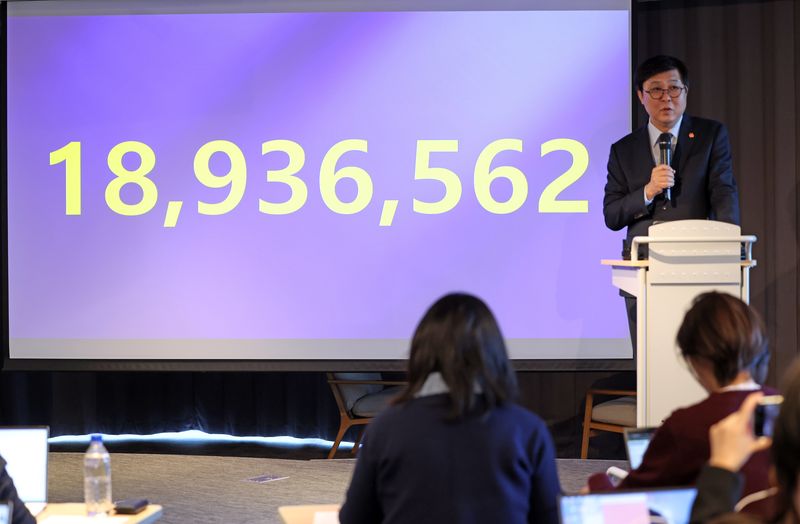
The government will increase next year’s tourism budget by 19% and work to revitalize regional tourism centered on regional airports as it seeks to usher in an era of 30 million foreign tourists.
On the 28th, Minister of Culture, Sports and Tourism Choi Hwi-young held a press briefing on tourism at Art Korea Lab in Jongno District, Seoul, and announced the sector’s 2026 achievements and key policy directions for 2027.
Minister Choi said that, as of the previous day, the number of foreign tourists visiting Korea had surpassed last year’s annual record of 18.94 million. He cited the global spread of K-culture, innovation in the tourism industry and the hospitality of the Korean people as factors behind the growth in inbound tourism despite the war in the Middle East, high oil prices and high inflation.
The government plans to pursue this year’s goal of attracting 23 million visitors to Korea while preparing, over the medium to long term, for more than 30 million and an era of 40 million visitors. To that end, it set next year’s tourism budget at 1.7562 trillion won, a 19% increase from this year’s 1.4751 trillion won.
Minister Choi said sustainable growth would be difficult under a structure in which more than 80% of inbound visitors are concentrated in the capital region, and identified revitalizing regional tourism as the top priority.
The key initiative is to develop tourism routes centered on five regional airports—Gimhae, Daegu, Cheongju, Muan and Yangyang—as part of a program to build tourism zones around regional airports. Next year, the government will provide about 410 billion won for cross-ministerial collaborative projects and pursue regulatory exemptions and artificial intelligence (AI) testing.
Of this, 93.5 billion won in central and local government funds combined will go toward creating tourism zones centered on regional airports. The budget has been allocated to establishing a shared brand for the zones and promoting them overseas, attracting tourists via regional airports, improving transport and payment convenience, and developing distinctive tourism content.
The government will also expand regional accommodation infrastructure. It plans to support the creation of an integrated accommodation information platform and improvements in lodging quality, as well as provide 152.3 billion won in loans to build large hotels in regional areas.
The government will also expand the development of tourism content that draws on local everyday life and culture. It allocated 7.2 billion won to promoting tourism at traditional markets, 2.5 billion won to creating “K-Food Road,” linking food streets with cultural tourism, and 5.8 billion won to tourism content using K-pop performances and drama filming locations.
Support for the MICE industry will also be strengthened to attract high-value tourists. The government has newly allocated 540 million won to build an AI-based “K-MICE” integrated platform and will invest 5.7 billion won in strengthening capacity to attract international conferences and incentive tourism. It will also pursue tourism marketing tied to major international events next year, including Seoul World Youth Day and the Chungcheong Summer Universiade.
Programs supporting domestic travel by the public will also be expanded. For the “Half-Price Travel Program,” the central government subsidy rate will rise from 30% to 50%, and the number of beneficiaries will increase from 300,000 to 400,000. The Worker Vacation Support Program will also expand eligibility to include workers in special forms of employment and support a total of 210,000 people. The budgets for the two programs are 22.8 billion won and 22 billion won, respectively.
The government will also pursue projects to revitalize regional tourist attractions (2.5 billion won), programs encouraging longer stays in regional areas using the Korea Dulle-gil trail (3.6 billion won), the “100×100 Project,” in which members of the public identify local attractions (1 billion won), and the development of cultural tourism festivals (8.8 billion won). It will also work to ease regulations in the tourism industry, train skilled professionals and provide tailored support to companies at each stage of growth.
Minister Choi said, “To ensure regional tourism can firmly drive local economies, we will manage qualitative aspects alongside the number of inbound visitors, a key indicator of tourism policy, and actively address concerns about overtourism.”
[email protected] Sun-Min Jung Reporter