Arsenic leak addressed, cardiac-arrest risk tackled ... 119 emergency management best practices selected
- Input
- 2026-10-28 14:37:22
- Updated
- 2026-10-28 14:37:22
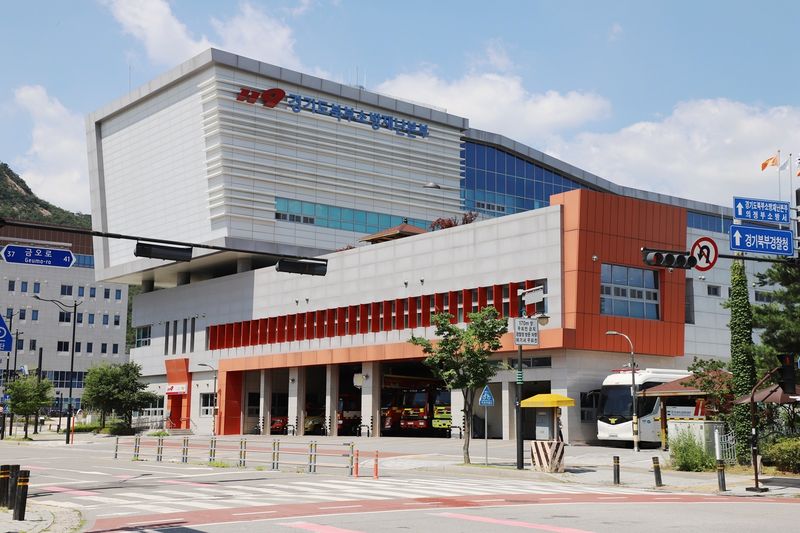
【Financial News, Uijeongbu = Reporter Kim Kyung-soo】Swift and accurate assessments by the 119 emergency operations room are helping protect firefighters at the scene and save the lives of emergency patients.
On the 28th, Gyeonggi Northern Fire and Disaster Headquarters (hereafter, the Fire Service) said it had reviewed incident-management cases among the 194,865 reports received by the Northern 119 General Situation Room in the third quarter of 2026 and selected four in total: one top-rated case and three excellent cases.
The selected cases included one in which information about hazardous materials was identified in advance to protect firefighters at a fire scene, and another in which responders supported the prompt treatment and transport of an emergency patient in a mountainous area.
The top-rated case involved a fire report from a semiconductor-related manufacturing facility on July 2. The report was received through a private security company, leaving information about the property where the fire had broken out limited.
The 119 operations room staff member therefore judged that hazardous materials might be present given the nature of the manufacturing facility. The staff member then used the fire-service-regulated premises database to obtain contact information for relevant personnel and check what hazardous materials were inside the facility.
As a result, the staff member learned that the toxic substance arsenic was stored in a glass bottle and immediately relayed the information to the responding crew. Based on this, the incident commander strengthened safety measures, including by additionally instructing firefighters to wear self-contained breathing apparatus.
Although arsenic did leak at the scene, there were no firefighter casualties, thanks to the 119 operations room’s proactive check for hazard information and prompt sharing of it.
The excellent case involved the rescue of a patient suffering a cardiovascular emergency at a point about 800 meters below the summit of Unaksan Mountain on September 27.
When a man in his 60s who was hiking with acquaintances complained of chest pain and difficulty breathing, an emergency medical dispatch supervisor stayed on the line with the caller, checked the severity and nature of the pain and the patient’s pulse, and quickly assessed the possibility of a cardiovascular emergency.
To prepare for the possibility that the patient’s condition might worsen, the supervisor first instructed people at the scene on CPR and told the responding ambulance crew to prepare the necessary emergency equipment, including an automated external defibrillator (AED), oxygen, an IV set and nitroglycerin (NTG).
The supervisor also took steps to establish a rapid transport plan, considering the mountainous location and checking in advance whether a helicopter transfer was possible and which hospitals could receive the patient. After arriving at the scene, the ambulance crew found signs of arrhythmia on an electrocardiogram and administered emergency treatment.
The Fire Service decided that the other two excellent cases might involve sensitive matters and, after careful consideration, excluded them from public disclosure.
Kim Mun-yong, head of Gyeonggi Northern Fire and Disaster Headquarters, said, “Accurate situational assessments and prompt information-sharing by the 119 operations room are directly linked not only to the lives of citizens but also to the safety of firefighters at the scene. We will continue to actively identify and share excellent cases to further strengthen our incident-management capabilities.”
[email protected] Kim Kyung-soo Reporter