Daiso and OLIVE YOUNG Have Also Pulled Out... Homeplus Is on Borrowed Time Despite a 200 Billion Won Cash Injection
- Input
- 2026-10-28 15:11:52
- Updated
- 2026-10-28 15:11:52
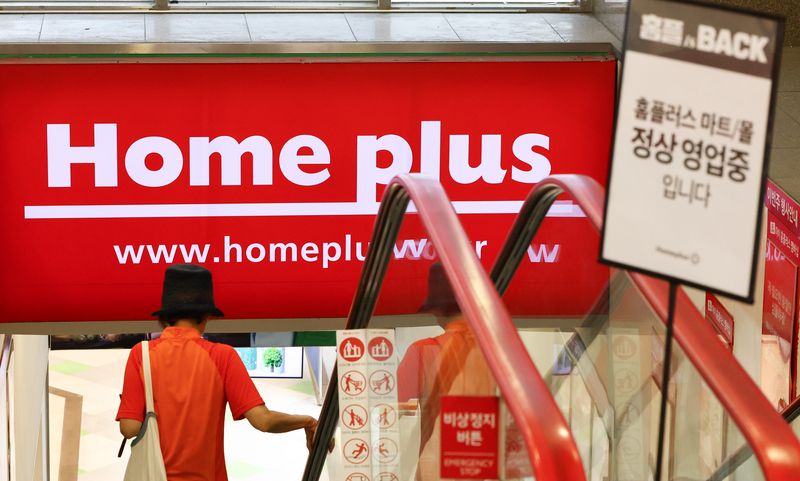
[Financial News] Homeplus, which staged a dramatic recovery after receiving 200 billion won in emergency debtor-in-possession (DIP) financing, is facing mounting liquidity pressure as unpaid wages and the threat of power cuts over overdue electricity bills compound its difficulties. Sales are far below target, and M&A efforts have made little progress, prompting concerns in the industry that Homeplus has little time left to hold out in its current state.
According to industry sources on the 28th, Homeplus is pursuing an M&A deal to sell its supermarket business—including 67 company-owned large-format stores—and its headquarters through a business transfer. Samil PwC, which is managing the sale, has sent teaser letters to potential domestic and overseas buyers and is accepting letters of intent through the end of this month. But with the deadline approaching, no viable buyer has yet emerged.
Business conditions are also challenging. Industry sources say sales last month, one month after Homeplus’s 67 key stores reopened, were only about 40% of their target, and had fallen to around 30% early this month. Customer traffic also appears to be declining as major tenants, including OLIVE YOUNG and Daiso, continue to pull out. In this situation, further cash outlays are scheduled, including payment of unpaid wages on the 30th and severance pay for employees taking voluntary retirement on the 14th of next month.
Some stores are also facing the threat of power cuts over unpaid electricity bills. Six stores, including the Pocheon Songu, KINTEX and Goyang Terminal locations—which have already closed, although some tenants are continuing to operate—have received notice from Korea Electric Power Corporation that their power will be cut off at the end of this month. The Incheon Songdo store has also been warned of a disconnection next month, as Homeplus’s liquidity crisis appears to be spreading across its store operations.
An industry source said, “The threat of power cuts is evidence that the company has reached a point where it is struggling to pay the costs needed to operate normally. If a full sale is not feasible, it will ultimately have no choice but to pursue a partial sale. But that process is also unlikely to be smooth, making it difficult to rule out liquidation.”
Experts also said it would be difficult to expect business operations to return to normal given the company’s current cash shortage. Yi Jong-u, a professor in the Department of Distribution and Marketing at Namseoul University, said, “The 200 billion won in DIP financing was essentially operating funds and would likely have been spent on events and other efforts to attract customers in the early days after reopening. Given the current situation, it is difficult to be sure Homeplus can even hold out through this year; I estimate it has five to six months at most.”
With the outcome of the M&A still uncertain, even liquidation is being discussed as a worst-case scenario. Seo Yong-gu, a professor of business administration at Sookmyung Women’s University, said, “With the large-format retail market in a slump, a full sale of Homeplus is not realistically easy. Given the high liquidation value, the possibility of liquidation in the worst-case scenario cannot be ruled out.”
[email protected] Kim Hyun-ji, Jang Yu-ha Reporter