Jeju citrus smart farms expand automated water management from greenhouses to open fields
- Input
- 2026-10-28 14:04:57
- Updated
- 2026-10-28 14:04:57
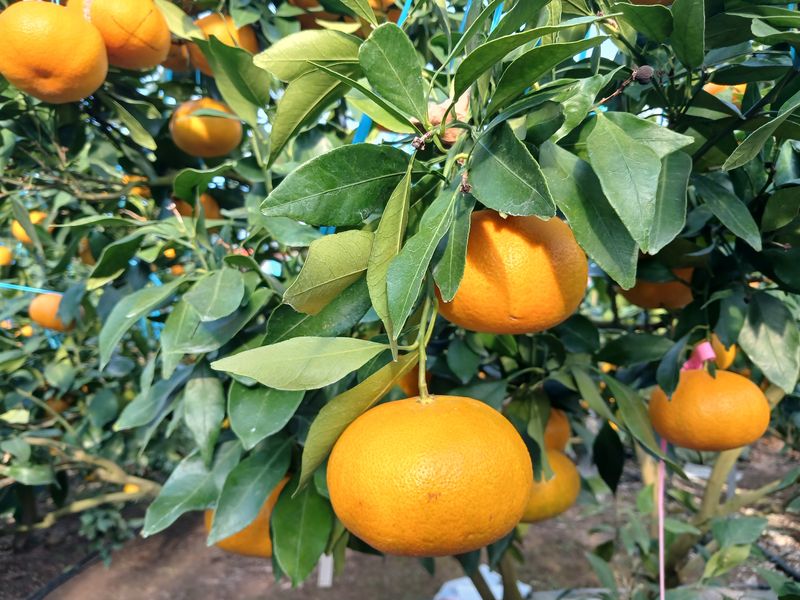
【Financial News Jeju = Reporter Jeong Yong-bok】 Water-management technology for Jeju-style smart farms will be extended from greenhouse-grown Redeuhyang to open-field citrus. Technology that automatically adjusts water supply using soil-moisture and fruit-quality data is being developed, with validation at farms planned for the first half of next year.
The Jeju Special Self-Governing Province Agricultural Research and Extension Services said on the 28th that it is pursuing an upgrade project to apply the Redeuhyang growth management model to its Jeju-style smart-farm management system, “Jebitna,” and expand its use to citrus grown with open-field mulching.
Jebitna, a system developed by the institute in 2023, manages farm conditions such as temperature, humidity and soil moisture, and remotely controls ventilation and water-supply equipment.
The upgrade will improve the system so it can compare appropriate environmental management standards for each Redeuhyang growth stage against actual farm data and set standards tailored to each farm’s growing conditions.
In particular, water-management technology previously used in greenhouse cultivation will be extended to open-field citrus grown with ground-cover film. The technology combines soil-moisture and fruit-quality data with a cultivation method that manages moisture by covering the soil with film, automatically adjusting water supply.
The institute reviewed development progress at an interim briefing on the 21st. It plans to complete system upgrades and functional testing by the end of this year, then begin validating stability and usability at farms in the first half of next year.
In the long term, the system will be developed to incorporate accumulated growth and environmental data with artificial intelligence (AI), analyze crop conditions and determine appropriate management methods. However, comprehensive AI-based automated control remains only a development goal.
Yang Cheol-jun, head of the Smart Technology Team at the Agricultural Research and Extension Services, said, “We will advance data-based precision environmental management and automated control technologies to build an intelligent agriculture model suited to Jeju’s growing conditions.”
[email protected] Jeong Yong-bok Reporter