‘AI Administrative Officer’ for National Universities’ Shared Administrative System; Jeju National University Develops It In-House, Considers Expansion to 36 Universities
- Input
- 2026-10-28 13:39:28
- Updated
- 2026-10-28 13:39:28
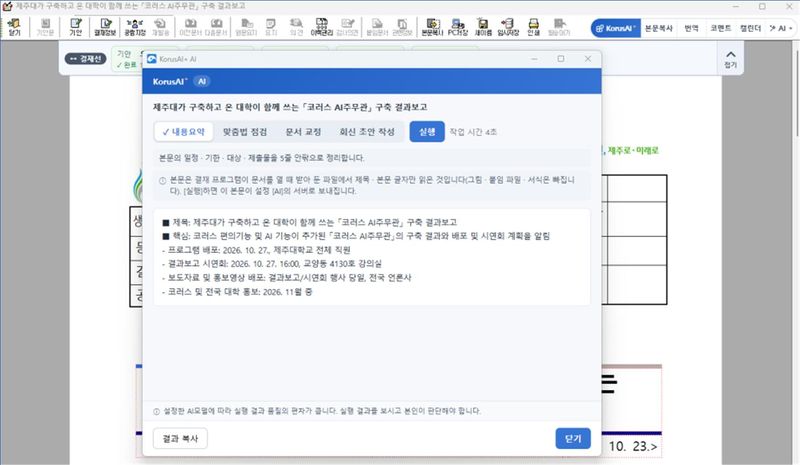
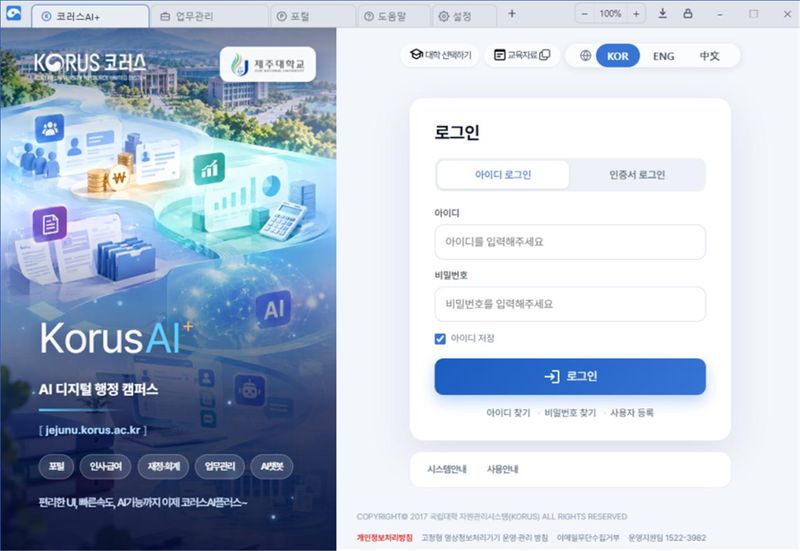
【Financial News Jeju = Reporter Jung Yong-bok】 Jeju National University has developed ‘KORUS AI Administrative Officer,’ adding artificial intelligence (AI) features to the administrative system shared by 36 national and public universities across the country, and has begun a pilot program on campus.
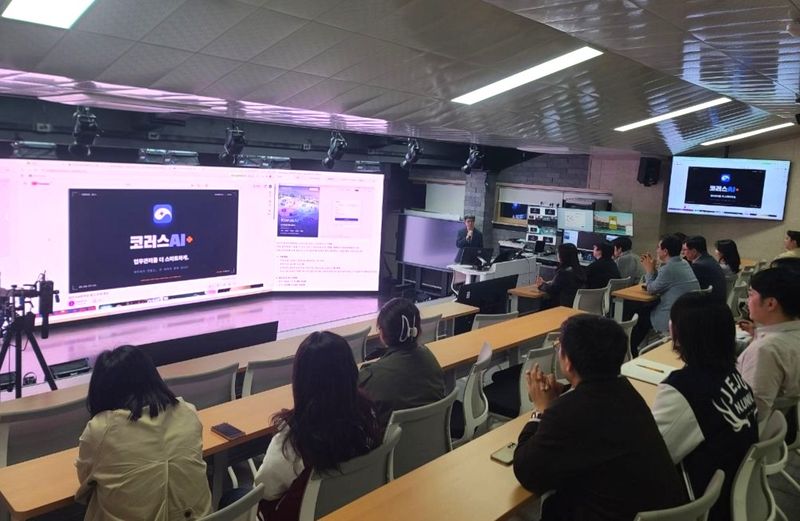
According to Jeju National University on the 28th, it developed a program integrating AI features into the National University Resource Management System (KORUS), used by faculty and staff, and held a briefing on the results of its development and a demonstration the previous day.
KORUS is a system that centrally manages major administrative tasks at national universities, including electronic documents, human resources and payroll, and finance and accounting. It was fully launched in 2017 and is used by about 50,000 faculty and staff at national and public universities across the country.
Because multiple universities jointly operate a single system, it had been difficult to quickly accommodate individual universities’ requests for improvements. Rather than modifying KORUS itself, Jeju National University chose to add separate AI features to the user interface.
Administrative staff developed the program alongside their regular duties, without a separate project budget. The university also used its own computing resources.
The core function is support for processing electronic documents. With an official document open, users can summarize its contents, check spelling, edit the document, and draft replies. Incoming documents are automatically classified by urgency as high, normal, or low, and the system also supports translation into English and Chinese.
AI chatbots for different areas of work have also been introduced. They answer staff members’ questions based on work manuals and relevant laws in three areas: portal and work management, human resources and payroll, and finance and accounting.
The aim is to reduce the burden on faculty and staff of searching through relevant manuals one by one or asking other staff members in order to check work rules or procedures.
User convenience features have also been improved. The system displays tasks to be handled on a single screen and offers tabs for managing multiple tasks at once. It has also improved features that had been inconvenient in existing workflows, including document-specific notes, personal schedule and task management, and automatic display of approval routing.
The AI processing methods were also designed with the protection of administrative information in mind. Jeju National University removes sensitive information from the work manuals used by the chatbot and processes official-document translations on the user’s PC without sending the original text externally.
For generative AI features, the university uses a large language model (LLM) running on its own graphics processing unit (GPU) server instead of using AI services from external companies. An LLM is an AI technology trained on vast amounts of text data to answer questions or write documents.
However, even when using its own servers, the university must continuously verify the accuracy of AI-generated documents, the protection of personal information, and system stability. Because the system handles sensitive administrative information, particularly in human resources and payroll and in finance and accounting, staff in charge must review AI responses before applying them to actual work.
The development is notable because it improved a shared administrative system used by universities nationwide with the technology and personnel of an individual university. It could serve as a case for determining whether this approach—expanding functionality without a separate large-scale system overhaul—can be applied at other national universities.
Jeju National University plans to gather feedback from faculty and staff during the pilot, improve the features, and consider expanding the program to other national and public universities that use KORUS. A nationwide rollout will require checking compatibility with the shared system, information security, and the reliability of AI processing results.
[email protected] Jung Yong-bok Reporter