One in 20 people living in South Korea is a foreign resident...number tops 2.66 million, a record high
- Input
- 2026-10-28 13:37:38
- Updated
- 2026-10-28 13:37:38
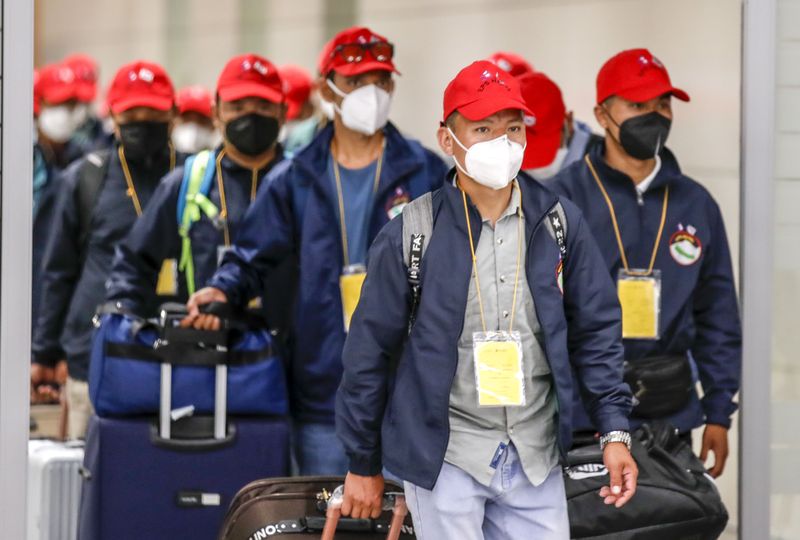
The number of foreign residents living in South Korea has surpassed 2.66 million, a record high. They account for 5.1% of the total population—about one in every 20 people. However, the growth rate for foreign residents slowed from 5.0% the previous year to 3.1%. International students, in particular, increased by 17.6%, accounting for more than half of the overall increase in foreign residents.
On the 28th, the Ministry of the Interior and Safety said its analysis of Population and Housing Census data from the Ministry of Data and Statistics found that, as of November 1 last year, South Korea had 2,662,967 foreign residents. That was an increase of 79,341 (3.1%) from the previous year, marking the fourth consecutive year of growth, according to the ministry’s release, ‘2025 Status of Foreign Residents by Local Government.’
The number of foreign residents rose from 2,258,248 in 2022 to 2,459,542 in 2023, 2,583,626 in 2024 and 2,662,967 last year. Their share of the total population also increased, from 4.4% in 2022 to 4.8% in 2023, 5.0% in 2024 and 5.1% last year.
However, the pace of growth slowed. The number of foreign residents increased by 124,084 in 2024, but the increase last year was 79,341—down by 44,743.
Among the categories, international students showed the most pronounced growth. Their number reached 274,329, up 41,092 (17.6%) from the previous year. They accounted for 51.8% of the total increase in foreign residents. The growth rate for international students rose to 17.6% from 13.0% the previous year.
By contrast, the number of foreign workers increased by just 11,409 (2.3%), to 514,043. This was lower than the previous year’s growth rate of 6.9%. Marriage migrants increased by 2,178 (1.1%), to 194,017, while overseas Koreans with foreign citizenship decreased by 4,381 (1.1%), to 411,314.
By citizenship status, the number of foreign residents without South Korean citizenship increased by 66,313 (3.2%) from the previous year, to 2,109,057. The number of people who acquired South Korean citizenship rose by 10,913 (4.4%), to 256,491, while the number of children of foreign residents born in South Korea increased by 2,115 (0.7%), to 297,419.
By region, the largest numbers of foreign residents were in Gyeonggi Province, with 859,943; Seoul, with 453,201; South Chungcheong Province, with 178,229; Incheon, with 174,824; and South Gyeongsang Province, with 170,267.
A total of 1,487,968 foreign residents, or 55.9% of the total, lived in the Seoul metropolitan area. Although their number increased from the previous year, the area’s share fell by 0.8 percentage points, from 56.7%.
North Gyeongsang Province had the highest growth rate for foreign residents, at 8.0%, followed by Gangwon Province at 7.9% and South Jeolla Province at 7.8%. North Jeolla, North Chungcheong and South Chungcheong provinces also each saw increases of at least 5%. The number of foreign residents rose in all 17 cities and provinces.
South Chungcheong Province had the highest share of foreign residents relative to its total population, at 7.9%. The figures were 6.2% in both North Chungcheong and Gyeonggi provinces, and 5.8% in both South Jeolla Province and Jeju Special Self-Governing Province.
By city, county and district, Ansan in Gyeonggi Province had the largest number, at 109,544, followed by Hwaseong with 83,657, Siheung with 79,706, Suwon with 74,161 and Bucheon with 63,381.
Yeongam County in South Jeolla Province had the highest share of foreign residents relative to its total population, at 22.4%. It was followed by Eumseong in North Chungcheong Province at 19.7%, Ansan in Gyeonggi Province at 15.8%, Jincheon County in North Chungcheong Province at 15.0% and Pocheon in Gyeonggi Province at 14.8%.
There were 154 ‘areas with concentrated foreign-resident populations’—places where at least 10,000 foreign residents live or where they make up at least 5% of the total population—12 more than the previous year. Compared with 97 such areas in 2022, the number increased by 57 in three years.
The Ministry of the Interior and Safety plans to use these statistics as a basis for understanding the characteristics and needs of foreign residents in each region and for developing local governments’ policies to support their settlement.
Jang Heon-beom, director general of local administration at the Ministry of the Interior and Safety, said, “The increase in foreign residents shows that our local communities are changing into more diverse and dynamic societies.” He added, “I hope these statistics will be used to take a close look at the characteristics of each region and the needs of foreign residents, and will help develop policies that enable foreign residents to settle stably in their communities and grow together with local residents.”
[email protected] Lee Bomi Reporter