'Putting in the legwork to prevent crime, solving problems through communication': A veteran’s philosophy on the front lines [Number 112]
- Input
- 2026-10-28 15:48:03
- Updated
- 2026-10-28 15:48:03

Responding to 112 calls is the main job of local police, but there is plenty to do even when no calls are coming in. When officers spot a dangerous place on patrol, they ask the district office to address it. In Doksan-dong, traffic complaints are common during the day, while calls about intoxicated people are frequent at night. Domestic violence calls are also not uncommon, so officers work to separate victims from perpetrators at the scene and calm things down.
Theft spotted on the way to work...a visit to a scrap dealer before dawn
For Inspector Jeong, even an ordinary commute is an extension of his crime-prevention work. Early one morning last April, he noticed an elderly person taking clothes out of a used-clothing collection bin near Doksan Station. “I thought something seemed off, so I watched for a while. They were taking all the clothes out. So I went over and said, ‘You can’t do that. That’s theft,’” he recounted.At the time, thefts from used-clothing collection bins and of parcel deliveries were recurring in the area. Of the 132 thefts recorded from last April through June, about 20 were related incidents. After that day, Inspector Jeong checked 160 used-clothing collection sites and put up crime-prevention stickers, then visited 10 scrap dealers who buy used clothing to ask for their cooperation. In the early morning, he waited for older people who came to sell waste paper and used clothes and spoke to them directly. “I explained that even if they took the items and sold them, the fine could be far more than they earned in a day,” he said. “Most understood and said they wouldn’t do it again.”
He didn’t overlook even minor problems in the neighborhood. Cigarette butts piled up every night on “Mannaneun Street” in Doksan-dong, an area packed with restaurants and bars. For about a month, Inspector Jeong stepped up night patrols, cracking down on around 100 minor offenses, including illegal dumping, and handing out promotional materials he had made himself to business owners and visitors.
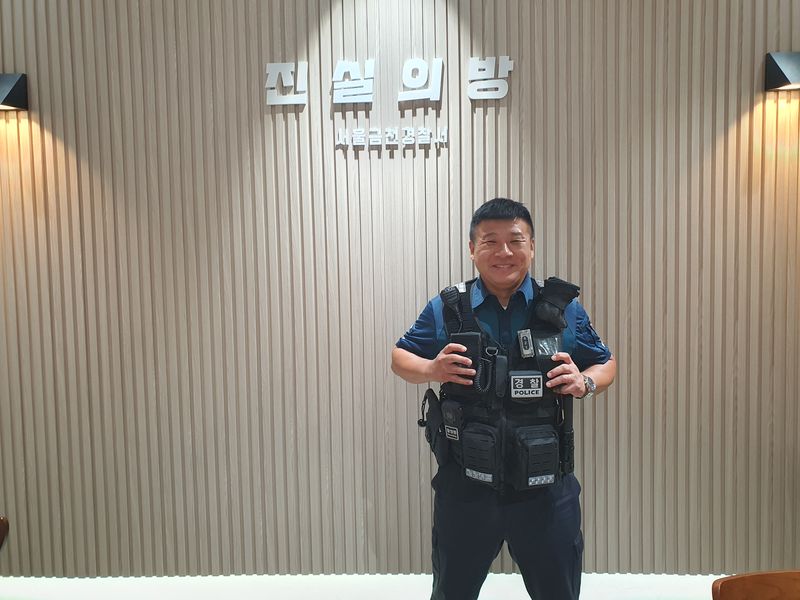
“Communicating in writing with a student in crisis”: Continued attention even after the call
The incident Inspector Jeong remembers most vividly was meeting a middle school student with a hearing impairment. The student had tried to jump from a high pedestrian overpass but was brought out of danger with help from a passerby. Responding to a report, Inspector Jeong sat the anxious student, who was trying to leave the scene, down on a chair and took out a piece of paper.He explained, “I asked, ‘Would it be okay if I wrote things down to talk to you?’ When I showed them what I’d written, they replied on their phone. As we talked that way, they gradually opened up.”
The student confided that they had attempted to take their own life before. Inspector Jeong called the student’s guardian and a mental health emergency response agency, but they could not secure a bed for emergency hospitalization. The next day, he contacted the local mental health welfare center himself to arrange counseling and kept in touch with the guardian.
“I have children myself, so I felt awful thinking about how hard it must have been,” he said. “What I could do was connect them with the relevant agencies so they could continue to get help.”
At crisis scenes, Inspector Jeong considers conversation essential. “The quickest way to resolve things is to calm people down and understand the situation through conversation, rather than threaten and frighten them,” he said, emphasizing, “If you listen, you can learn about circumstances you didn’t know about at first.”
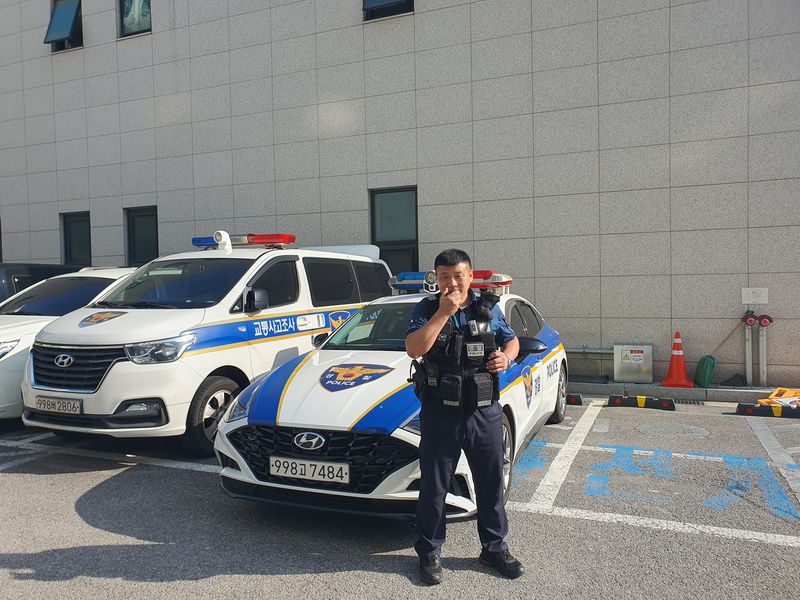
He also urged junior officers to take the initiative. “If you think of it as getting a head start on everything and act proactively, good results tend to follow,” he said. “I hope you’ll be officers who move first rather than hang back.”
[email protected] Choi Seung-han Reporter