India moves to acquire at least 300 additional South Korean K9 self-propelled howitzers to bolster artillery capabilities along the border
- Input
- 2026-10-28 13:06:06
- Updated
- 2026-10-28 13:06:06
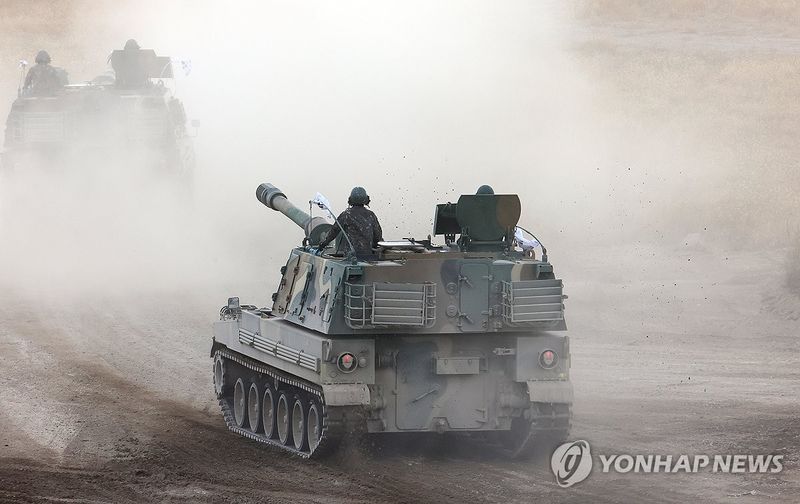
【NEW DELHI, India — Pragya Awasthi, correspondent】India’s Ministry of Defense has given in-principle approval to a plan to acquire at least 300 additional K9 Vajra-T self-propelled howitzers, based on South Korean-made K9 howitzers. The project budget is expected to exceed 200 billion rupees (2.812 trillion won). However, the move is at the stage of in-principle approval by the Indian government and is separate from the signing of a final contract.
According to local media reports and other sources on the 28th, India’s Ministry of Defense approved a plan to acquire at least 300 additional South Korean-made K9 howitzers and is reportedly planning to deploy them in border areas adjoining China and Pakistan, significantly strengthening its artillery capabilities.
The Indian Army currently operates 100 K9 Vajra-T howitzers and is producing 100 more under a contract signed in December 2024. If the Indian Ministry of Defense’s latest acquisition plan proceeds as intended, the total number in service will rise to about 500.
The K9 Vajra-T is an Indian variant of the 155 mm self-propelled howitzer developed from South Korea’s K9 Thunder. It is a tracked platform with a 52-caliber barrel. Unlike towed field artillery, it combines an armored hull with a rotating turret to provide protection and mobility. In particular, it is designed for the so-called “shoot-and-scoot” tactic, in which the weapon quickly changes position after firing.
The K9 Vajra-T is manufactured by Indian company Larsen & Toubro (L&T) at its armored systems production facility in Hazira, Gujarat, with South Korea’s Hanwha Aerospace participating as a partner. The project is a leading example of local production combining South Korean defense technology with India’s manufacturing capabilities. It has proceeded in three phases. The first contract, in May 2017, allocated 45 billion rupees (632.7 billion won) for the acquisition of 100 howitzers. The second contract, signed in December 2024, covered 100 howitzers and was valued at 76.29 billion rupees (about 1.0726 trillion won). This time, a budget of more than 200 billion rupees is expected to be needed for the plan to add at least 300.
The level of localization is also a major challenge. According to L&T, at least 80% of the overall physical work and subassemblies are handled in India, and the localization rate by value is reportedly above 50%. The Indian Ministry of Defense has set a target of exceeding 70% localization for this additional order.
The K9 Vajra-T was initially acquired for desert operations, but its operational range expanded to high-altitude areas following the 2020 military standoff with China in Ladakh. After high-altitude trials, it was deployed in eastern Ladakh and fitted with cold-weather equipment. Its range is about 40 km, reaching up to 50 km with special ammunition. However, its use is limited in the steep, road-poor mountainous areas of the Himalayas, making it necessary to use it alongside lighter weapon systems such as towed field artillery.
The push for this additional acquisition is seen as part of India’s effort to strengthen long-range firepower and mobility in border areas while expanding its domestic production base by leveraging foreign defense technology. The project is also drawing attention from South Korea’s defense industry, as it could broaden the overseas operational footprint of the K9 family and sustain defense cooperation between the two countries.
[email protected] Pragya Awasthi, correspondent Reporter