China’s stock market has shed 3.2 quadrillion won since May... Shares plunge amid U.S. tech controls [Lee Seok-woo’s China 24]
- Input
- 2026-10-28 12:18:53
- Updated
- 2026-10-28 12:18:53
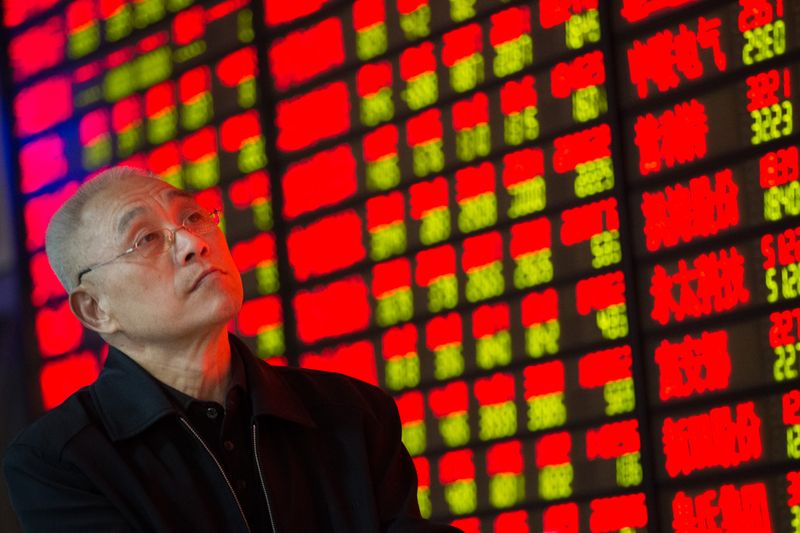
[Financial News] China’s stock market capitalization has shed $2.4 trillion (about 3.2 quadrillion won) since May.
The plunge in AI-related stocks has put the Chinese government’s ambitious drive to become an AI power to the test.
The United States is tightening controls on advanced technology to China, while a lack of domestic demand is said to be deepening the crisis.
The Guardian, a British daily, reported on the 27th (local time) that concerns are growing about the sustainability of the AI boom in China, which is competing with the United States for global dominance.
The Guardian noted that several quadrillion won have evaporated from China’s stock market in the past six months amid concerns about AI’s growth prospects, and forecast that even in these circumstances, China’s leadership would find it difficult to introduce new stimulus measures immediately.
The STAR 50 index, which mainly tracks technology and innovation stocks on the Shanghai Stock Exchange, has plunged 40% since June.
AI-related stocks already account for more than 40% of market capitalization in mainland China and Hong Kong, so any fall in those stocks is bound to send shockwaves across Chinese stock markets.
CSI 300 falls for 11 straight weeks through last week... Enters bear market
The CSI 300, a benchmark index for mainland China, fell for 11 consecutive weeks through last week. On the 22nd, its decline from its recent peak exceeded 20%, putting it within the conventional definition of a bear market. The Shanghai Composite Index fell another 1.33% on the 27th.
The Guardian said the sharp declines suggest that although the Chinese government is going all out to get ahead of the United States in the AI race for dominance, domestic demand is not strong enough to support that effort.
The Chinese government has invested heavily to develop the AI industry. This month, an AI investment fund worth 60 billion yuan (about 12 trillion won) began investing in developers.
But amid a prolonged economic downturn, ordinary Chinese consumers are still keeping their wallets closed.
The Chinese government is also giving full support to humanoid robots, a major application of AI, and the related industry is growing. But companies are grappling with a double whammy: exports are blocked and domestic demand is weak.
Dan Wang of consulting firm Eurasia Group said, “Profit margins this year are falling short of expectations,” adding, “The United States is raising interest rates, and domestic demand in China is very weak.”
He added that this was fueling widespread unease among technology companies.
On the 26th, Reuters published an analysis titled “China’s AI bubble has already burst,” and forecast that AI-related stocks could fall further.
“China’s AI bubble has burst”... CXMT down 25% in a month
Reuters said the two-year stock rally, fueled by Chinese government stimulus, had abruptly hit the brakes, and analyzed that high valuations for technology stocks were crumbling amid concerns about AI demand and export restrictions.
Shares in companies that appeared to have government backing, such as Unitree, whose retail investor subscription ratio at the time of its listing reached 8,000 to 1, plunged across the board. Retail investors’ losses mounted, and the investment fever naturally cooled.
Shares in China’s Changxin Memory (CXMT), which is challenging the DRAM semiconductor industry, have also fallen by more than 25% in a month.
As a result, fundraising by technology companies through initial public offerings (IPOs) is also expected to slow.
Hong Hao, chief investment officer (CIO) at Hong Kong-based Lotus Asset Management, said, “Because of what is happening now, many companies will put their listing plans on hold.”
The New York Times (NYT) analyzed the situation, saying the sell-off reflects anxiety about China’s economy and doubts about whether the authorities’ response is sufficient.
[email protected] Lee Seok-woo, International Affairs Correspondent Reporter