“Fight fires fast, punish accidental fire-setting harshly” ... Korea Forest Service (KFS) announces fall wildfire plan
- Input
- 2026-10-28 12:53:30
- Updated
- 2026-10-28 12:53:30
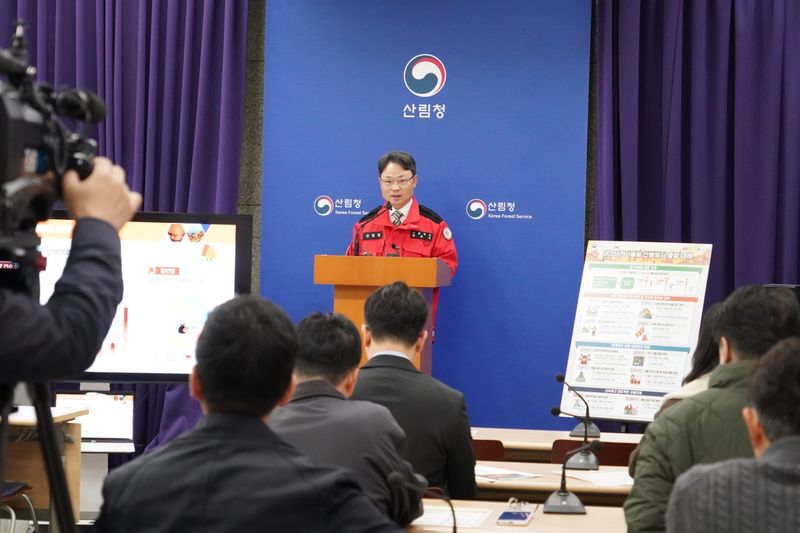
On the 28th, KFS chief Park Eunsik announced the ‘2026 Fall Wildfire Prevention Plan,’ which includes these measures, at Government Complex Daejeon. The plan focuses on △strengthening measures tailored to the causes of wildfires and public awareness campaigns △improving 24-hour situation management and firefighting capabilities △supporting proactive, overwhelming firefighting efforts and a system for rapidly evacuating residents.
First, KFS has significantly expanded key firefighting resources, including helicopters, equipment and personnel. The number of interagency firefighting helicopters available to relevant bodies, including KFS, the Ministry of National Defense and firefighting agencies, has risen by 54, from 261 to 315. The fleet of high-performance, multipurpose wildfire firefighting vehicles suited to rugged terrain has also been expanded substantially, from 29 to 108, while the authorized strength of elite airborne and special firefighting teams has increased from 599 to 755.
The ability to respond to nighttime wildfires, considered a particularly vulnerable period, has also been further strengthened. KFS has secured 14 nighttime flight pilots and plans to deploy seven firefighting helicopters at night immediately, depending on weather conditions. On the ground, it will also mobilize a rapid-response team of about 1,700 people to contain fires early at night.
This spring’s wildfire response is considered to have achieved some results. The area damaged by wildfires this spring was down 99% from last year, the time taken to contain the main fire was cut by 58%, and there were no wildfire-related deaths. KFS plans to carry these response lessons into its fall measures.
Penalties for causing wildfires will also be significantly increased to raise public awareness. Under the revised Forest Disaster Prevention Act, which takes effect on the 13th of next month, even those who negligently start a wildfire will face up to five years in prison, up from three years. The maximum administrative fine for handling embers without authorization will also rise to 3 million won from 2 million won. Following the law’s revision, KFS plans to seek reimbursement from those responsible for causing wildfires for firefighting expenses and damage-recovery costs.
In addition, inspections of wood-burning boilers in homes near forests will be completed by the end of this month, and proactive prevention measures will be pursued, including allowing the discretionary felling of standing trees within 25 meters of buildings.
“Wildfire prevention is a key task directly linked to the lives and safety of the public,” KFS chief Park Eunsik said. “We will strengthen coordination with relevant agencies and establish a seamless system, from advance preparation to on-site response.”
Meanwhile, as drought and abnormal heat intensify amid the recent global climate crisis, wildfires—which used to be concentrated in particular seasons such as spring and fall—are becoming a ‘year-round disaster’ that can occur at any time. In particular, given the high proportion of conifers in the country’s forests, dry, strong winds can dry out trees, making it increasingly common for small wildfires to rapidly grow into large ones and underscoring the importance of an effective initial response.
[email protected] Kim Won-jun Reporter