Ahead of energy foundation merger... Jeju proposes agency branch and relocation of environmental institutions
- Input
- 2026-10-28 10:01:47
- Updated
- 2026-10-28 10:01:47

【Financial News, Jeju—Reporter Jeong Yong-bok】 Jeju Island is proposing the establishment of a branch of the Korea Energy Agency in Jeju to perform specialized functions, as the government moves to consolidate public institutions in the energy sector. It plans to ask the National Institute of Green Technology and the Korea Environmental Industry & Technology Institute to relocate their headquarters and collaborate on research and demonstration projects using sites in Jeju.
According to Jeju Special Self-Governing Province on the 28th, Cho Seon-hui, director of its Climate and Energy Bureau, and Hyeon Gwang-min, head of its Carbon Neutrality Policy Division, are scheduled to visit four institutions in Seoul that day—the Korea Energy Information and Culture Agency, the Korea Energy Foundation, the National Institute of Green Technology and the Korea Environmental Industry & Technology Institute—to deliver proposals to attract them to Jeju and discuss ways to cooperate.
The visit is a response to the government’s plan, expected to be announced in the fourth quarter of this year, for the second round of public institution relocations outside the Seoul metropolitan area, as well as its efforts to reform the functions of public institutions. Jeju Island is pursuing not only the relocation of entire institutions but also the decentralization of specialized functions that can be linked to the region’s energy and environmental industries.
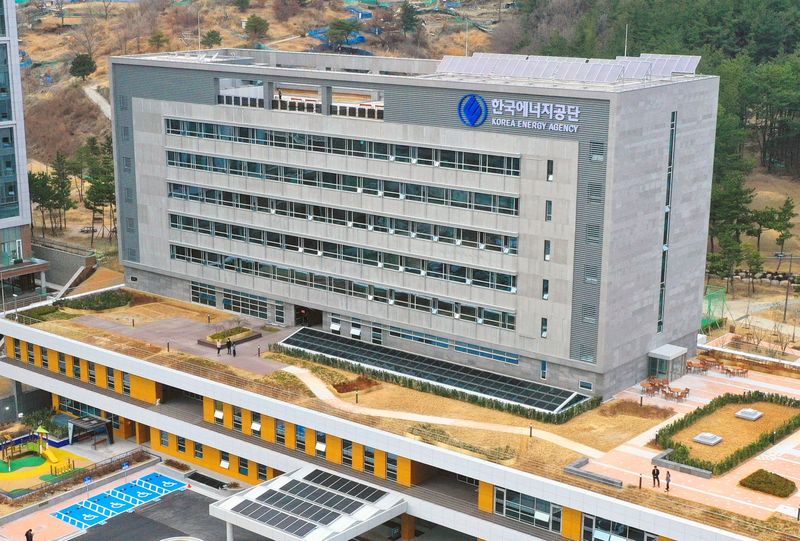
The most concrete proposal is to establish a Jeju branch of the Korea Energy Agency. In its “Plan for Reforming the Functions of Public Institutions,” announced on September 3, the government proposed merging the Korea Energy Information and Culture Agency and the Korea Energy Foundation into the Korea Energy Agency.
The Korea Energy Information and Culture Agency provides education and information on energy policy and technology and communicates with the public. The Korea Energy Foundation runs energy welfare programs, including improving energy efficiency in low-income households’ homes and providing heating and cooling support.
Jeju Island plans to propose setting up a specialized branch to carry out these functions in Jeju following the merger. The idea is to use Jeju, which is pursuing renewable energy expansion and distributed energy policies, as an on-the-ground hub for energy education and welfare programs. However, the Korea Energy Agency already operates its Jeju Regional Headquarters in Nohyeong-dong, Jeju City. The existing regional headquarters handles energy efficiency, the rollout of renewable energy and regional energy projects, among other responsibilities.
Jeju Island will propose relocating the National Institute of Green Technology’s climate technology policy research and international cooperation functions to Jeju. The plan is to demonstrate renewable energy technologies in Jeju and incorporate the results and problems identified during their operation into national policy. The province also plans to discuss using the research findings in climate technology cooperation projects with developing countries and island nations.
Jeju Island will ask the Korea Environmental Industry & Technology Institute to relocate with a focus on field testing and commercialization of environmental technologies. The plan is to test technologies that address local issues in Jeju, such as waste management and resource circulation, water resource use and the marine environment, at actual sites and help businesses commercialize them. Expanding eco-friendly certification in connection with the tourism industry, and supporting the growth and overseas expansion of Jeju environmental businesses, are also among the areas for cooperation.
However, competition with other regions to attract the two institutions is expected. On September 2, labor unions at the National Institute of Green Technology and the Korea Environmental Industry & Technology Institute asked for the institutions to relocate to Daejeon during a meeting with Daejeon City. The city is pursuing the concentration of research management institutions around Daedeok Innopolis. Although the unions’ relocation preference is separate from the institutions’ final decisions, it shows that competition among regions to attract them is already underway.
The institutions to be included in the government’s second round of public institution relocations, as well as their destinations, have yet to be finalized. The government has set out a principle of minimizing the number of public institutions remaining in the Seoul metropolitan area and clustering related institutions around existing innovation cities. It plans to draw up a relocation plan in the fourth quarter of this year, taking into account links with regional industries and universities, and begin relocating leading institutions from 2027.
Jeju previously identified six institutions as key targets to attract, including the Korea Racing Authority, Korea Airports Corporation and the Korea Institute of Energy Technology Evaluation and Planning. On September 17, it proposed that the latter relocate its headquarters to Jeju and discussed cooperation on energy research and development.
The visit to institutions in the climate and energy sectors is part of an effort to secure specialized research, energy welfare and environmental technology demonstration functions in addition to Jeju’s existing strategy to attract priority institutions.
Jeju Island also plans to discuss the conditions needed to support institutions’ relocation, including office buildings and sites, as well as housing, education and transportation for employees and their families. Next month, it will visit the relevant central government ministries to explain its case for attracting the institutions and continue follow-up discussions.
Cho Seon-hui, director of Jeju Island’s Climate and Energy Bureau, said, “We will develop concrete plans to attract the institutions by linking Jeju’s climate economy policies with each institution’s expertise,” adding, “We will continue discussions with central government ministries and relevant institutions, taking into account the institutions’ operating conditions and employees’ needs for settling in.”
The key question is whether Jeju Island’s proposals can lead to the actual selection of relocation targets and the placement of organizational units and personnel. It will need to present concrete plans not only for renewable energy and environmental technology demonstrations, but also for avoiding overlap with existing institutions, helping relocating employees settle in, and creating industry links that distinguish Jeju from other regions.
[email protected] Jeong Yong-bok Reporter