“Do you earn more than 3 million won a month? Then you’re among the top 50% of workers in South Korea” ... The share earning 5 million won a month also hits a record high
- Input
- 2026-10-28 10:30:04
- Updated
- 2026-10-28 10:30:04
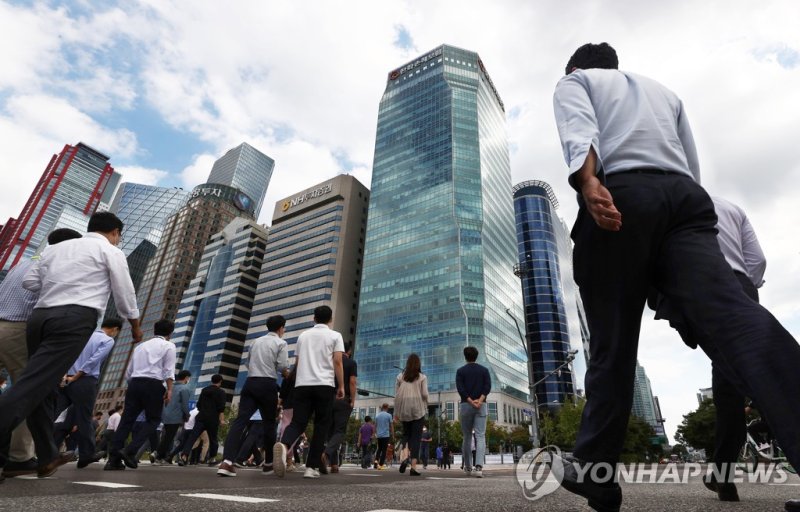
[Financial News] In the first half of this year, for the first time, workers earning an average of at least 3 million won a month accounted for more than half of all wage workers.
For the first time, more than 50% earn an average monthly wage of at least 3 million won
According to the “2026 First-Half Regional Employment Survey: Characteristics of Employed Persons by Industry and Occupation,” released by the National Data Office on the 27th, wage workers accounted for 22,373,000 of all employed people as of April this year. Of these, 51.9% earned an average monthly wage of at least 3 million won, exceeding 50% for the first time since the relevant statistics were first compiled.
A breakdown shows that 22.8% earned between 3 million and less than 4 million won, 11.5% earned between 4 million and less than 5 million won, and 17.6% earned at least 5 million won. In particular, the share earning at least 5 million won rose by 1.2 percentage points from a year earlier, reaching its highest level for the first half of the year since the relevant statistics began in 2013. The shares earning between 3 million and less than 4 million won and between 4 million and less than 5 million won also rose by 0.4 and 0.3 percentage points, respectively.
Average monthly wages refer to the total amount received from one’s main job over the past three months, including bonuses and in-kind payments. Bonus payments in industries such as semiconductors appear to have boosted the share of high earners in the first half of this year.
40% of finance and insurance workers earn at least 5 million won
There were wide gaps across industries. The share of workers earning at least 5 million won was highest in finance and insurance, at 40.5%, followed by professional, scientific and technical services (37.5%) and information and communications (35.8%). Manufacturing also saw its share rise, from 22.9% in the first half of last year to 25.4% in the first half of this year. By contrast, the figure for health and social welfare services was just 5.8%.
The health and welfare sector led job growth. Employment in the operation of non-residential welfare facilities, which includes comprehensive welfare centers and visiting welfare services, totaled 1,843,000, up by 155,000 in a year. Its share of all employed people also reached 6.4%, exceeding 6% for the first time. Employment at hospitals (64,000) and clinics (26,000) also increased as demand for healthcare and welfare services grew.
By contrast, employment fell by 82,000 in crop production, 62,000 in architectural, engineering and related technical services, and 31,000 in general merchandise retail.
[email protected] Kim Su-yeon Reporter