“Stop free-riding on ‘K-brands’ and revive local manufacturing”... Korea Customs Service launches sweeping three-month crackdown
- Input
- 2026-10-28 11:00:00
- Updated
- 2026-10-28 11:00:00
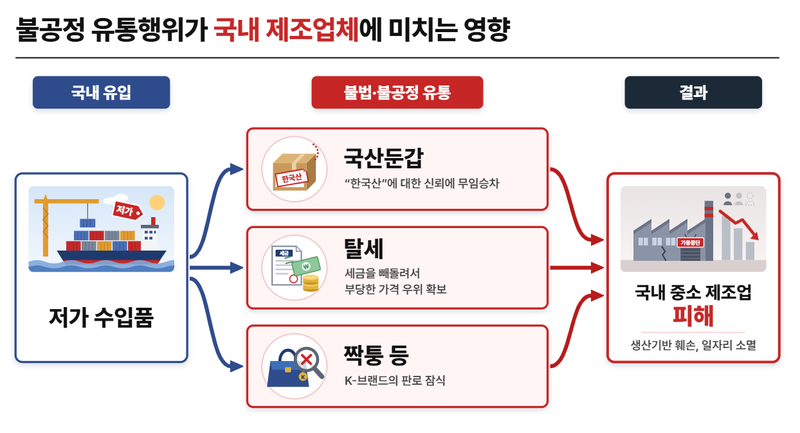
On the 28th, the Korea Customs Service announced a “comprehensive plan to protect K-manufacturing,” built on two pillars: “strict enforcement” to block unfair trade practices and “win-win support” to help revive local SMEs. It plans to carry out special crackdowns and support measures simultaneously at customs offices nationwide for three months, starting next month and running through January next year.
Under the plan, the enforcement system—previously divided into five areas and carried out separately, including origin-labeling enforcement, customs audits, rules-of-origin verification under Free Trade Agreements (FTAs), counterfeit-goods enforcement and criminal investigations—will be overhauled into “integrated customs enforcement.” The plan is to activate a “full-cycle import-distribution-export defense system” that checks the entire process at once, from import-stage customs clearance inspections through distribution and export, to prevent illegal activity from shifting elsewhere in the process.
The plan reflects demands from the front lines of small and medium-sized manufacturing. The harm caused by low-priced imports being passed off as domestic products is severe: in a survey of 500 small and medium-sized manufacturers conducted by the Korea Customs Service last June, 72.8% of respondent companies said that “stronger enforcement of origin labeling is needed to maintain the manufacturing base.”
In November, the Korea Customs Service will sign “business cooperation agreements to protect K-manufacturing” with local governments and producer groups through each regional headquarters and directly administered customs office. It will select locally specialized manufactured goods and combine focused enforcement with tailored export support. It will also expand support for compliant companies through customs offices’ Export and Import Business Support Centers, including consultations on using FTAs and assistance in resolving overseas customs-clearance difficulties. Violators will face strict measures, including administrative fines of up to 300 million won and criminal penalties under the Foreign Trade Act, as well as recovery of evaded taxes under the Customs Act.
Korea Customs Service Commissioner Lee Jong-wook said, “We will use every tool of customs administration to level the playing field, which has been tilted by unfair practices such as misrepresenting the origin of goods, tax evasion and counterfeiting.”
The plan also comes amid growing risk that Korea could be exploited as a “transit point for origin laundering” for goods made in third countries, as U.S.-China trade tensions continue and global supply chains are reconfigured. Concerns have been raised that if goods rerouted through Korea and falsely labeled as Korean-made are detected, bona fide Korean exporters as a whole could suffer secondary harm, such as import restrictions or high tariffs, as major economies tighten origin rules.
[email protected] Kim Won-jun Reporter