Jeju Special Self-Governing Province Selects 118 Civil Servants as ‘AI Partners’; Only 2 at Department-Improvement Level
- Input
- 2026-10-28 09:48:52
- Updated
- 2026-10-28 09:48:52
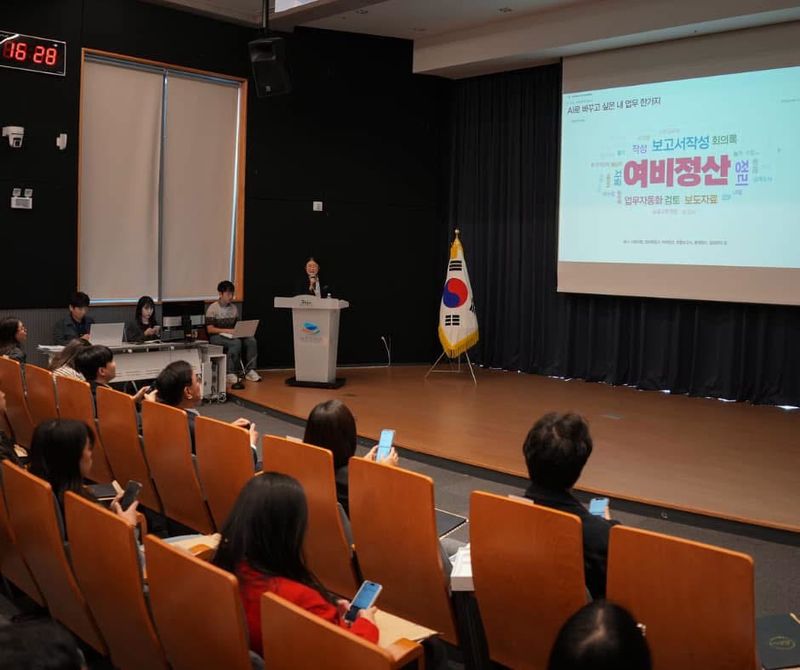
【Financial News, Jeju — reporter Jung Yong-bok】 Jeju Special Self-Governing Province has selected 118 civil servants as ‘AI Partners’ to expand the use of artificial intelligence (AI) among civil servants.
According to Jeju Special Self-Governing Province on the 28th, an AI Partner launch ceremony was held the previous afternoon in the main auditorium of Jeju Literature Museum, attended by Jeju Governor Wi Seong-gon and public officials from the provincial headquarters, directly affiliated agencies and offices.
AI Partners are in-house staff who help civil servants reduce repetitive administrative work and spread their experience using AI throughout their departments. The aim is to ensure that accumulated skills and methods remain within the organization even when the person responsible for a task changes.
Jeju Special Self-Governing Province is operating a three-tier certification system—Learner, Builder and Master—based on participating civil servants’ proficiency in using AI and their roles.
Learners use AI for individual tasks such as drafting documents, summarizing materials and searching for information. Builders identify work-improvement projects for their departments and share ways to use AI with colleagues. Masters plan and advise on AI transformation at the bureau and department level, and mentor partners in other departments.
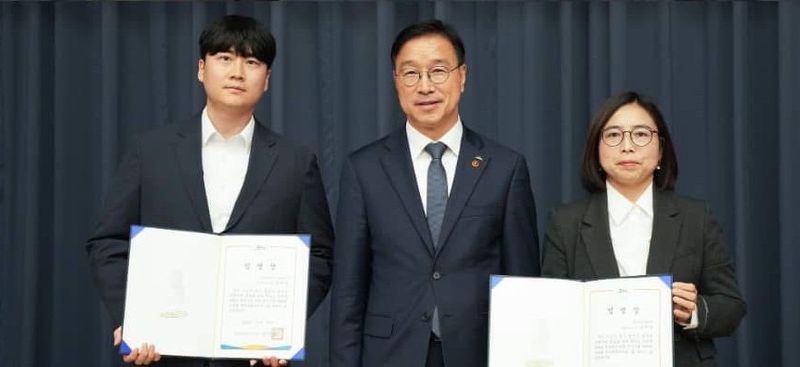
Of the 118 people selected, 116 are Learners and 2 are Builders. No civil servants are yet at the Master level.
Since most participants are at the basic-use level, a key challenge will be how much practical capacity to improve work they can develop through future training. This is because using AI to draft documents is distinct from improving administrative procedures and applying those improvements to systems.
Jeju Special Self-Governing Province will hold tiered training in November and December, and a best-practice competition in December. It plans to work with experts to refine the work-improvement programs developed by civil servants and support their application to actual administrative work.
A system of incentives will also be introduced to encourage participation. Depending on their certification level, participants will receive awards from the governor and certification badges, among other incentives. From 2027, bonus points will also be applied in personnel decisions and department heads’ performance evaluations.
The initiative is also connected to the government’s policy of AI transformation in the public sector. Last September, the Ministry of the Interior and Safety announced a plan to support civil servants in using AI to directly solve problems in the field of public administration and enable organizations to use validated results. The plan includes training 20,000 ‘AI Champions’—AI specialists in the public sector—by 2030, and expanding development environments and security and quality verification systems.
Jeju Special Self-Governing Province has also been operating ‘AI Haebommaru,’ a continuous learning space for public officials, since last September. Through a separate initiative called ‘AI Connect,’ it plans to develop an administrative assistant and expand AI services that use administrative and public-sector information.
When applying AI to administrative work, it is also important to protect personal information, ensure security and verify the accuracy of generated information. In particular, before introducing programs developed by civil servants themselves into work systems, their performance and potential for errors must be checked, and responsibility for their operation must be clearly assigned.
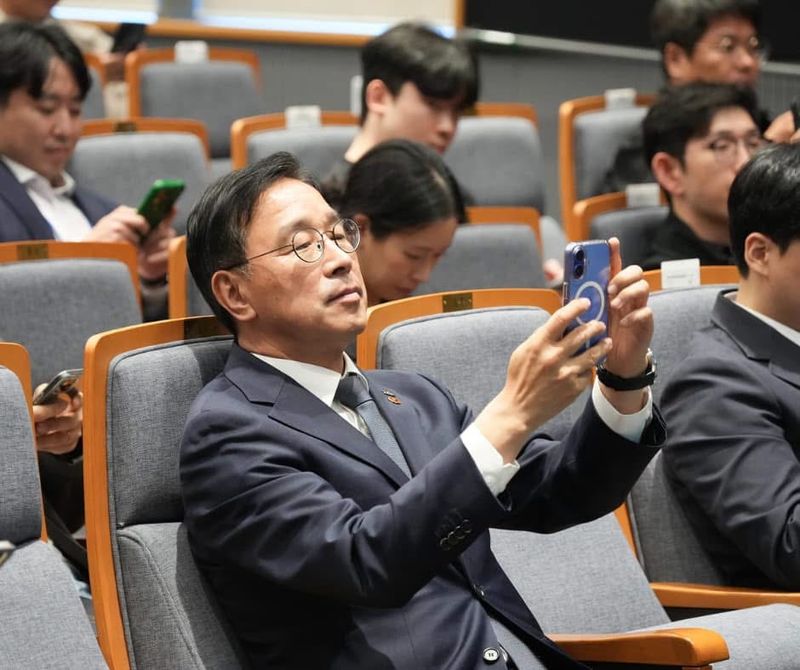
At the launch ceremony, Governor Wi Seong-gon introduced his experience using AI by reading aloud some of the prepared remarks that he had photographed and had AI rewrite.
Governor Wi urged them, saying, “I ask all of you AI Partners to become innovators who change the way your entire departments work,” and “Start by directly improving inconvenient tasks in the field, then share the results with your colleagues and spread them throughout provincial administration.”
He added, “We will actively support the programs developed by public officials being refined with experts so they can be used in actual work.”
[email protected] Jung Yong-bok Reporter