More Important Than Robots: “Factory Data” ... Samil PwC: “Korean Manufacturing Sites as a Key AI Asset” [fn Market Watch]
- Input
- 2026-10-28 08:46:44
- Updated
- 2026-10-28 08:46:44
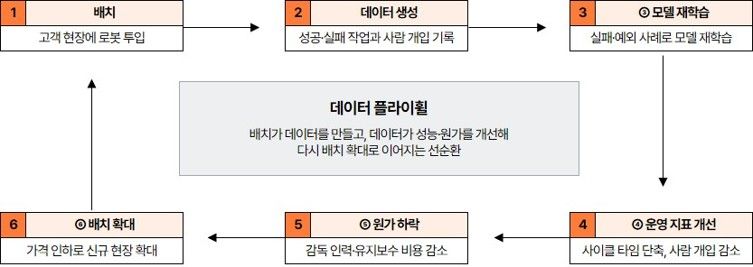
According to a report published by Samil PwC on the 28th, the physical AI industry has moved beyond the technology validation stage and entered the early stages of commercialization, where competitiveness is assessed by actual deployment at worksites and operational results. The report is titled “Physical AI: From the Performance Race to the Race to Deploy in the Field.”
According to market research firm International Data Corporation, global humanoid shipments totaled approximately 25,000 in the first half of this year, up 432% from the same period a year earlier. Figure AI’s humanoid “Figure 02” operated for at least 1,250 hours at BMW’s Spartanburg plant in the United States, contributing to the production of at least 30,000 X3 vehicles.
The report identified “real-world behavioral data” as central to competitiveness in physical AI. Information such as a robot’s force and tactile sensing, as well as records of successful and failed tasks, can only be gathered at actual worksites. The report explains that companies that deploy robots first can accumulate data and use it to retrain models and improve performance, thereby widening the technology gap.
Korea is relatively weak in general-purpose AI models and some key robot components, but it has world-class manufacturing facilities in sectors such as semiconductors, automobiles, shipbuilding and batteries. The report stressed that instead of competing head-on with U.S. AI models or low-cost Chinese hardware, Korea should turn its complex manufacturing processes into data assets that can be used to train AI.
Securing data ownership for manufacturing companies was also identified as a key challenge. Ownership of and usage rights to work data generated during the introduction of robots could determine future competitiveness. The report recommended that companies clearly define the scope of data use, its use for model training, and whether it may be provided to third parties when signing contracts with robot suppliers.
Kim Jeong-yeon, a partner at PwC Consulting, stressed, “Competition in physical AI is moving beyond the performance of individual models and robots to how reliably they can be operated in real-world settings and continuously improved. Korean companies should use complex manufacturing sites as strategic assets, accumulate real-world data, and build a virtuous cycle that connects it to training and performance improvement.”
[email protected] Kim Hyun-jung Reporter