Lula turns the tide with WhatsApp... His first “personal phone” is a Galaxy S26
- Input
- 2026-10-28 08:45:34
- Updated
- 2026-10-28 08:45:34
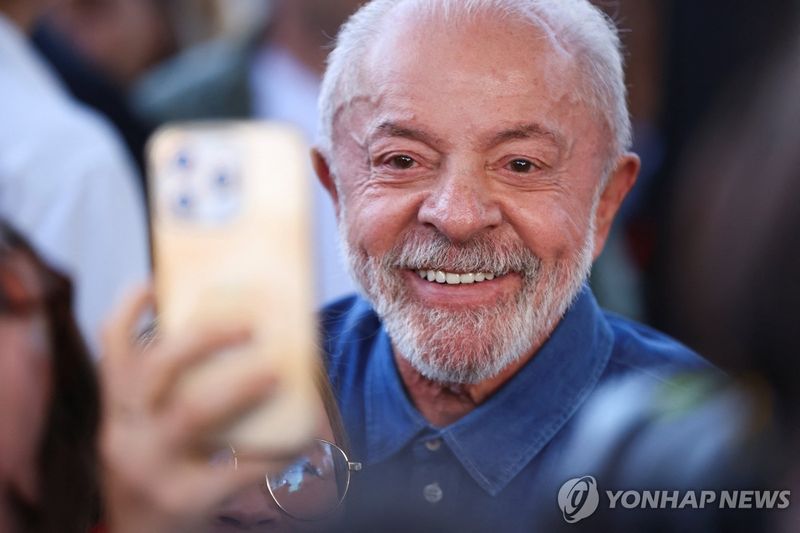
[Financial News] WhatsApp is being cited as a key factor in the victory of Brazilian President Luiz Inácio Lula da Silva, 81, who scored a dramatic comeback win in Brazil’s presidential election.
President Lula, who did not usually use a mobile phone, was given a Samsung Electronics Galaxy S26 Ultra as his first smartphone so he could campaign digitally on WhatsApp. He also showed how actively he used it on social media.
According to the British daily The Guardian and the BBC on the 26th (local time), Lula’s camp created a WhatsApp channel called “Lula’s Army” after he lost the first round of Brazil’s presidential election on the 4th of this month, and attracted 10.8 million followers in just three weeks.
Lula’s close ally, Congressman André Janones, mounted an aggressive campaign, posting dozens of videos a day through the channel and livestreaming on YouTube for 24 hours on the day before voting.
In his victory speech the previous day, President Lula also called Congressman Janones “our general.”
President Lula, who turned 81 this year, also drew attention during the campaign by recording selfie videos and saying, “From now on, I will communicate with the people of Brazil several times every day.”
Lula received his first-ever mobile phone as a gift during this election and used it in his campaign
Brazilian media outlet Metrópoles reported that President Lula, who was said not to have had a personal mobile phone, received his first-ever phone as a gift during this election campaign and joined the “Lula’s Army” effort.
In a video about one minute long posted on X (formerly Twitter) on the 21st, Piauí Governor Rafael Fonteles can be seen handing President Lula a boxed Galaxy S26 Ultra.
President Lula promised to join the “Lula’s Army” WhatsApp channel himself. At the end of the video, after opening the box and holding the smartphone, he also called it “a weapon for our army.”
The Galaxy S26 Ultra is Samsung Electronics’ flagship smartphone, released in February this year. The reason he chose a Galaxy as his first smartphone is not known.
Experts say the social media campaign helped rally President Lula’s supporters and boost in-person campaigning, ultimately contributing to his presidential election victory.
The achievement is drawing even more attention because it came in a social media space that had until now been considered dominated by right-wing politicians, including candidate Flávio Bolsonaro.
Lula’s victory was “the result of combining social media with efforts to rally supporters on the streets”
It has previously been noted that social media also played a key role when former President Jair Bolsonaro, the father of candidate Bolsonaro, won the 2018 presidential election.
Denilji Holzacker, a professor at Brazil’s ESPM University, told the BBC, “It is commendable that Lula recognized his weaknesses and completely changed his style.” He added, “Lula’s aide Janones succeeded in doing something that would have been hard to imagine for the Brazilian left: taking control of social media.”
Maíra Goulart, a professor at the Federal University of Rio de Janeiro, likewise said Lula’s victory this time “was the result of combining social media with efforts to rally supporters on the streets.” She said this “not only helped reduce abstention, but also succeeded in turning a considerable number of undecided voters into supporters.”
Some predict that these efforts could become a valuable asset for the next Lula administration, which takes office next year.
In his victory speech the previous day, President Lula said, “We will ensure that the people have a greater say in the decision-making process, and digital communication will play a much greater role in government.”
At a celebration of his election victory on the 26th, he also said, “I’ve already received a smartphone as a gift,” and promised, “I will communicate with you directly through the (WhatsApp) channel, not through the media anymore.”
[email protected] Lee Seok-woo, International Affairs Correspondent Reporter