Presale rate at 94%, but move-in rate at 82% ... construction firms face financial-cost burdens over ‘uncollected final payments’ [fn Market Watch]
- Input
- 2026-10-28 08:39:38
- Updated
- 2026-10-28 08:39:38
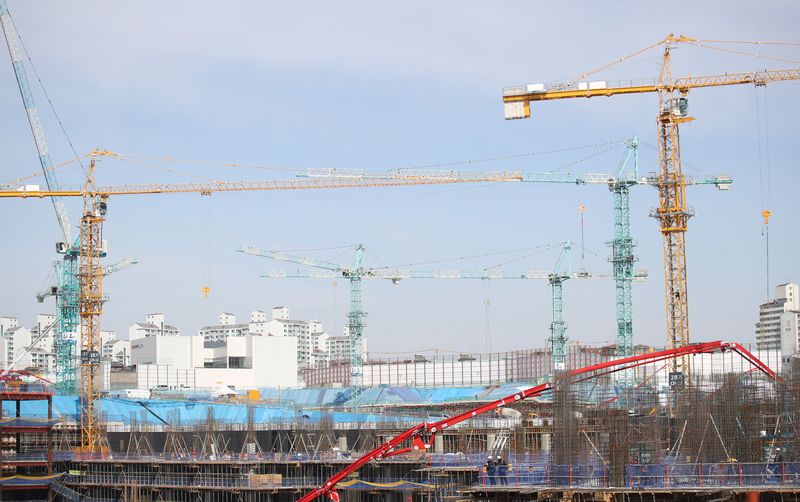
In a report on the 28th, Lee Kyung-rok, a researcher at Shinyoung Securities Co., Ltd., said, “Today, buyers are failing to move in even in areas where prices have risen,” and noted that “in most cases, buyers who intend to move in are unable to do so because of financing problems, such as delays in selling their existing homes, failure to secure loans for final payments, or inability to find tenants.”
According to data from the Housing Industry Research Institute cited by Shinyoung Securities Co., Ltd., delays in selling existing homes accounted for the largest share of reasons buyers failed to move in, at 37.0%. Failure to secure loans for final payments followed at 31.5%, while inability to find tenants accounted for 16.7%. Delays in selling existing homes and failure to secure final-payment loans alone made up 68.5% of all reasons for buyers not moving in.
A gap is also emerging between presale and move-in rates. According to an analysis by NICE Investors Service, the presale rate at completed projects in high-risk areas reached 93.8%, but the actual move-in rate was just 81.6%. The gap between the two figures was 12.2 percentage points.
Such move-in delays could also put pressure on construction companies’ cash flows. Even after selling homes and completing construction, a construction company can collect the full sale proceeds only when buyers pay the balance as part of the move-in process. So even when the presale rate is high, delays in actual move-ins can leave receivables outstanding at completed projects, while prolonged collection periods may require additional working-capital financing and result in higher financial costs.
An analysis released last month by NICE Investors Service found that accounts receivable from presale projects at 21 construction companies with valid credit ratings totaled approximately 17.7 trillion won. Of that amount, receivables from completed project sites totaled approximately 7.6308 trillion won, accounting for 43% of the total. Receivables that had remained uncollected for more than six months after project completion also amounted to approximately 3.2 trillion won.
The problem is that early cash recovery through discounted sales is also difficult amid rising construction costs and financial regulations on real estate. Construction companies are responding to liquidity pressures by using alternative funding methods, including supplier finance agreements, securitization of accounts receivable and the issuance of hybrid securities.
Lee assessed that “the losses from this current risk of buyers failing to move in may be smaller than in the past, but the period needed to resolve it could be longer,” adding that “while collection of final payments is delayed, additional funding and mounting financial costs are unavoidable, and the timing of a resolution is expected to depend on restrictions on final-payment loans, housing transaction volumes and the path of the benchmark interest rate.”
[email protected] Kim Hyun-jung Reporter