“Kim Jong Un Is Better Off Not Talking to Trump”; Concerns Outweigh Hopes for November U.S.-North Korea Talks
- Input
- 2026-10-28 07:16:30
- Updated
- 2026-10-28 07:16:30
Sydney Seiler, a senior adviser at the Center for Strategic and International Studies (CSIS) and a former deputy coordinator for North Korea at the U.S. Office of the Director of National Intelligence, said on a CSIS podcast on the 27th (local time) that “no one, including Kim Jong Un, feels any urgency for the United States and North Korea to hold talks right away,” making this assessment.
He said, “The possibility of China stepping in as a mediator at this juncture is very slim.” Seiler, a former deputy coordinator, instead saw little reason for North Korea to enter talks with the United States at this point. He added, “Under the current circumstances, it could be more advantageous for North Korea to stay out of talks, as that could make the United States even more anxious.”
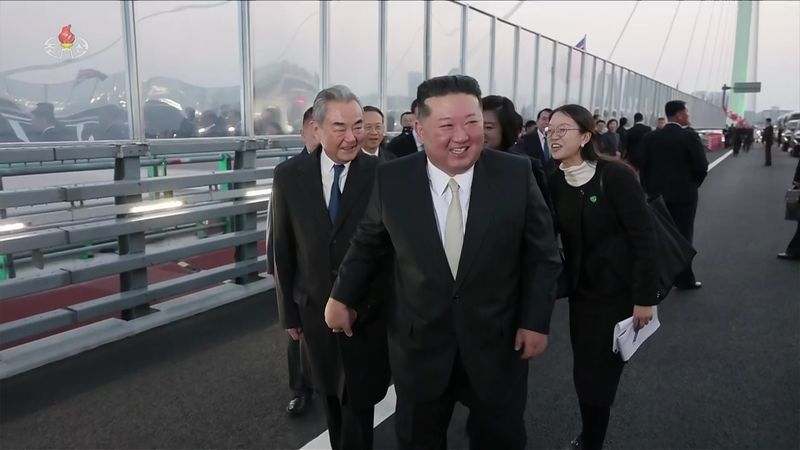
After reports emerged recently of North Korean leader Kim Jong Un’s surprise visit to Dandong, China, some speculated that it could be a signal of an upcoming U.S.-North Korea summit. Experts, however, cautioned that it was difficult to regard the visit as decisive evidence that talks would take place. They said it was merely a move to strengthen internal ties between North Korea and China, and insufficient to reverse the stalemate in U.S.-North Korea relations.
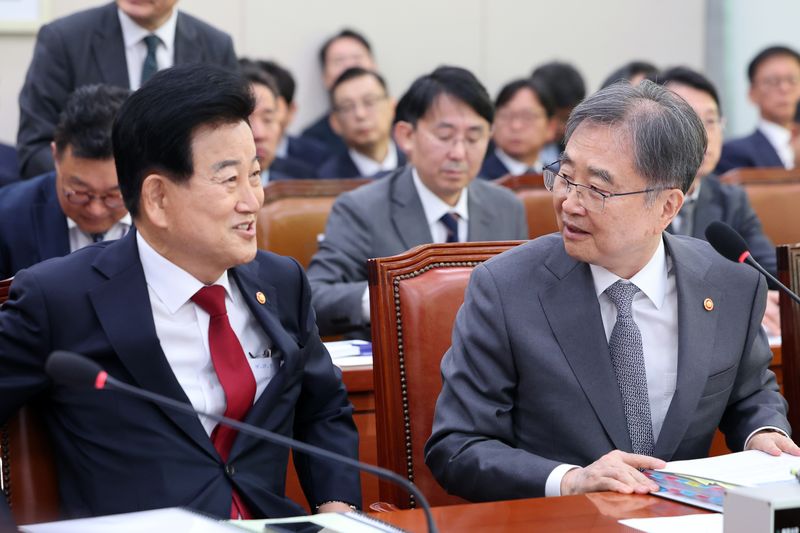
South Korean government officials are also maintaining a cautious stance. At the previous day’s comprehensive audit of state affairs before the National Assembly’s Foreign Affairs and Unification Committee, the ministers of unification and foreign affairs did not rule out the possibility of U.S.-North Korea talks, but were extremely guarded, saying they “could not say for certain” whether an actual meeting would take place.
Foreign Minister Cho Hyun said of the possibility of coordinating U.S.-North Korea talks, “I think that is possible,” but added, “It is still difficult to draw a conclusion. I think we will have to consider various factors together.” Cho added, “We are also communicating with the United States and China so that talks between North Korea and the United States can take place and the current situation on the Korean Peninsula can be resolved.”
Asked whether a U.S.-North Korea summit was within reach, Cho said, “It could be, but I don’t think we can necessarily be optimistic.”
Meanwhile, Unification Minister Chung Dong-young said, “There were too many people accompanying (Kim) for his visit to Dandong, China, via the New Yalu River Bridge to be viewed as merely an economic event.” He described it as “highly unusual, with Chinese Foreign Minister Wang Yi among those who appeared, and displaying the characteristics of leader-level diplomacy without a summit.”
He went on to say, “If he had visited the Museum of the War to Resist U.S. Aggression and Aid Korea, military officials should have accompanied him, but none did,” adding, “The distinctive feature was that the top diplomatic officials showed up in force.” During Kim’s visit to China, the appearance of even Ma Zhaoxu, China’s executive vice foreign minister and an expert on U.S. affairs, prompted speculation that U.S.-North Korea talks could be coordinated.
[email protected] Kim Kyung-soo Reporter