“Anti-Netanyahu bloc: 52–53 seats vs. pro-Netanyahu bloc: 50” ... No bloc secures a majority in razor-thin race
- Input
- 2026-10-28 07:24:21
- Updated
- 2026-10-28 07:24:21
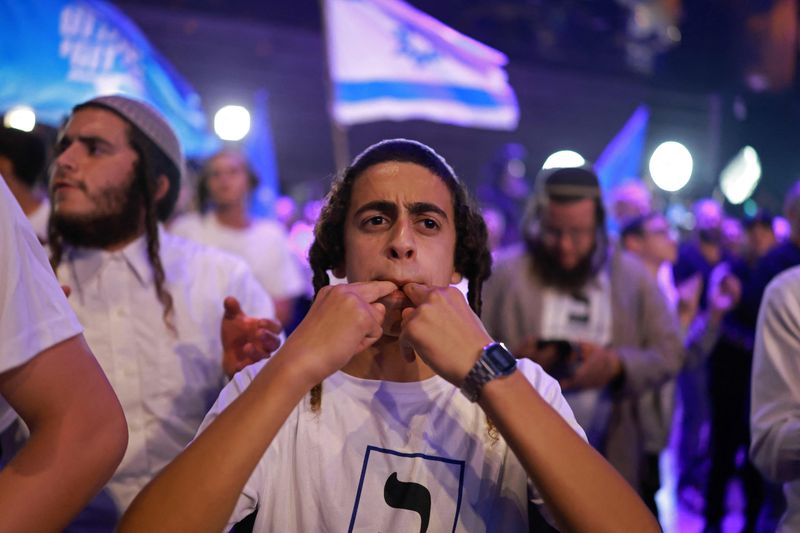
[Financial News] Exit polls showed that Israel’s general election, which could determine whether Prime Minister Benjamin Netanyahu remains in power, ended on the 27th (local time) without a clear winner.
The race is so close that it may take time to determine which party comes first, and it could take weeks to decide who will be the next prime minister. If coalition talks run into difficulties, another election may be necessary.
Exit polls released by broadcasters immediately after voting ended at 10 p.m. that day showed anti-Netanyahu parties narrowly ahead of pro-Netanyahu parties. However, neither bloc appeared to have secured the 61 seats needed for a majority to form a coalition government.
Exit polls: Netanyahu’s ruling Likud leads among individual parties with 24 seats
According to The Times of Israel, a Keshet 12 exit poll projected that the ruling Likud party, led by Prime Minister Netanyahu, would win the most seats of any individual party, with 24 of the 120 seats. Pro-Netanyahu parties, including Likud, were projected to win a total of 50 seats.
The four Jewish opposition parties aligned against Netanyahu were projected to win a total of 52 seats, including 22 for the Yashar Party, led by former military chief of staff Gadi Eisenkot.
The Arab parties Ra’am and the Joint List were projected to win 7 and 11 seats, respectively, giving them the casting vote in forming the next government.
A Channel 13 exit poll also projected 53 seats for the anti-Netanyahu bloc, 50 for the pro-Netanyahu bloc and 17 for Arab parties. Other broadcasters released broadly similar results.
After the exit poll results were announced, Eisenkot said they showed “a complete loss of confidence” in Prime Minister Netanyahu.
By contrast, Likud foreign minister Gideon Sa’ar said in a post on X (formerly Twitter) that it was “too early” for the opposition to celebrate. He stressed that the exit polls showed Likud winning the most seats among individual parties.
“Anti-Netanyahu parties edge pro-Netanyahu bloc’s 50 seats with 52–53” ... No bloc secures a majority in razor-thin race
Once the official vote count is announced, President Isaac Herzog will consult with the leaders of each party and then assign the task of forming a government to the candidate most likely to form a coalition. The candidate will have up to six weeks to secure a majority; if unsuccessful, another candidate may get a chance.
In theory, Arab parties could play a decisive role in forming a coalition. However, Prime Minister Netanyahu and Eisenkot have both so far ruled out an alliance with Arab parties, The Associated Press reported.
It has also been suggested that Arab parties could hold the key to forming a coalition by supporting it from outside without joining it directly, or by abstaining in votes related to forming the next government.
Highest turnout in decades ... First election since the surprise Arab attack in October 2023
Agence France-Presse reported that Ra’am and the Joint List, while not part of Eisenkot’s bloc, have been open to supporting the opposition bloc.
If neither bloc secures a majority in negotiations, another election will be held within several months, and the process of forming a government will begin again from scratch.
Until then, Netanyahu’s government will continue to run the country as a caretaker government.
Even another election could result in the same deadlock. Israel held five general elections in the three and a half years leading up to November 2022.
Agence France-Presse reported that this general election saw the highest turnout in decades.
According to the Central Elections Committee, turnout is at least 8 percentage points higher than in the 2022 general election.
[email protected] Lee Seok-woo, international affairs correspondent Reporter