Opposition Leads in Israeli Election, but Change of Government Remains Uncertain
- Input
- 2026-10-28 06:21:14
- Updated
- 2026-10-28 06:21:14
On the 27th (local time), Israel’s Channel 13 projected that Eisenkot’s camp would win 53 seats and Netanyahu’s camp 50. The public broadcaster Kan projected 55 and 50, respectively, while Keshet 12 forecast 52 and 50. Israel’s parliament, the Knesset, has 120 seats in total, with 61 needed for a majority.
Exit polls released by Israel’s major broadcasters immediately after voting ended at 10 p.m. that day showed Netanyahu’s Likud party narrowly ahead of the party led by Eisenkot and set to remain the largest party. However, Eisenkot’s camp was found to have the advantage in the opposition’s total seat count.
The biggest wild card in the election is the gains made by Arab parties. Exit polls projected that two Arab parties would win 17–18 seats. If the actual vote count confirms this, it would be the largest number of seats ever won by them.
The difficulty is that support from Arab parties is unlikely to translate directly into a change of government by the opposition. Since Hamas’s attack on Israel on October 7, 2023, Eisenkot and some opposition parties have taken a negative stance toward relying on support from Arab parties. Excluding the Arab parties, the seat gap between the opposition and Netanyahu’s camp was not wide.
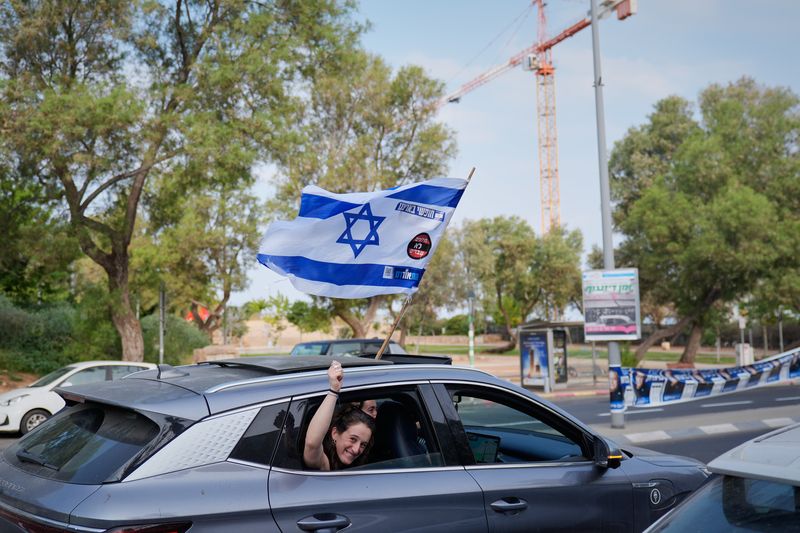
This is the first nationwide election since Hamas’s attack on Israel on October 7, 2023. The war that has continued for about three years since then has left most of the Gaza Strip in ruins, while debate has continued within Israel over the Netanyahu government’s responsibility for security failures.
Arab voters’ turnout was especially notable that day. Arab citizens, who make up about 20% of Israel’s total population, were reported to have turned out at polling stations in large numbers. Netanyahu cited the high turnout among Arab residents, claiming that “they are trying to steal the election,” and urged his right-wing supporters to vote.
The election is seen as a watershed that will determine Israel’s future political and diplomatic course. Netanyahu is seeking to return to power with the support of nationalist forces and ultra-Orthodox Jewish parties, campaigning on pledges including tighter control over the West Bank and Gaza Strip and judicial reform.
Eisenkot, a former army chief of staff, emphasized the need to hold the Netanyahu government accountable for its failure to respond to the October 7 attack and to restore Israel’s credibility, which has been damaged internationally. He also pledged to crack down on extremist violence against Palestinians in the West Bank. Eisenkot also lost his son in the war in Gaza.
However, Israeli exit polls have differed from actual vote counts in close races in the past, making it difficult to predict the final result. Official election results are expected around the 29th.
[email protected] Lee Byung-chul, correspondent Reporter