Yuna Kim’s leap rendered in ink strokes... Seok Chang-woo’s ‘A Question Mark at the Fingertips’ opens on the 29th [fn Art Snap]
- Input
- 2026-10-28 06:30:00
- Updated
- 2026-10-28 06:30:00
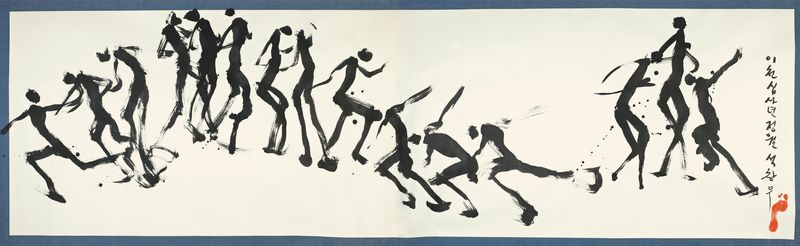
He performed ink-drawing pieces at the closing ceremonies of the 2014 Sochi and 2018 PyeongChang Winter Paralympics. He also went through trial and error before finding a way to secure a brush to a hook-shaped prosthesis. Speaking at a media briefing at Modu Art Space on the 27th, Seok said, “The way a soft brush expresses things really suited me.”
The exhibition’s title comes from the rounded hook at the tip of his prosthesis. It captures his process of asking what he could do with his body and finding ways to express it.
The sports series begins with repeated viewings of competition footage. He looks for moments when an athlete’s posture and strength are concentrated, then responds to the movement by sweeping his brush or turning his body.
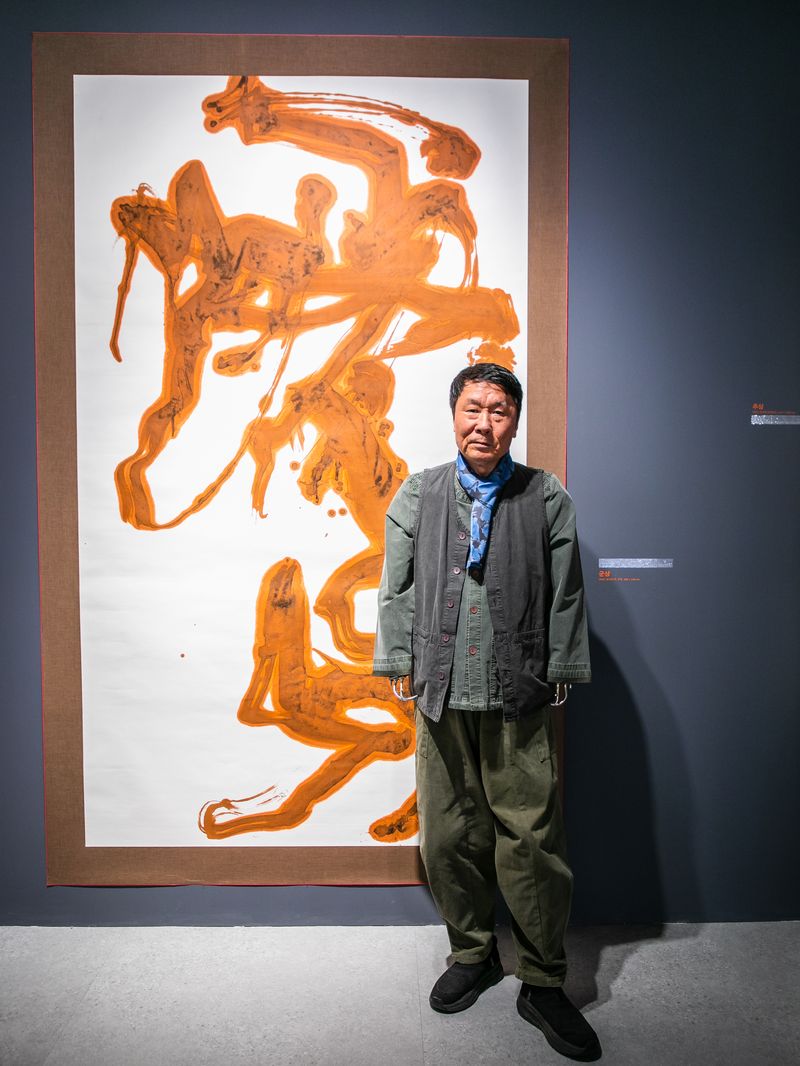
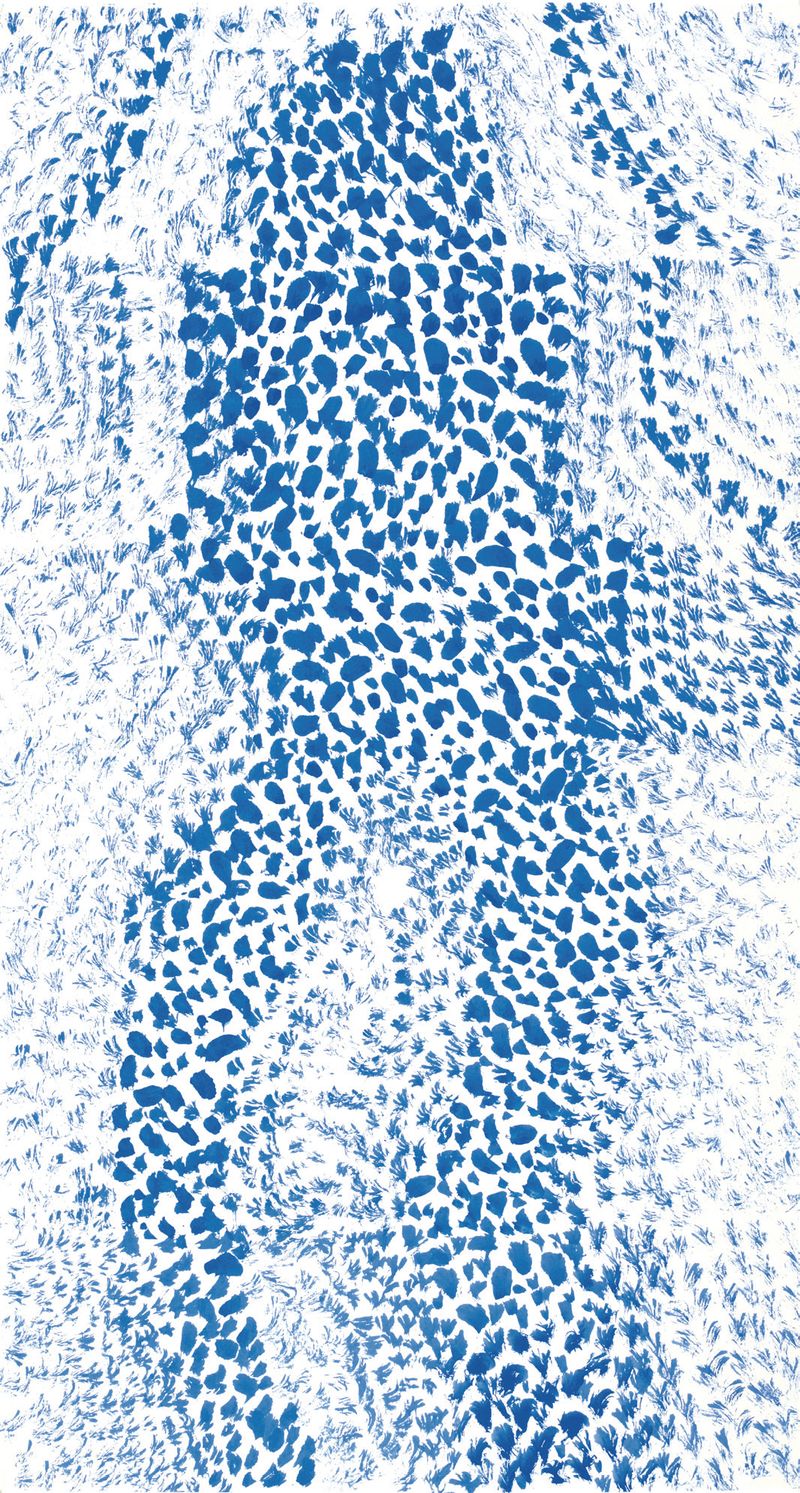
In ‘Group Figures’ (2010), bold brushstrokes and spreading ink make the figures overlap and intertwine. Rather than details of each individual, the canvas is filled with relationships in which people lean on and influence one another.■ The rhythm of abstraction found in flowers and crowdsHis interest in the movement of the human body led him to color and dots. The turning point was a trip to Europe in 2019. The crowds he viewed from above at a horse festival in Italy and the colors he encountered at a flower festival became starting points for his abstract work. The artist said he could sense movement even when only people’s heads were visible.
In this year’s work ‘Abstraction,’ dots and flows convey energy in place of clearly defined human figures. The composition, where large and small dots gather and disperse, is another variation on group figures. Though the forms change, his interest in movement continues.
Speaking about a dream he had after the accident, Seok said, “In my dreams, I had both hands, but when I started expressing it through my work, that dream went away.”
Archives, including diaries written on a computer and film photographs, offer a glimpse of everyday life behind the artworks. ‘Anchor,’ a 16-minute documentary whose production was supported by Modu Art Space, explores his life and work through interviews with people around him, photographs and materials related to his art.
As part of the exhibition’s programs, ink-croquis workshops will be held on November 14 and 26, and a conversation with the artist on the 21st. An educational program will also invite infants and toddlers to express dots and negative space on paper. The exhibition is open Monday through Saturday from 10 a.m. to 6 p.m., and admission is free.
[email protected] Jang In-seo Reporter