Police launch special crackdown on five major forms of local collusion-related corruption; investigations to expand from November
- Input
- 2026-10-28 12:00:00
- Updated
- 2026-10-28 12:00:00
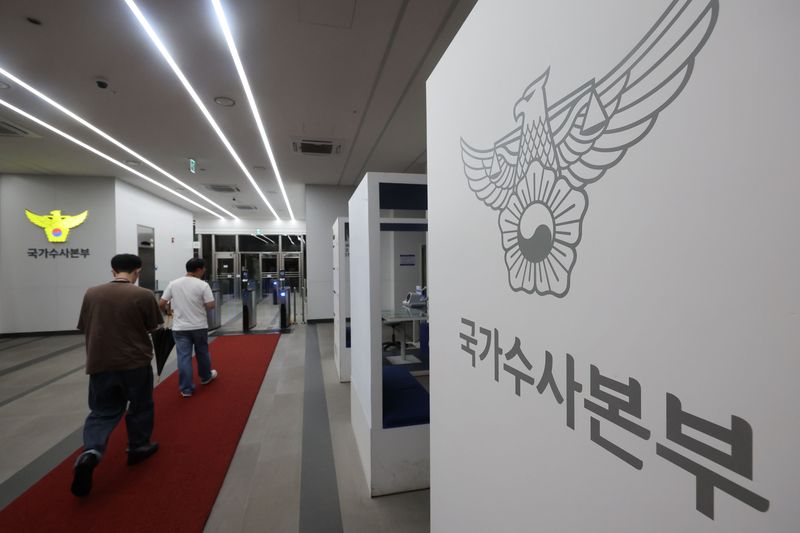
[Financial News] Starting next month, police will launch a special crackdown on five major forms of corruption rooted in local communities to stamp out the problem. They plan to expand investigations, previously focused on local governments and local councils, across the local public sector as a whole.
The National Office of Investigation of the Korean National Police Agency said on the 28th that it would begin a second special crackdown on November 1, with the goal of “strictly cracking down on rule-breaking and unfair privileges and rooting out local collusion-related corruption.”
The crackdown will focus on five types of corruption: job-related misconduct; receiving money and valuables and illicit brokerage; sole-source contracting and financial corruption; personnel-related corruption; and corruption involving cooperatives. The scope of investigations will also widen from local governments, local councils and local public corporations to the local public sector as a whole, including the legal, military, police, corrections, tax, fire service, education and cooperative sectors.
Police previously conducted their first “special crackdown on entrenched local corruption” from March 4 through October 31. They identified 2,288 people involved in a total of 785 cases and referred 1,094 of them to prosecutors. Of those referred, 31 were detained, and measures were taken to preserve approximately 4 billion won in criminal proceeds for confiscation and collection before indictment.
By type, financial corruption, including irregularities in budget spending and falsification of supporting documents, accounted for 1,114 people, or 48.7% of everyone apprehended. Abuse of authority—including exerting undue pressure on people involved or accepting money and valuables related to official duties—accounted for 968 people (42.3%). This was followed by the use of insider information, with 114 people (5.0%); unfair contracts, with 74 (3.2%); and illegal neglect, with 18 (0.8%).
By status, 1,015 people (44%) were public officials, while 862 (38%) were affiliated with private companies and other entities. Police said they had also apprehended numerous brokers connected to these individuals and confirmed links between improper solicitations and brokerage activities.
Among the major cases, the Gyeongnam Provincial Police Agency apprehended a local council member suspected of setting up a company under another person’s name and conspiring with acquaintances and others to secure 28 sole-source contracts, thereby obtaining benefits worth about 58 million won.
The Gyeonggi Southern Provincial Police Agency apprehended 20 people, including a local council member, suspected of receiving kickbacks totaling about 450 million won in dealings between companies and public officials in exchange for budget allocation and supplier selection. Three of them were detained.
The Seoul Metropolitan Police Agency apprehended seven people, including a district council member, on suspicion of accepting money and valuables worth 65 million won in exchange for hiring special-service and fixed-term officials at district councils. Two were detained.
The Gyeongbuk Provincial Police Agency apprehended seven people, including a business operator and district council members, on suspicion of providing bribes worth 31 million won to local council members and public officials to secure operating rights for a monorail project. One person was detained.
In the second special crackdown, police plan to focus on brokers who serve as conduits for collusion-related corruption, lobbying for appointments and preferential hiring, and wrongdoing related to contracts and subsidies.
To that end, police will expand special promotions and special achievement bonuses for those who make significant contributions to investigations and intelligence gathering, and will also pursue plans to reward police agencies and investigators with outstanding results. They plan to improve the effectiveness of the crackdown by establishing a cooperative framework with relevant agencies, including the Ministry of the Interior and Safety (MOIS) and the Anti-Corruption and Civil Rights Commission (ACRC).
Hong Seok-gi, head of the National Office of Investigation of the Korean National Police Agency, said, “We will make the crackdown on local collusion-related corruption a key police priority rather than a one-off effort, and continue high-intensity investigations without leaving anyone off-limits. We will ensure that the identities of those who report or provide tips are not disclosed in accordance with the Public Interest Whistleblower Protection Act and other laws, and will also actively provide rewards for information leading to arrests.”
[email protected] Kim Ye-ji Reporter