"France Tried to Block Social Media to Stop Protests, but the Plan Fell Through"
- Input
- 2026-10-28 02:42:27
- Updated
- 2026-10-28 02:42:27
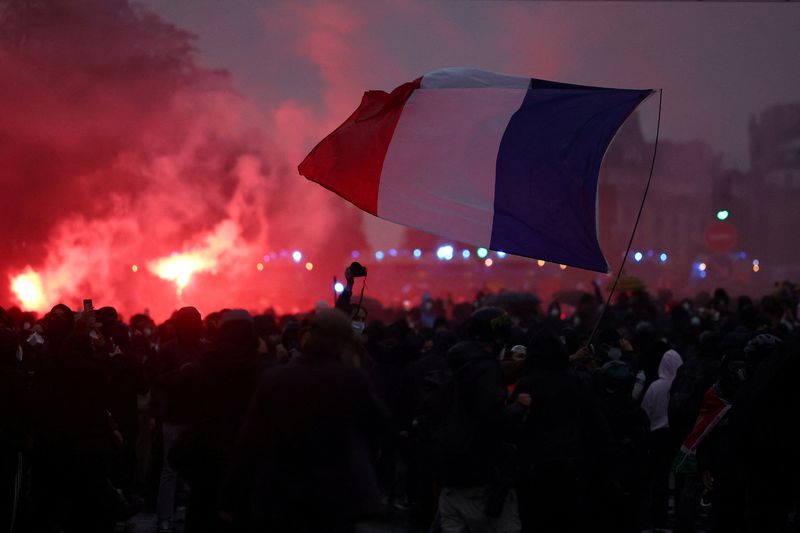
The French government reportedly tried to block access to social media and mobile internet to prevent large-scale protests over the weekend, but the effort fell through.
Politico reported on the 27th (local time), citing officials at the French prime minister’s office and telecom industry sources, that the Interior Ministry had contacted telecommunications companies ahead of the protest on the 24th about taking this kind of action in certain areas, but ultimately abandoned the plan because of various problems.
President Emmanuel Macron had previously blamed social media for nationwide protests that escalated into riots, saying, “Social media is damaging our democracy.”
According to the report, Prime Minister Sébastien Lecornu sent a letter to TikTok, Instagram, Snapchat and X asking them to prepare to block access.
An official at the prime minister’s office said the government had also considered a fallback measure: forcibly disabling location sharing to prevent people who do not know one another from gathering. An anonymous telecom industry source also said the government “above all wanted to block communications channels that groups could use to gather and organize.” The apparent aim was to prevent people from taking advantage of the protests to carry out armed robberies.
The plan ultimately fell through because of various problems.
It was technically impossible to restrict access to social media only in specific areas. Concerns were also raised that blocking mobile internet would seriously disrupt payments, security monitoring devices and emergency communications, among other things. Even if access were blocked, people could potentially get around the restrictions using virtual private networks (VPNs).
Telecom companies were reportedly opposed to the plan, citing these technical issues and the possibility of legal problems. In 2024, the French government blocked access to TikTok in New Caledonia, its territory in the South Pacific, after pro-independence protests there escalated into riots. The following year, France’s highest administrative court ruled the move unlawful.
The French parliament has begun the legislative process. It is drafting a bill that would require social media platforms to remove content inciting violent protests. Under the bill, content that could seriously disrupt public order—including incitement to assault, theft and property damage—would have to be removed within 24 hours, while content inciting riots would have to be removed within one hour.
Meanwhile, protests in France that began last month, with high school students calling for improvements to their educational environment, grew into large-scale nationwide demonstrations over broader social issues, including high prices. The protests, marred by looting and violence, drew around 400,000 people nationwide on the 24th, as 70,000 police officers were deployed and the government took a hard line, banning some demonstrations. However, the protests did not escalate into riots.
[email protected] Song Kyung-jae Reporter